If you are reading this blog, you probably have your own favourite period dramas. Well, most likely several. And like we eagerly await new period dramas and rewatch our favourites, we also are always looking for more after. You love a particular show, and you want to know more, to stay immersed in that world. What then? Books, of course. Books to allow you to linger with them and learn more about the history behind it. I’ve gathered five of my favourite period dramas and recommended a non-fiction book and a fiction book to follow up with afterwards!

I enjoy most period dramas, and it was difficult to narrow this list down to just five! Normally Downton would be on this list, but I’ve got a whole post about what to read if you love Downton Abbey, and that seemed repetitive. Depending on where you live, it might be difficult to watch some of these period dramas. However, the older ones appear to go up and down on Youtube, and the newer are easy to stream! So, without further adieu, let us jump into the past…

The Paradise
Denise Lovett may look the part of a country bumpkin when she arrives penniless and in search of work at the doors of The Paradise, Britain’s glamorous first department store. But before long, intoxicated by the potential of the modern world, she will turn her ambitious and inspired eye to the store’s ladieswear department, meanwhile catching the eye of the shop’s dashing and reckless owner, John Moray, a grieving widower with a secret.
Why I Love The Paradise
This show gets recommended a lot as a “better alternative” to Mr. Selfridge, but I equally enjoy both shows! However, I think that this show is a slightly more relaxed watch, and given that we are in a world of constant stress, this is more enjoyable on rewatch. It also feels like we are watching the other side when Lady Mary Crawley is going shopping, and getting to know the Anna and Carson of the store.
What Should You Read After Watching The Paradise?
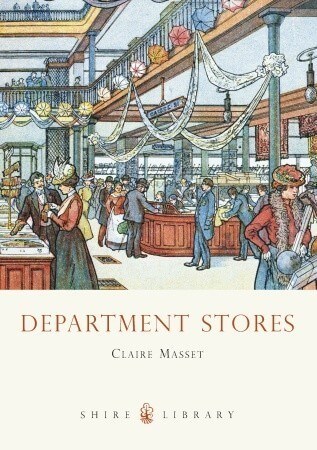
Department Stores by Clare Masset
The way we shop has undergone many transformations over the years, and a pioneer of one such change was the department store. Selling everything from clothes to cosmetics, furniture to food, the department store is a one-stop shop for consumers. Claire Masset charts the history of the department store, the innovations in retailing, advertising and technology, and the developments in fashion, design and working practices.
Using evocative adverts, prints, memorabilia and photographs, the highs and lows of these retail giants are discussed, including the golden age of department stores in the 1920s and 1930s, and their future in a modern world. Filled with amusing anecdotes, this lively book brings the fascinating world of British department stores to life.
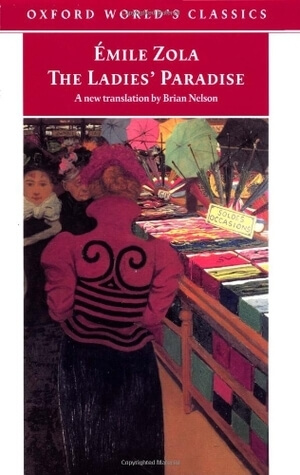
The Ladies’ Paradise by Emile Zola
The Ladies Paradise (Au Bonheur des Dames) recounts the rise of the modern department store in late nineteenth-century Paris. The store is a symbol of capitalism, of the modern city, and of the bourgeois family: it is emblematic of changes in consumer culture, and the changes in sexual attitudes and class relations taking place at the end of the century.
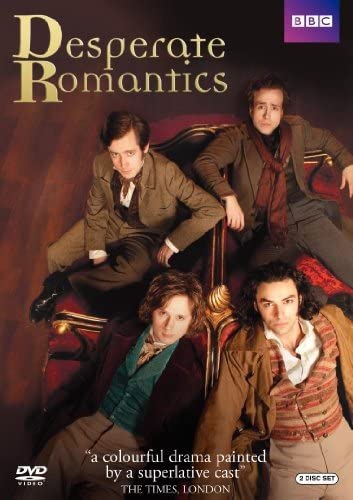
Desperate Romantics
Desperate Romantics follows the lives and loves of the Pre-Raphaelite Brotherhood. Dante Gabriel Rossetti, John Everett Millais, William Holman Hunt, and a fictional Fred Walters make waves in society and the art world, while pursuing their love interests.
Why I Love Desperate Romantics…
This 2009 series might seem a bit romantic, but it is one of those somewhat niche but highly entertaining shows that you can’t stop watching. If you are moderately interested in nineteenth century art, poetry, or literature, you will have all sorts of Easter eggs to spot throughout the show. Also, given that it is a 2009 show, there are a plethora of big-name actors at the beginning of their career. (A pre-Poldark Aidan Turner plays Rossetti before his turn as da Vinci in 2021!)
What Should You Read After Watching Desperate Romantics?
Pre-Raphaelite Sisters by Jan Marsh
When the Pre-Raphaelite Brotherhood (the ‘PRB’) exhibited their first works in 1849 it heralded a revolution in British art. Styling themselves the ‘Young Painters of England’, this group of young men aimed to overturn stale Victorian artistic conventions and challenge the previous generation with their startling colours and compositions.
Think of the images created by William Holman Hunt, John Everett Millais, Dante Gabriel Rossetti and others in their circle, however, and it is not men but pale-faced young women with lustrous, tumbling locks that spring to mind, gazing soulfully from the picture frame or in dramatic scenes painted in glowing colours. Who were these women? What is known of their lives and their roles in a movement that, in successive phases, spanned over half a century?
Some were models, plucked from obscurity to pose for figures in Pre-Raphaelite paintings, while others were sisters, wives, daughters and friends of the artists. Several were artists themselves, with aspirations to match those of the men, sharing the same artistic and social networks yet condemned by their gender to occupy a separate sphere. Others inhabited and sustained a male-dominated art world as partners in production, maintaining households and studios and socialising with patrons. Some were skilled in the arts of interior decoration, dressmaking, embroidery, jewellery-making –the fine crafts that formed a supportive tier for the ‘higher’ arts of painting and sculpture. And although their backgrounds and life-experiences certainly varied widely, all were engaged in creating Pre-Raphaelite art.
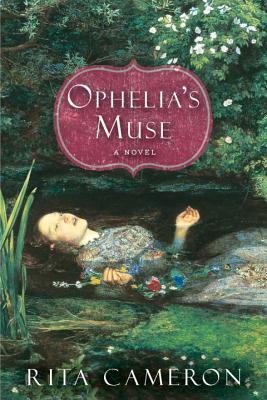
Ophelia’s Muse by Rita Cameron
Ophelia’s Muse depicts the passionate but doomed romance between the Pre-Raphaelite Brotherhood painter Dante Rossetti and his model, muse, and wife, Lizzie Siddal.
“I’ll never want to draw anyone else but you. You are my muse. Without you there is no art in me.”
With her pale, luminous skin and cloud of copper-colored hair, nineteen-year-old Lizzie Siddal looks nothing like the rosy-cheeked ideal of Victorian beauty. Working in a London milliner’s shop, Lizzie stitches elegant bonnets destined for wealthier young women, until a chance meeting brings her to the attention of painter and poet Dante Gabriel Rossetti. Enchanted both by her ethereal appearance and her artistic ambitions–quite out of place for a shop girl–Rossetti draws her into his glittering world of salons and bohemian soirees.
Lizzie begins to sit for some of the most celebrated members of the Pre-Raphaelite Brotherhood, posing for John Everett Millais as Shakespeare’s Ophelia, for William Holman Hunt–and especially for Rossetti, who immortalizes her in countless paintings as his namesake’s beloved Beatrice. The passionate visions Rossetti creates on canvas are echoed in their intense affair. But while Lizzie strives to establish herself as a painter and poet in her own right, betrayal, illness, and addiction leave her struggling to save her marriage and her sense of self.
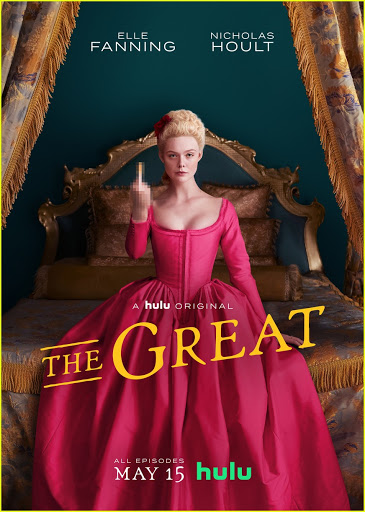
The Great
The Great is very loosely based on Catherine the Great’s early marriage and rise to power at the Russian court. An immature, violent, and dangerous Peter runs a violatile court, and Catherine and her few followers wait until the right moment to try and seize power.
Why I Love The Great
I know that many historians reared up in protest of The Great but I think it is the most fun I’ve had watching a period drama in years. Life in the Russian court was such an extravagant and out-of-touch way of life, ramping it up on the screen seems appropriate. It also brings levity to what can be a very dark time in Catherine’s life. (Written by Tony McNamara who also wrote The Favourite, it’s definitely off-beat.)
What Should You Read After Watching The Great?
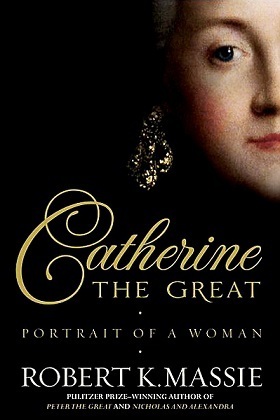
Catherine the Great: Portrait of a Woman by Robert K Massie
Pulitzer Prize winner Massie offers the tale of a princess who went to Russia at 14 and became one of the most powerful women in history. Born into minor German nobility, she transformed herself into an empress by sheer determination. Possessing a brilliant, curious mind, she devoured the works of Enlightenment philosophers, and reaching the throne, tried using their principles to rule the vast, backward empire. She knew or corresponded with notable figures of her time: Voltaire, Diderot, Frederick the Great, Maria Theresa of Austria, Marie Antoinette & John Paul Jones. Wanting to be the “benevolent despot” Montesquieu idealized, she contended with the deeply ingrained realities of Russian life, including serfdom. She persevered, and for 34 years the government, foreign policy, cultural development and welfare of the Russian people were in her hands. She dealt with domestic rebellion, wars & the tides of political change and violence inspired by the French Revolution. Her reputation depended on the perspective of the speaker. She was praised by Voltaire as like the classical philosophers. She was condemned by enemies, mostly foreign, as “the Messalina of the north.” Her family, friends, ministers, generals, lovers and enemies are vividly described. These included her ambitious, scheming mother; her weak, bullying husband, Peter (who left her sexually untouched for nine years after their marriage); her unhappy son & heir, Paul; her beloved grandchildren; and her favorites—the young men from whom she sought companionship and the recapture of youth as well as sex. Here, too, is Gregory Potemkin, her most significant lover & possible husband, with whom she shared a correspondence of love & separation, followed by 17 years of unparalleled mutual achievement. All the qualities that Massie brought to Nicholas & Alexandra and Peter the Great are present: historical accuracy, deep understanding, felicity of style, mastery of detail, ability to shatter myth & a genius for finding and expressing a human drama.
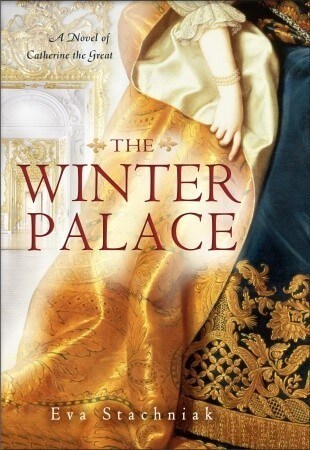
The Winter Palace by Eve Stachniak
Her name is Barbara—in Russian, Varvara. Nimble-witted and attentive, she’s allowed into the employ of the Empress Elizabeth, amid the glitter and cruelty of the world’s most eminent court. Under the tutelage of Count Bestuzhev, Chancellor and spymaster, Varvara will be educated in skills from lock picking to lovemaking, learning above all else to listen—and to wait for opportunity. That opportunity arrives in a slender young princess from Zerbst named Sophie, a playful teenager destined to become the indomitable Catherine the Great. Sophie’s destiny at court is to marry the Empress’s nephew, but she has other, loftier, more dangerous ambitions, and she proves to be more guileful than she first appears.
What Sophie needs is an insider at court, a loyal pair of eyes and ears who knows the traps, the conspiracies, and the treacheries that surround her. Varvara will become Sophie’s confidante—and together the two young women will rise to the pinnacle of absolute power.
With dazzling details and intense drama, Eva Stachniak depicts Varvara’s secret alliance with Catherine as the princess grows into a legend—through an enforced marriage, illicit seductions, and, at last, the shocking coup to assume the throne of all of Russia.

Emily of New Moon
Based on the novels by Lucy Maud Montgomery, this follows orphan Emily Byrd Starr after she settles in with her family in Blair Water after her father’s death. Living at New Moon with her aunts Elizabeth and Laura and Cousin Jimmy, Emily navigates her new and often-difficult life.
Why I Love Emily of New Moon…
I know that everyone loves Anne Shirley, and that Anne of Green Gables is worshipped across the world. However, Emily Starr has always been the Montgomery heroine for me. And this show aired on CBC when I was a kid- I remember eagerly waiting for the next episode each week. (And this is actually a show that I own on DVD still…)
What Should You Read After Watching Emily of New Moon?
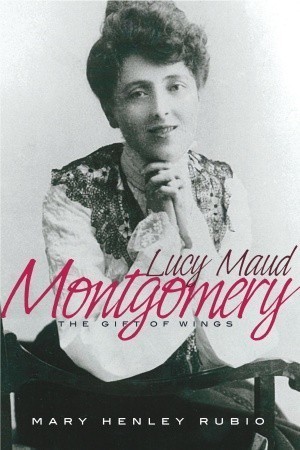
Lucy Maud Montgomery: The Gift of Wings by Mary Henley Rubio
Mary Henley Rubio has spent over two decades researching Montgomery’s life, and has put together a comprehensive and penetrating picture of this Canadian literary icon, all set in rich social context. Extensive interviews with people who knew Montgomery – her son, maids, friends, relatives, all now deceased – are only part of the material gathered in a journey to understand Montgomery that took Rubio to Poland and the highlands of Scotland.
From Montgomery’s apparently idyllic childhood in Prince Edward Island to her passion-filled adolescence and young adulthood, to her legal fights as world-famous author, to her shattering experiences with motherhood and as wife to a deeply troubled man, this fascinating, intimate narrative of her life will engage and delight.

Emily of New Moon, Emily Climbs, Emily’s Quest by LM Montgomery
Emily Starr never knew what it was to be lonely–until her beloved father died. Now Emily’s an orphan, and her mother’s snobbish relatives are taking her to live with them at New Moon Farm. She’s sure she won’t be happy. Emily deals with stiff, stern Aunt Elizabeth and her malicious classmates by holding her head high and using her quick wit. Things begin to change when she makes friends, with Teddy, who does marvelous drawings; with Perry, who’s sailed all over the world with his father yet has never been to school; and above all, with Ilse, a tomboy with a blazing temper. Amazingly, Emily finds New Moon beautiful and fascinating. With new friends and adventures, Emily might someday think of herself as Emily of New Moon.

The Marvelous Mrs. Maisel
The Marvelous Mrs. Maisel follows Miriam Maisel, a young Jewish housewife on the Upper West Side in 1958. After discovering that her perfect life is not-so-perfect, and that her husband, Joel, is having an affair with his secretary (of course!), Midge turns to stand-up comedy. First to process the breakdown of her marriage, but then to build her own career and life.
Why I Love The Marvelous Mrs. Maisel…
Oh, let me count the ways… Firstly, the costuming is incredible. I adore 1950s fashion, and the costume team for Maisel has NAILED it. (Also, if you are watching this show- she mentions Jacques FATH, not Jacques FOSS.) Secondly, Rachel Brosnahan perfectly embodies Midge Maisel who says exactly what we all wish we could. (Along with profanity- there is a decent amount of swearing in it…) Thirdly, it isn’t that stereotypical view of the 1950s that we normally get. Divorce was not terribly common in the 1950s (relative to now), and a single working mother was a foreign concept for the middle class.
What Should You Read After Watching The Marvelous Mrs. Maisel?
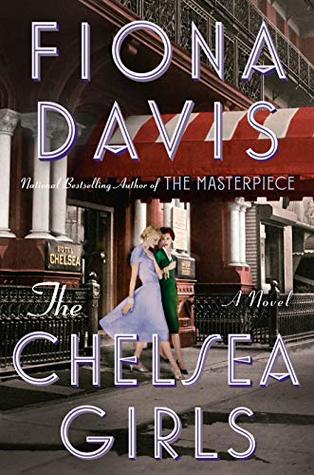
The Chelsea Girls by Fiona Davis
From the dramatic redbrick facade to the sweeping staircase dripping with art, the Chelsea Hotel has long been New York City’s creative oasis for the many artists, writers, musicians, actors, filmmakers, and poets who have called it home—a scene playwright Hazel Riley and actress Maxine Mead are determined to use to their advantage. Yet they soon discover that the greatest obstacle to putting up a show on Broadway has nothing to do with their art, and everything to do with politics. A Red scare is sweeping across America, and Senator Joseph McCarthy has started a witch hunt for Communists, with those in the entertainment industry in the crosshairs. As the pressure builds to name names, it is more than Hazel and Maxine’s Broadway dreams that may suffer as they grapple with the terrible consequences, but also their livelihood, their friendship, and even their freedom.
Spanning from the 1940s to the 1960s, The Chelsea Girls deftly pulls back the curtain on the desperate political pressures of McCarthyism, the complicated bonds of female friendship, and the siren call of the uninhibited Chelsea Hotel.
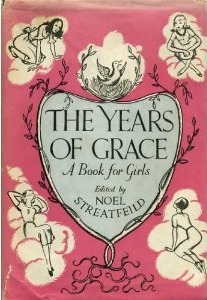
The Years of Grace edited by Noel Streatfeild (synopsis from The Guardian)
This eye-opener on postwar female aspirations was published in 1950 as a manual for “awkward age” girls. If you thought female body image was a contemporary problem, think again. “I want you to be lovely in every way …” is followed by a roll-out of prescriptions for perfection. Advice includes how to have perfect underwear, and how to be as perfect as Princess Margaret. There’s a chapter on careers too, though naturally, “the best career for every woman is, of course, taking care of her husband and home”.
Out of these period dramas and books to go with them, what would you read/watch first?
Cheers,
The Historian
Facebook | Twitter | Instagram | Pinterest | Bloglovin’

Thanks for the suggestion of new shows to watch- I’ll add them to my long list! I loved watching Matvelous Mrs. Maisel (3 seasons) so I am hoping a 4th comes out. And I remember watching EMily of New Moon as a kid- it doesn’t stick exactly to the books but it was good to watch. I think at a certain point it got cancelled but I’m not sure why. If people like that they could try “Anne with an E” (sadly also cancelled but also good with going into the social issues of the time period).
And The Winter Palace was a really good book!