Today I am joined by historian Gemma Hollman for a guest post. Gemma is a medieval historian who does extensive work on royal women in the medieval period, and her second book, The Queen and The Mistress: The Women of Edward III explores some of the most powerful women in the English court. Of course, I am always fascinated by court fashion and the social complexities that ensue. Gemma will be exploring fashion and image in the reign of Edward III and the crucial role it played!
Philippa of Hainault and Alice Perrers: Fashion and Image in the reign of Edward III
When people think of the monarchy – of any era – often the first things that come to mind are images of wealth. From sparkly jewels, to elaborate dresses, to gorgeous palaces, throughout history monarchies have displayed their wealth to show their associated power. The English monarchy was no different, and during the reign of Edward III fashion became a high priority.
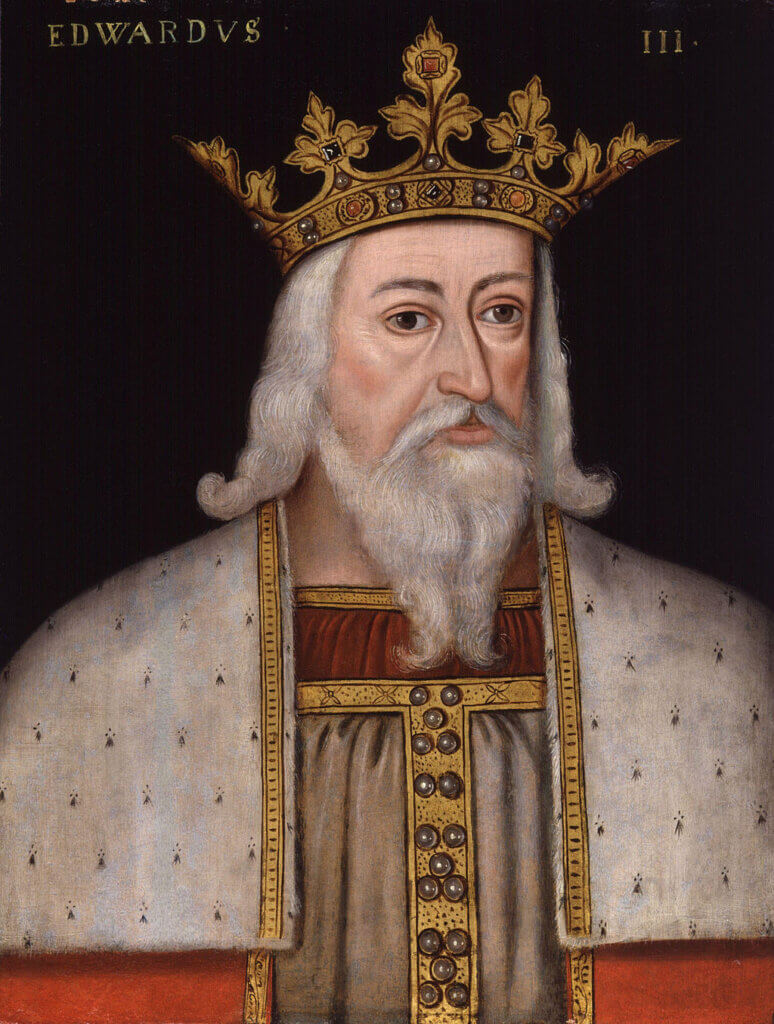
Edward III’s Early Reign
Edward III came to the throne as a teenager under unusual circumstances. His mother had invaded his father’s kingdom and, with popular support, overthrown him and his hated favourites. Keen to keep power for herself, Queen Isabella put her son Edward on the throne instead, and for several years she was the virtual ruler of England. During this time, Edward and his young bride, Philippa of Hainault (whose family had provided the initial invasion force for Isabella) were kept in relative poverty. Isabella held the purses of England, and she aggrandised herself whilst giving Edward and Philippa little of their own. It was clear for outsiders who held the real keys of the kingdom.
Thus, when Edward III seized power for himself during a coup in 1330, some of his first acts were designed to enrich himself and his wife. Just two days after his coup, Edward gifted the entire contents of Castle Donnington, the previous home of one of Edward I’s sons, to his wife and later that year moves were made to properly provide for Philippa with a sufficient queenly dower. Philippa herself took the opportunity to adorn her body with luxurious fabrics and jewels, something she had previously been denied, to show her new status as the most powerful queen in the country. The month of Edward’s coup she purchased expensive silk cloths, one of which was decorated with images of crowns, and within a few months she had commissioned jewellers to create golden brooches encrusted with diamonds and pearls.
Dressing Like Royalty
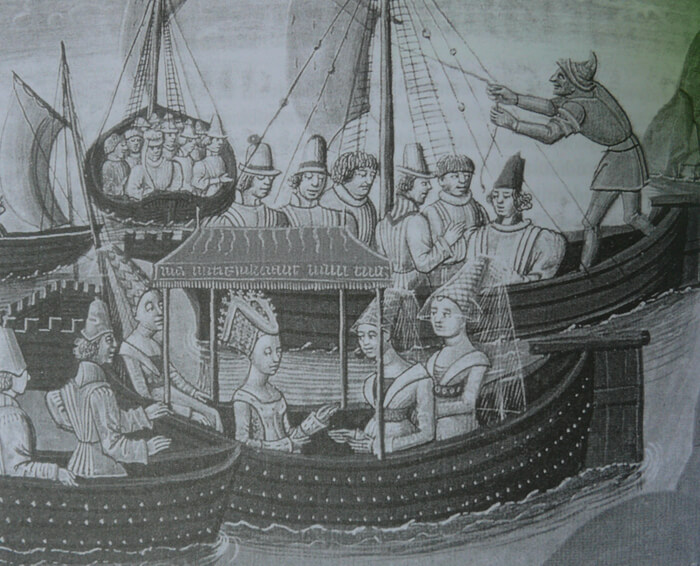
When the young couple had been living in poverty for so long, it was important for them to both start dressing the part as king and queen to show that they now held the power of the throne. Edward was no longer a puppet king under the control of his mother and other courtiers. In the medieval period, fashion was the most immediate symbol of status and power, for only those of certain classes who held immense wealth could afford to adorn their bodies with certain materials. This theme continued throughout Edward’s reign, and whenever he needed to show the strength of the English crown, expensive pieces of clothing were brought out for the masses, and Philippa’s body was part of this.
At every one of Philippa’s churchings – a ceremony undertaken by the queen after giving birth to a royal child – she was draped in a multitude of sumptuous outfits. She would often change several times across the festivities, with silk gowns lined with the most expensive white fur and embroidered by hand for thousands of hours. At Windsor Castle in 1344, Edward III made an announcement that he was going to create a great knightly order modelled after King Arthur and his Knights of the Round Table. The order was an important piece of propaganda and mythmaking for Edward, who was in the midst of claiming his rights as King of France, as it was a way to demonstrate to the world that he was a powerful Christian king. For the announcement, he dressed his wife and mother in resplendent gowns, whilst he himself wore his most regal attire. Over a decade later, in 1358, Edward held another grand tournament as part of his Garter festivities and monarchs and nobles from across Western Europe came to participate. These celebrations were some of the grandest of Edward’s entire reign, and Philippa was given £500 to create gowns to wear for the event. This was a staggering amount of money at the time, and it shows just how important it was for Edward to properly dress the women in his life.

Ford Madox Brown, Public domain, via Wikimedia Commons
Alice Perrers: The Image of Youth
But in the 1360s, as Philippa started to grow sick from a variety of ailments that had afflicted her during her life, Edward’s eyes began to stray. He took interest in one of Philippa’s ladies-in-waiting, a young woman around 20 years old called Alice Perrers. Alice was the daughter of a goldsmith, and of a far inferior social rank to Edward and his court. But as her relationship with the king developed, Alice began to collect pieces of land and thus gather wealth of her own. Her connection to the king meant that she was able to persuade wealthy men at court to sell her manors, castles and other property under favourable circumstances, and by the time the queen died Alice had amassed a respectable portfolio which put her in line with the knightly class of England.
With the queen gone, Alice quickly took over the centre of court as the woman who sat in Edward’s heart. Her wealth only expanded and now she could begin to dress herself in the clothes she could have never dreamed of owning. Fashion as a marker of social status had been so important to Edward that he had legislated about exactly what materials members of different social classes were allowed to wear. But Alice, as his mistress and lover, was able to transcend these rules. No longer a goldsmith’s daughter, Alice was practically the king’s unofficial wife, and so any and all material was available for her use.
Papal Support
Edward continued his generosity of providing clothing for his female relatives, and Alice was often listed side-by-side in the wardrobe accounts with Edward’s oldest and only surviving daughter, Princess Isabella, as a recipient of these stunning gowns. Alice was being dressed in the same clothes as a princess of England. This was a signifier to everyone in England and beyond of Alice’s new status. The message certainly was received: in 1371, Pope Gregory XI personally wrote to Alice to obtain her help in mediating with King Edward III to gain the freedom of his brother.
Dressing for the Jubilee
As Alice continued to rise in importance, her outfits continued to outdo each other. In 1376, during the Jubilee celebrations marking Edward III’s 50th year on the throne, Alice took centre stage. At a tournament in London, Alice was the leading lady. She took on the role of “Lady of the Sun” and she led the tournament procession from the Tower of London to the tournament grounds dressed in the most shimmering attire. She wore a gown lined with the finest white ermine fur – a material which, under Edward’s fashion laws, should only have been worn by the royal family and the highest of the nobility – and on top she had a cloak of gold tissue, making her truly shine like the sun. On her head was a cap glistening with jewels. Just as Philippa had worn the most expensive, beautiful outfits during her time as queen, marking her as the most powerful and beloved woman in Edward’s life, now Alice was doing the same.
Ultimately, Alice’s bold statements of her own power would lead to her downfall. By being so visible in Edward’s government, making sure everybody knew that she had the king’s ear (and his bed), she became a target for those who had been marginalised at court. It was seen as acceptable for Philippa to wear such grand clothes and wield influence over the king because she was his queen, and a powerful noblewoman in her own right. But Alice was a nobody who had risen far too high above her status. She was the wrong type of woman, the evil, social climbing mistress who manipulated the king for ill. When she finally was punished by Parliament for her misdeeds, her beautiful gowns and glistening jewels were all taken away from her, returning her to the bottom where she belonged.
♠
Gemma’s second book, The Queen and The Mistress: The Women of Edward III is releasing this week in the UK (autumn 2022) and in North America in Spring 2023. You can find it at your favourite bookseller here!
In a world where man is king, can a woman really have it all – and keep it? Philippa of Hainault was Queen of England for forty-one years. Her marriage to Edward III, when they were both teenagers, was more political transaction than romantic wedding, but it would turn into a partnership of deep affection. The mother of twelve children, she was the perfect medieval queen: pious, unpolitical and fiercely loyal to both her king and adopted country. Alice Perrers entered court as a young widow and would soon catch the eye of an ageing king whose wife was dying. Born to a family of London goldsmiths, this charismatic and highly intelligent woman would use her position as the king’s favourite to build up her own portfolio of land, wealth and prestige, only to see it all come crashing down as Edward himself neared death. The Queen and the Mistress is a story of female power and passion, and how two very different women used their skills and charms to navigate a tumultuous royal court – and win the heart of the same man.
You can find Gemma’s site here: http://www.justhistoryposts.com/.
You can find Gemma’s Facebook page here: https://www.facebook.com/JustHistoryPosts
You can find Gemma on Twitter here: @JustHistoryPost.
Thank you to Gemma for chatting with us about fashion and image in the reign of Edward III!
Cheers,
The Historian
Facebook | Twitter | Instagram | Pinterest