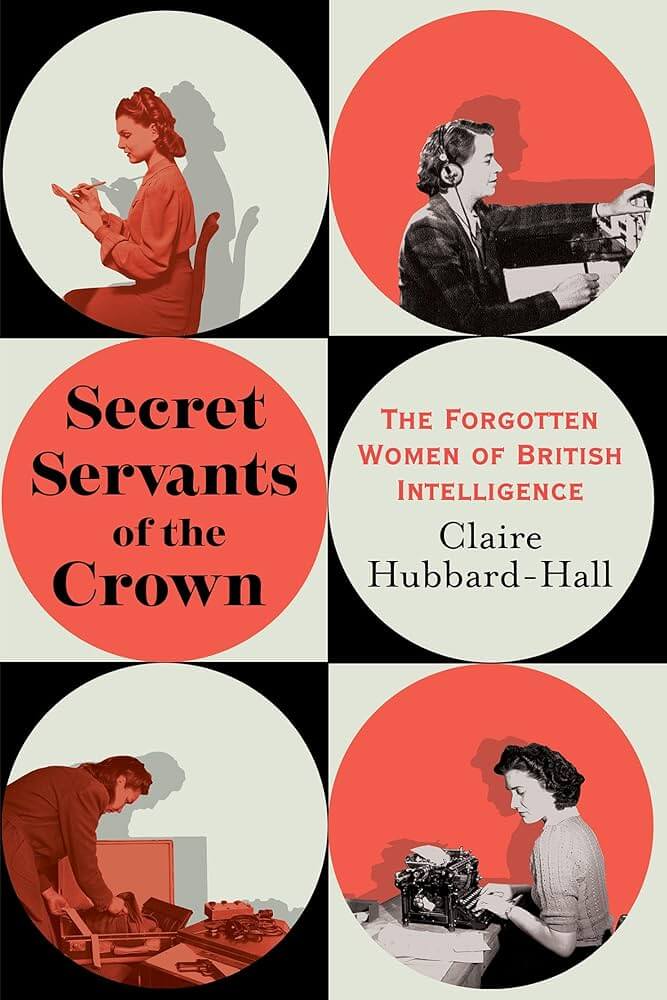
As it is Women’s History Month 2025 in the UK right now, there is no better time to highlight a book exploring the hidden lives of British women who dedicated their careers (and more) to their country. Women are so often left out of war history and if included, it focuses on women in the home. Those women should not be forgotten but they are not the only women to make an impact during conflict. In Secret Servants of the Crown by Claire Hubbard-Hall, we are able to learn about some of the incredible women who served in British intelligence in the twentieth century!
Thank you to NetGalley for providing an eARC in exchange for an honest review.

Secret Servants of the Crown: The Forgotten Women of British Intelligence, Claire Hubbard-Hall
Drawing on private and previously classified documents, this definitive history of women’s contributions to the intelligence services is the first authoritative account of the hidden female army of clerks, typists, telephonists, and secretaries who were the cornerstone of the British secret state across two world wars and beyond.
To the undiscerning eye, they were secretaries, typists, personal assistants, and telephonists. But those innocuous job titles provided the perfect cover for what were in reality a range of complex technical, clerical, and occupational roles. Often overlooked and underestimated by outsiders, the women of British intelligence encoded, decoded, and translated enemy messages, wrote propaganda, and oversaw agents, performing duties as diverse as they were indispensable.
One of those women was Kathleen Pettigrew, super-secretary to three consecutive Chiefs of MI6, the secret foreign intelligence service of the United Kingdom, and widely regarded as the inspiration for author Ian Fleming’s Miss Moneypenny. Serving her county loyally for four decades, Kathleen amassed a formidable knowledge of people and events. From the surprise apprehension of World War I courtesan spy Mata Hari to the unmasking of MI6 officer Kim Philby, the ‘Third Man’ of the Cambridge spy ring, Kathleen created, organized, and archived an empire of top-secret information.
Though most women toiled in offices and backrooms, there were also agent-runners and agents, prized for their ability to hide in plain sight. Drawing on extensive research and unique access to family archives, Claire portrays many of these remarkable figures—including the brilliant, multi-lingual Lunn sisters, glamorous spy Olga Gray; and Jane Sissmore, MI5’s first female officer— and reconsiders the priceless contributions they made.
In a field where women were often assumed to be little more than window-dressing, Miss Moneypenny reveals their multi-faceted, essential roles, offering a powerful and compelling testament to their many accomplishments.
Why You Should Read This…
I included this on my to-read history books for 2025, so I was obviously interested. However, it was even more fascinating than I originally expected. Hubbard-Hall has structured the book to focus on the women, each chapter follows a different woman in intelligence from the beginning of her life to the end (with the spotlight on their intelligence career). I think that this lets their lives shine through as well as their work.
Hubbard-Hall skillfully highlights their careers and contributions. It does not feel clunky or heavy-handed in any way but she does emphasise the ways that their work has been ignored and belittled since. Many people will assume that women in history are “equally represented” but in many areas of history, they are still left in the shadows. And that goes doubly for the 20th century in areas like this. (I am happy to see that publishers are continuing to back these books.) This book is interesting and engaging, and so needed!
Is Secret Servants of the Crown on your to-read list?
Cheers,
The Historian
Facebook | Threads | Instagram | Pinterest