Yesterday was International Women’s Day 2025 and we are in the thick of Women’s History Month (for the UK and the US, expect it again in October for Canada!). While I am always interested in women in history, I am particularly drawn to a few areas, literary history being one of them. (As a woman who has always been a reader, it does make sense.) Instead of book recommendations today (though I will link some at the end of the post!), I’m going to share 5 female firsts in literary history!

5 Female Firsts in Literary History
Enheduanna- First Named Author (2300 BCE)
Enheduanna was a Sumerian high priestess who is also considered by many scholars to be the first named author. Her father, Sargon of Akkad, ruled over the Akkadian empire and he most likely appointed her to her religious role. Several religious poems and hymns have been attributed to Enheduanna, including The Exaltation of Inanna and Inanna and Ebih.
There has been some debate as to her authorship with some scholars claiming that the hymns and poems attributed to her were written centuries later while others believe that they are from her period.
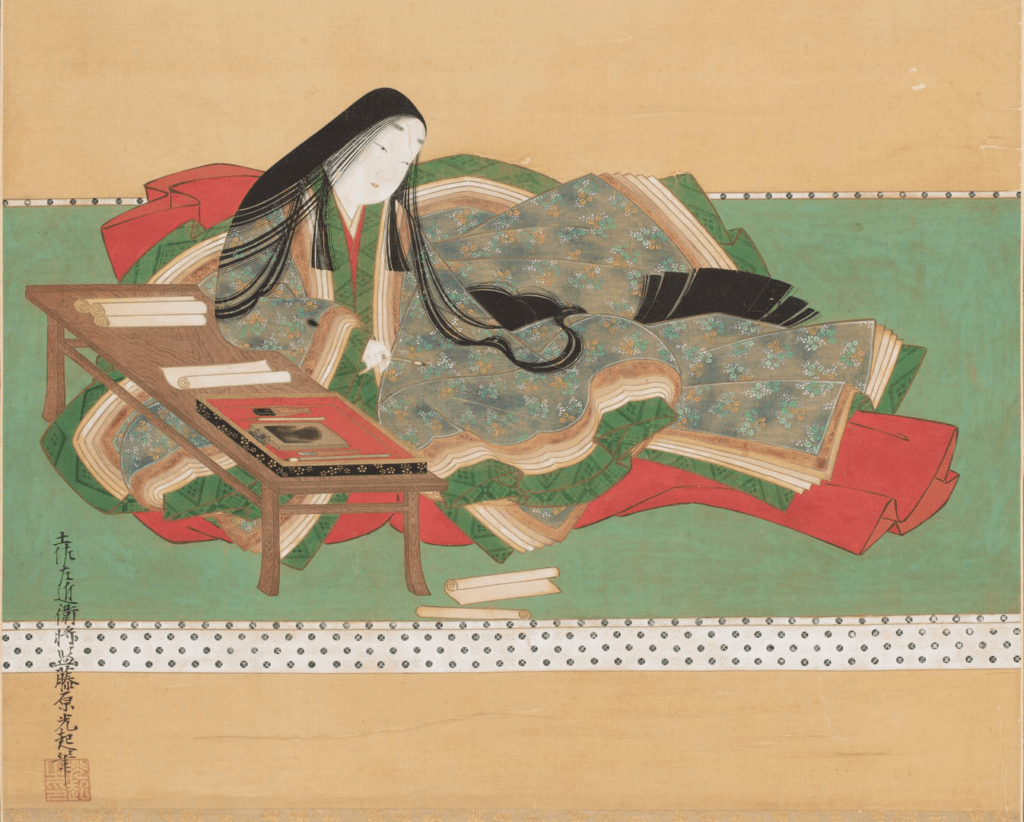
Murasaki Shikibu- First Novelist (11th Century CE)
Murasaki Shikibu is not the author’s actual name but it is the descriptive name that we know her by. This author was a lady-in-waiting at the Japanese Imperial Court and would have been a rarity in the period for being able to write and read. She married and had a daughter, but her husband tragically died after only a few years (most likely during a cholera epidemic).
Empress Shōshi asked her to become Lady-in-Waiting; the young Empress asked many female scholars to her court.
The Tale of Genji is considered to be the first novel written. It is over 1,000 pages long, has 54 chapters, and was written in Early Middle Japanese. It follows Genji, the son of the Emperor who has been removed from the line of succession and establishes his Imperial career. It focuses on life at court and although can be difficult to read due to the inclusion of poetry, there have been several translations over the last century to modern Japanese, English, and other languages.

Anna Comnena- First Female Historian (12th Century CE)
Anna Komnene, typically Latinised as Anna Comnena, is considered one of the first women to record historical events. She was born to Alexios I Komnenos and Irene Doukaina who would go on to become the Byzantine Emperor and Empress. She was thoroughly educated, including studying literature, astronomy, geography, mathematics, and military theory, in addition to history. She was considered to be incredibly intelligent in both academics and “real world” issues.
After a failed coup to seize power from her brother, Anna spent the remainder of her years in a monastery. (Although historians debate whether or not she was actually involved in the coup, she was removed from court entirely in any case.) While living at the monastery, Anna wrote the Alexiad. This Attic Greek text is both a biography of her father and a record of the Byzantine Empire during his reign. Although it is biased towards her father, it is one of the most complete sources on the Byzantine Empire from the period.
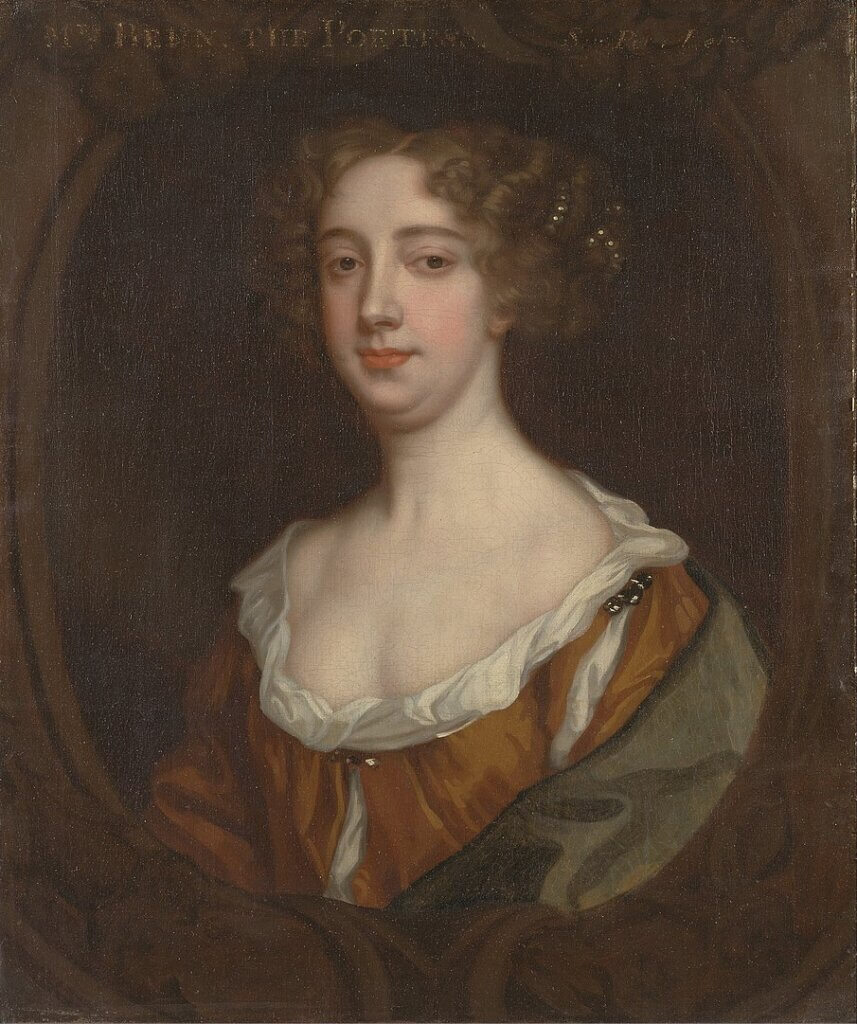
Aphra Behn- First Paid Female English Playwright (17th Century CE)
If you are reading this article in 2025, you may think that Aphra Behn is a familiar name- a new statue of the author was unveiled in Canterbury early this year! Although Behn was not the first female playwright, she was the first professional playwright in England (to be paid for her work), and a spy. Her early years are largely unknown; we know she studied languages, though. Born roughly around the English Civil War, Behn was recruited to be a spy for King Charles II in the mid-1660s.
Unfortunately, the King did not pay her salary in any sort of timely manner and Behn was left struggling. Thus she turned to writing and worked for both the King’s Company and the Duke’s Company. Notably, she publicly worked as a woman (when women would hide their gender as authors for centuries to come).
Behn is largely known for The Rover, a comedy, and Oroonoko: or, the Royal Slave, a novel. She died in APril 1689 and is buried in Westminster Abbey.
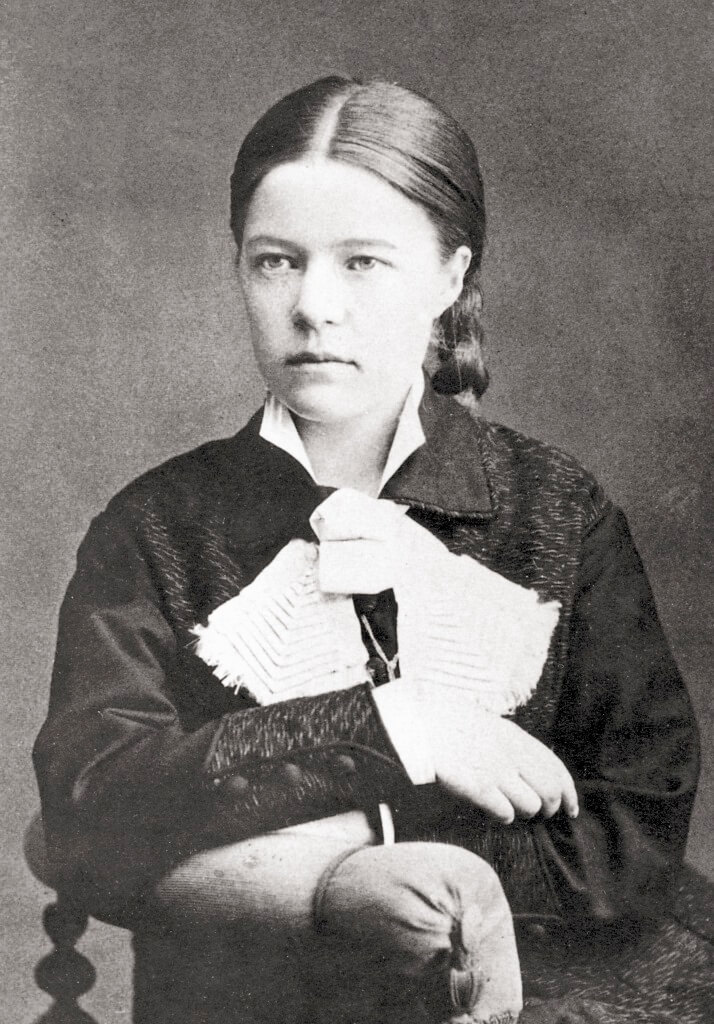
Selma Lagerlöf sådan hon såg ut när hon först kom till Landskrona, ännu med den långa flätan i behåll. Foto Anna Ollson, Karlstad
Selma Lagerlöf- First Female Noble Prize in Literature (1909)
Selma Lagerlöf was a Swedish author born in 1858. Like many of us readers, she was a quiet child who loved to read. She was educated in teaching and taught at the secondary level for a decade while beginning her authorial career. She travelled widely as an adult which gave her much of the inspiration needed for her novels.
She published her first novel, Gösta Berlings saga (The Story of Gösta Berling) in 1891, and would continue to publish novels, short stories, and poetry for the rest of her life. In 1909, Lagerlöf was awarded the Nobel Prize in Literature. It was not awarded for a specific work but rather,
in appreciation of the lofty idealism, vivid imagination, and spiritual perception that characterize her writings.
She would become a member of the Swedish Academy in 1914, the first woman to do so. In 1909, she was also awarded the Litteris et Artibus, a Swedish royal medal given for contributions to culture, and in 1926 was awarded the Illis quorum, another Swedish gold medal.
♠
If you are looking for some incredible books written by women, read on!
7 Great Books by Female Authors
My To-Read Books for Women’s History Month 2025
My 2025 To-Read Historical Fiction Books
5 Must-Read Books Written By Women

Who are your favourite female authors from history?
Cheers,
The Historian
Facebook | Threads | Instagram | Pinterest