Last week I shared my to-watch period dramas of 2025, and this week we look to another category- history books! I always tend to read a good amount of non-fiction books but I’ve set myself a specific non-fiction reading goal this year, so I’ve been pouring over the lists more than normal. Thus I thought I would share what look to be some standouts! It must be said: this list is not exhaustive. (If a book is not included, it doesn’t mean that I won’t read it or recommend it!) Without anymore delay, these are my 2025 to-read history books!

My 2025 To-Read History Books
As of the original publish date of this post (January 2025), the list is currently focusing on books being published in the first half of 2025. Not only have many books publishing later not been given a firm publishing date, I want to be able to specifically highlight those closer to. (Expect to see another post partway through the year!) These are the Canadian publishing dates, so if you are elsewhere, you may have other dates.
♠
You will notice: I am focusing on books written by female authors. As I shared in my 2025 Reading Goals, reading more non-fiction books written by women is a priority for me. Female authors are still largely under-represented in non-fiction history and biography books. And I firmly believe that if we continue to read, share, purchase, and recommend these books, we can help boost these fantastic books and show publishers that we would like to see more.
I have had some people push back on this goal on social media, saying that they do not pay attention to the gender of the author. However, the publishing industry and field of history in genre (overall) is still dominated by men, and ignoring gender only serves to reinforce those existing barriers for women. So, onto some incredible books!
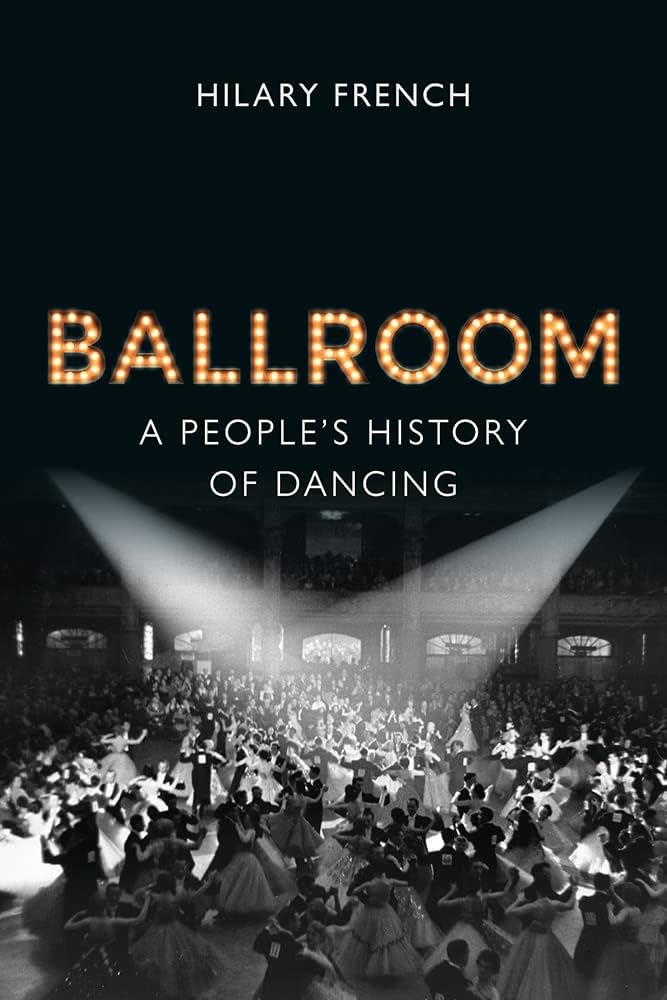
Ballroom: A People’s History of Dancing, Hilary French (12 February 2025)
In the early twentieth century, American ragtime and the Parisian Tango fueled a dancing craze in Britain. Public ballrooms—which had never been seen before—were built throughout the country, providing a glamorous setting for all classes to dance. The new styles of dance being defined and taught in the 1920s, as well as the films of Fred Astaire and Ginger Rogers in the 1930s, ensured that ballroom dancing continued to be the most popular pastime until the 1960s, rivaled only by the cinema.
This book explores the vibrant history of Ballroom and Latin: the dances, the lavish venues, the competitions, and the influential instructors. It also traces the decline of competitive dancing and its resurgence in recent years with the hugely popular TV shows Strictly Come Dancing and Dancing with the Stars.
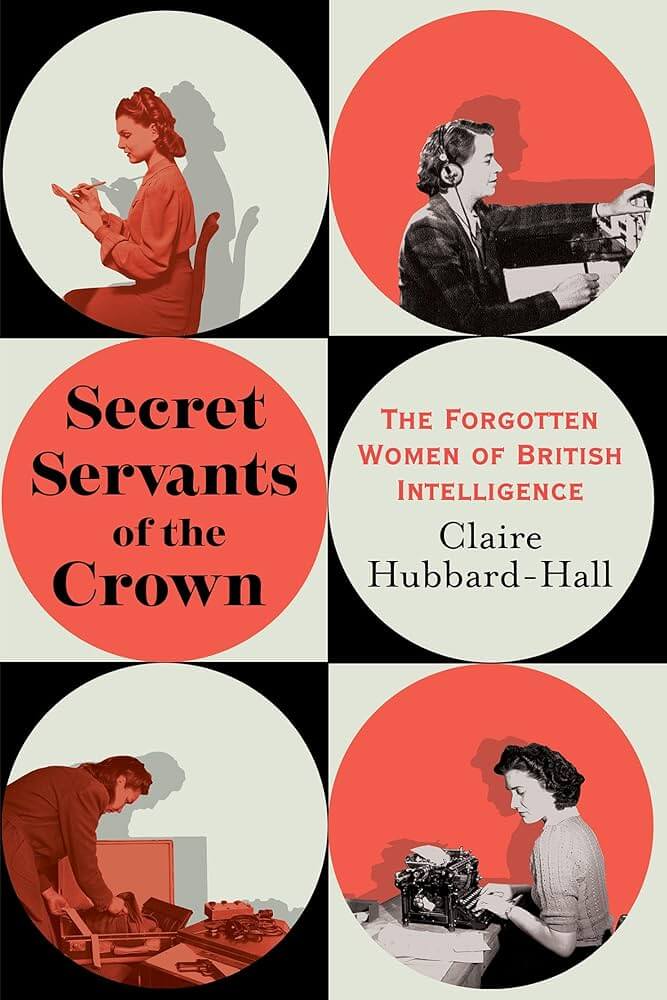
Secret Servants of the Crown: The Forgotten Women of British Intelligence, Claire Hubbard-Hall (25 February 2025)
Drawing on private and previously classified documents, this definitive history of women’s contributions to the intelligence services is the first authoritative account of the hidden female army of clerks, typists, telephonists, and secretaries who were the cornerstone of the British secret state across two world wars and beyond.
To the undiscerning eye, they were secretaries, typists, personal assistants, and telephonists. But those innocuous job titles provided the perfect cover for what were in reality a range of complex technical, clerical, and occupational roles. Often overlooked and underestimated by outsiders, the women of British intelligence encoded, decoded, and translated enemy messages, wrote propaganda, and oversaw agents, performing duties as diverse as they were indispensable.
One of those women was Kathleen Pettigrew, super-secretary to three consecutive Chiefs of MI6, the secret foreign intelligence service of the United Kingdom, and widely regarded as the inspiration for author Ian Fleming’s Miss Moneypenny. Serving her county loyally for four decades, Kathleen amassed a formidable knowledge of people and events. From the surprise apprehension of World War I courtesan spy Mata Hari to the unmasking of MI6 officer Kim Philby, the ‘Third Man’ of the Cambridge spy ring, Kathleen created, organized, and archived an empire of top-secret information.
Though most women toiled in offices and backrooms, there were also agent-runners and agents, prized for their ability to hide in plain sight. Drawing on extensive research and unique access to family archives, Claire portrays many of these remarkable figures—including the brilliant, multi-lingual Lunn sisters, glamorous spy Olga Gray; and Jane Sissmore, MI5’s first female officer— and reconsiders the priceless contributions they made.
In a field where women were often assumed to be little more than window-dressing, Miss Moneypenny reveals their multi-faceted, essential roles, offering a powerful and compelling testament to their many accomplishments.

The Rebel Empresses: Elisabeth of Austria and Eugénie of France, Power and Glamour in the Struggle for Europe, Nancy Goldstone (25 February 2025)
When they married Emperors Franz Joseph and Napoleon III, respectively, Elisabeth of Austria and Eugénie of France became two of the most famous women on the planet. Young and beautiful—becoming cultural and fashion icons of their time—they also played a pivotal role in ruling their realms during a tempestuous era characterized by unprecedented political and technological change.
Fearless, adventurous, and independent, Elisabeth and Eugénie represented a new kind of empress—one who rebelled against tradition and anticipated and embraced modern values. Yet both women endured hardship in their private and public lives. Elisabeth was plagued by a mother-in-law who snatched her infant children away and undermined her authority at court. Eugénie’s husband was an infamous philanderer who could not match the military prowess of his namesake. Between them, Elisabeth and Eugénie were personally involved in every major international confrontation in their turbulent century, which witnessed thrilling technological advances as well as revolutions, assassinations, and wars.
With her characteristic jump-off-the-page writing and in-depth research, Nancy Goldstone brings to life these two remarkable women, as Europe goes through the convulsions that led up to the international landscape we recognize today.

The Rebel Romanov: Julie of Saxe-Coburg, the Empress Russia Never Had, Helen Rappaport (15 April 2025)
In 1795, Catherine the Great of Russia was in search of a bride for her grandson Constantine, who stood third in line to her throne. In an eerie echo of her own story, Catherine selected an innocent young German princess, Julie of Saxe-Coburg, aunt of the future Queen Victoria. Though Julie had everything a young bride could wish for, she was alone in a court dominated by an aging empress and riven with rivalries, plotting, and gossip―not to mention her brute of a husband, who was tender one moment and violent the next. She longed to leave Russia and her disastrous marriage, but her family in Germany refused to allow her to do so.
Desperate for love, Julie allegedly sought consolation in the arms of others. Finally, Tsar Alexander granted her permission to leave in 1801, even though her husband was now heir to the throne. Rootless in Europe, Julie gave birth to two―possibly three―illegitimate children, all of whom she was forced to give up for adoption. Despite entreaties from Constantine to return and provide an heir, she refused, eventually finding love with her own married physician.
At a time when many royal brides meekly submitted to disastrous marriages, Julie proved to be a woman ahead of her time, sacrificing her reputation and a life of luxury in exchange for the freedom to live as she wished. The Rebel Romanov is the inspiring tale of a bold woman who, until now, has been ignored by history.

Claire McCardell: The Designer Who Set Women Free, Elizabeth Evitts Dickinson (17 June 2025)
Claire McCardell forever changed fashion—and most importantly, the lives of women. She shattered cultural norms around women’s clothes, and today much of what we wear traces back to her ingenious, rebellious mind. McCardell invented ballet flats and mix-and-match separates, and she introduced wrap dresses, hoodies, leggings, denim, and more into womenswear. She tossed out corsets in favor of a comfortably elegant look and insisted on pockets, even as male designers didn’t see a need for them. She made zippers easy to reach because a woman “may live alone and like it,” McCardell once wrote, “but you may regret it if you wrench your arm trying to zip a back zipper into place.”
After World War II, McCardell fought the severe, hyper-feminized silhouette championed by male designers, like Christian Dior. Dior claimed that he wanted to “save women from nature.” McCardell, by contrast, wanted to set women free. Claire McCardell became, as the young journalist Betty Friedan called her in 1955, “The Gal Who Defied Dior.”
Filled with personal drama and industry secrets, this story reveals how Claire McCardell built an empire at a time when women rarely made the upper echelons of business. At its core, hers is a story about our right to choose how we dress—and our right to choose how we live.
What are your 2025 to-read history books?
Cheers,
The Historian
Facebook | Twitter | Instagram | Pinterest | Threads