Just over a week ago, we observed the 378th anniversary of Charles I’s execution. He was led outside one of the upper story windows of Banqueting House onto scaffolding, and then beheaded. Although that was Banqueting House’s most important moment in history, it has served many purposes. Some of British history’s most interesting figures have spent time at Banqueting House. And although you may not realise it, it plays a substantial role in history. So, if you are looking for more information after visiting the hall, or preparing for your visit, I’ve got you covered. This Banqueting House reading guide is chock full of royal history, intrigue, revolution, and mystery!
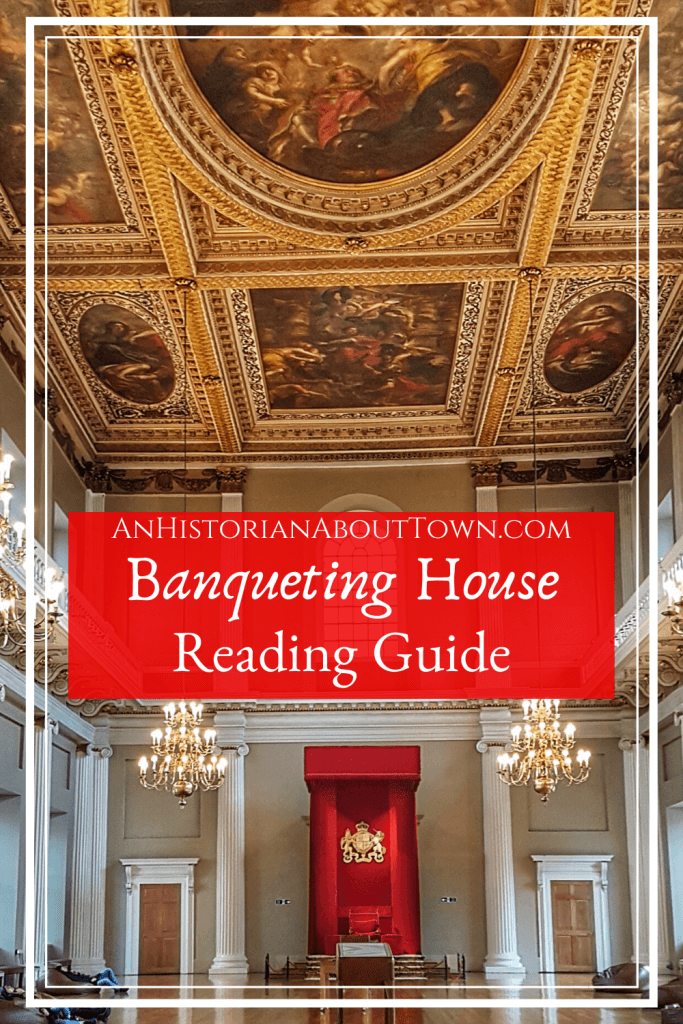
This reading guide for both the fiction and non-fiction lovers- there is something for everyone. Banqueting House itself is rather nondescript in Whitehall. The buildings surrounding it were designed to match it, so it doesn’t stand out. (Though it is gorgeous.) Similarly, it tends to get lumped in with the Palace of Whitehall as a whole in written sources. Whitehall was a Tudor palace that was also used by the Stuarts, until a fire demolished it in 1698. However, due to the quick thinking of William III, Banqueting House was saved.

Why You Need to Visit Banqueting House
For more gorgeous photos and in-depth royal history, I would recommend reading my full post on Banqueting House. (There is far more than meets the eye with this Stuart gem…) However, if you are visiting now, it is most likely to see the ceiling. While most palaces have wonderful ceilings regardless (the crown molding!!), Banqueting House takes it to another level. The talented seventeenth century painter, Sir Peter Paul Rubens, painted 9 separate panels that adorn the ceiling. And they are truly gorgeous, in every sense of the word. Charles I commissioned them to honour his father, and it is an incredible tribute.
Note: People always skip Banqueting House because it is a single room, and it isn’t promoted as much as Kensington Palace/ the Tower of London/ Hampton Court. Don’t make that mistake!

Non-Fiction Books on Banqueting House
No Banqueting House reading guide would be complete without the actual history of it!
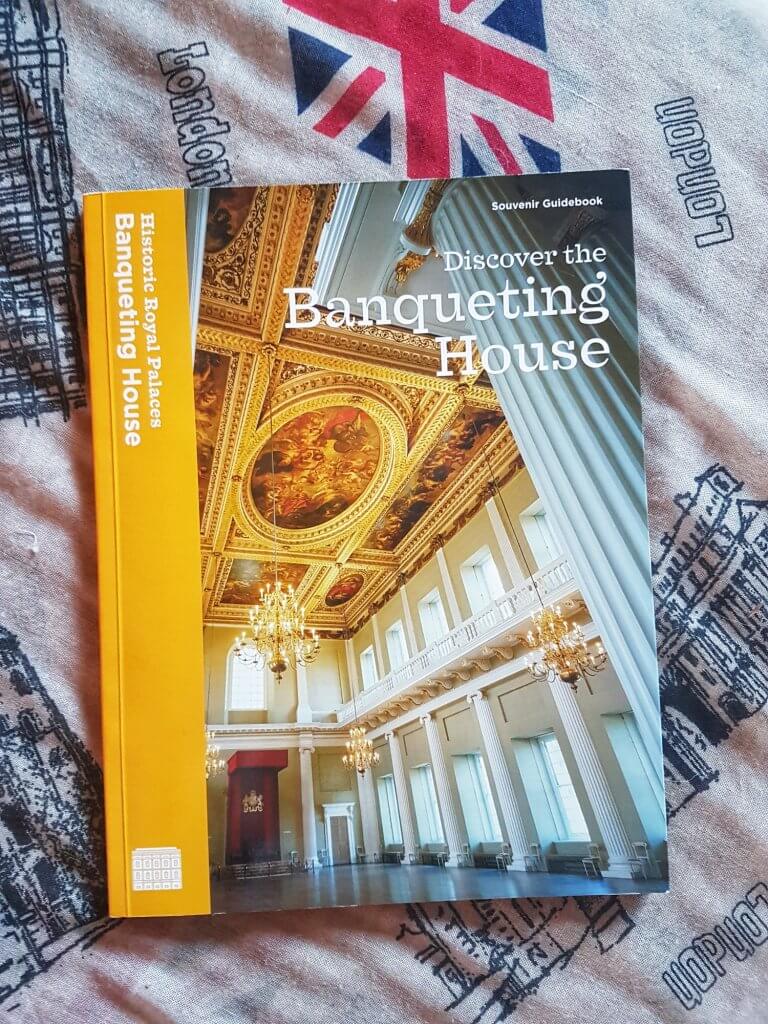
Discover the Banqueting House, Susanne Groom
Descriptive, informative, authoritative – this superb official guidebook is the best guide to your visit to the Banqueting House. This elegant building has gone through many changes: discover the stories of the excesses and extravagances of the Stuart era, the wild masques and sumptuous receptions, and the drama of the bleak winter’s day when King Charles I was executed here in 1649. This souvenir guidebook contains all the highlights and best things to see and do at the Banqueting House including Whitehall’s best-kept secrets — the famous ceiling painting by Peter Paul Rubens. Packed with fascinating history and vividly illustrated with colour photographs. (Historic Royal Palaces)
If you ever visit a Historic Royal Palaces property, I would always recommend getting a guidebook. They are pretty reasonable, usually £5-7, and have stunning photographs. It also will give you any of the basic historical background that you would need. Understandably so, the gift shop at Banqueting House is almost a closet. However, you can get this fantastic guide! It covers the full history of Banqueting House, including the temporary structures that stood before this one, and the uses it has had over the centuries. For only £5, it is more than worth it, especially for the painting guide. The fold out map with titles and explanations is invaluable when you are looking back are your photographs!
The White King: Charles I, Traitor, Murderer, Martyr, Leanda de Lisle
Barely forty years after the England’s golden age under Elizabeth, the country was at war with itself, split between loyalty to the Crown and Parliament, with armies raised in Scotland and Ireland, and fighters arriving from Europe to wage war on English soil for the last time in England’s history. The English Civil War would set family against family, friend against friend, and its casualties were immense—a greater proportion of the population than in World War I. England had become a failed state.
At the head of the disintegrating kingdom was the figure of the king: Charles I. In this vivid portrait—newly informed by previously unseen manuscripts, including royal correspondence between the king and his queen, some of it written in code—Leanda de Lisle depicts a man who was not cruel enough for his cruel times. He would not persecute his opponents in the bloody style of his Tudor antecedents, or throw his servants to the wolves to save his own skin in the time-honored royal style. He was tutored by his father in the rights and obligations of kings, but had none of his father’s political subtlety and experience in survival. In a court of remarkable women he was happily married—but to a French Catholic princess, which caused consternation to his protestant subjects. Principled and high minded, he would pay a terrible price for the personal honor he so valued, and for having enemies more ruthless than he was. Nothing, however, would reflect on his character as much as the scene at his terrible death, speaking on the scaffold as a “martyr of the people.”
In his own destruction Charles did not sow the seeds of the monarchy’s destruction but its rebirth. England’s revolution lasted eleven unhappy years and the Crown was then restored, to national rejoicing. Today England enjoys rule by parliament and monarch while the Church of England has the bishops Charles was determined to preserve. More radical religious experimenters took their faith to the New World and the seeds of a republic, leaving England to mend its wounds and restore its fortunes and future as the world’s preeminent constitutional monarchy.
I had been saving this for the week of Charles’ execution anniversary, and I have to say, I was not disappointed. Leanda de Lisle is well-known for her Tudor and Stuart studies, and for good reason. Charles was a complicated man. It’s easy to say he was a tyrant stopping a democratic parliament, a common modern analysis. However, he staunchly maintained his convictions, and did what he believed was right. This biography not only looks at Charles but the broader context of his reign and European connections. I found it particularly helpful, as I could better understand Charles’ actions and stances because of it. I listened to the audiobook of The White King, and the narrator truly brought it to life. Banqueting House is quite different once you have read/listened to several accounts of Charles’ execution.
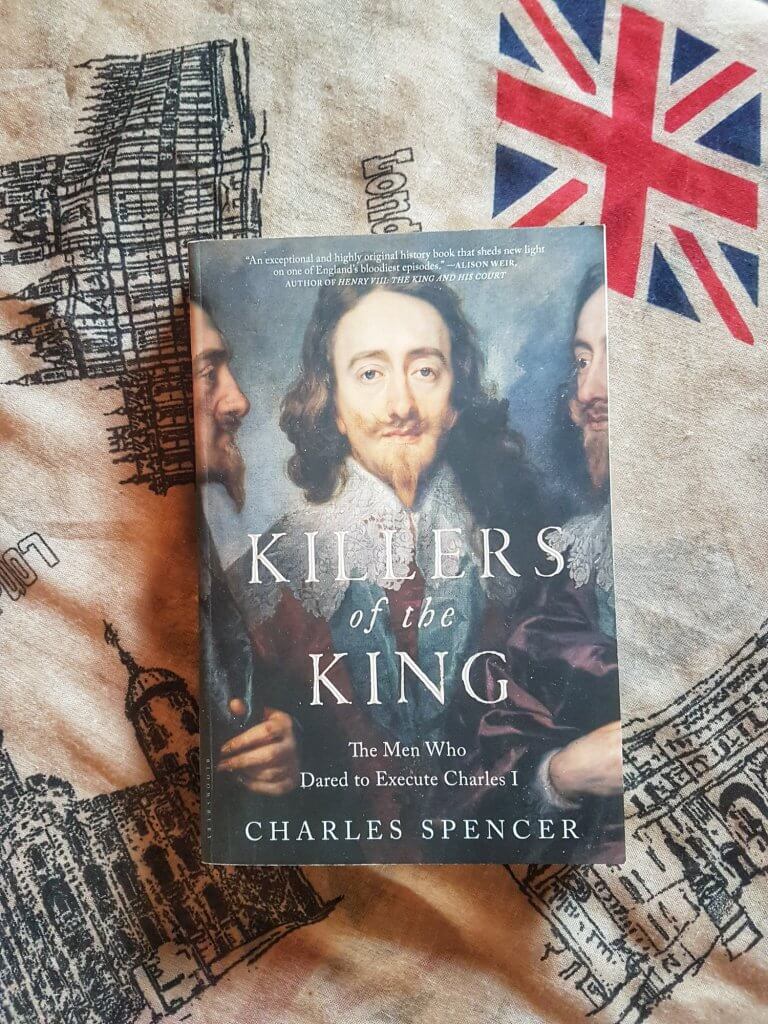
Killers of the King: The Men Who Dared to Execute Charles I, Charles Spencer
On August 18, 1648, with no relief from the siege in sight, the royalist garrison holding Colchester Castle surrendered and Oliver Cromwell’s army firmly ended the rule of Charles I of England. To send a clear message to the fallen monarch, the rebels executed four of the senior officers captured at the castle. Yet still, the king refused to accept he had lost the war. As France and other allies mobilized in support of Charles, a tribunal was hastily gathered and a death sentence was passed. On January 30, 1649, the King of England was executed. This is the account of the fifty-nine regicides, the men who signed Charles I’s death warrant. Recounting a little-known corner of British history, Charles Spencer explores what happened when the Restoration arrived. From George Downing, the chief plotter, to Richard Ingoldsby, who claimed he was forced to sign his name by his cousin Oliver Cromwell, and from those who returned to the monarchist cause and betrayed their fellow regicides to those that fled the country in an attempt to escape their punishment, Spencer examines the long-lasting, far-reaching consequences not only for those who signed the warrant, but also for those who were present at the trial and for England itself. A powerful tale of revenge from the dark heart of England’s past, and a unique contribution to seventeenth-century history, Killers of the King tells the incredible story of the men who dared to assassinate a monarch.
This is slightly more tangential, but if you are interested in Charles I’s execution at Banqueting House at all, this is the book for you. (And yes, that Charles Spencer is brother to the late Princess of Wales.) Instead of ending with the execution in Whitehall, it begins with it. Who are the men who brought it to fruition? And what came of them afterwards, given that the Commonwealth only lasted 11 years? If you have a bias to one side or the other, you may be infuriated or enthused. However, you cannot deny that they are fascinating subjects of history, and picked quite a place to make their stand.
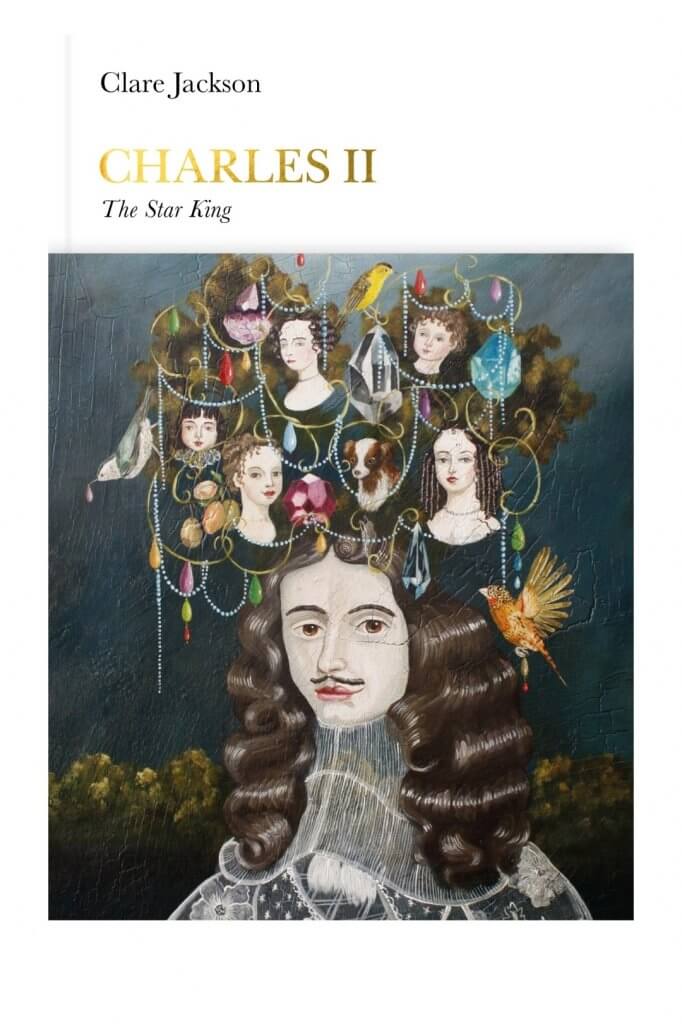
Charles II: The Star King, Clare Jackson
Charles II has always been one of the most instantly recognisable British kings – both in his physical appearance, disseminated through endless portraits, prints and pub signs, and in his complicated mix of lasciviousness, cynicism and luxury. His father’s execution and his own many years of exile made him a guarded, curious, unusually self-conscious ruler. He lived through some of the most striking events in the national history – from the Civil Wars to the Great Plague, from the Fire of London to the wars with the Dutch.
And what would Banqueting House be without Charles II? Given that it was the site of his father’s execution, Charles II knew that he would have to establish himself and the throne again at Banqueting House. I enjoy the Penguin Monarch series- they aren’t common in bookstores here in Canada but they are readily available on my Kobo. They aren’t full length biographies, but are useful introductions to monarchs and the key people, places, and events in their lives.

Fiction Books on Banqueting House
While you will find countless historical fiction books on the Tudor court, you will find significantly less on the Stuarts. Which quite frankly is a real shame, because it is just as salacious and offers more than just marital intrigues. Still, there are a few fantastic fiction books where you can find Banqueting House, and they are some of my favourites. And the author should not surprise you at all…

The King’s Witch and The Devil’s Slave, Tracy Borman
The King’s Witch
In March of 1603, as she helps to nurse the dying Queen Elizabeth of England, Frances Gorges dreams of her parents’ country estate, where she has learned to use flowers and herbs to become a much-loved healer. She is happy to stay at home when King James of Scotland succeeds to the throne. His court may be shockingly decadent, but his intolerant Puritanism sees witchcraft in many of the old customs—punishable by death.
But when her ambitious uncle forcibly brings Frances to the royal palace, she is a ready target for the twisted scheming of the Privy Seal, Lord Cecil. As a dark campaign to destroy both King and Parliament gathers pace, culminating in the Gunpowder Plot of 1605, Frances is surrounded by danger, finding happiness only with the King’s precocious young daughter, and with Tom Wintour, the one courtier she feels she can trust. But is he all that he seems?
The Devil’s Slave
Thank you to NetGalley for providing an eARC in exchange for an honest review.
Now, in The Devil’s Slave, Frances is compelled to return to the dissolute and dangerous court where she has been suspected of witchcraft.Catholics have gone underground in the new Puritan regime of King James I, and yet whispers of conspiracies continue to echo behind closed doors and down the halls of the royal palaces. Against this perilous backdrop, accompanied by her son George and her husband Sir Thomas Tyringham–whom she married conveniently to mask the true identity of her son’s father–Frances reunites with her former mistress, the Princess Elizabeth, now of marriageable age, as well as other less friendly members of the court: Prince Henry, heir to the crown who emulates his father’s brutality without scruple; Lord Cecil, eager to persecute Frances as a witch even as his own health rapidly declines; and King James himself, ever more paranoid and cruel towards alleged heretics and traitors. Yet a surprising ally emerges in the person of Sir Walter Raleigh, himself a prisoner in the Tower of London. With more lives than merely her own on the line, Frances soon finds herself caught in a spider’s web of secrets, promises, and plots.
In case you don’t know, Tracy Borman is Co-Chief Curator of Historic Royal Palaces (along with Lucy Worsley). She is a talented historian, and has turned her eye to fiction. Although that normally tends to be a difficult transition, Borman has absolutely triumphed with this trilogy. (The third instalment is due out in June 2020.) The Stuart courts are just as interesting as their Tudor brethren, and you can quickly see why in these books. Both of these books are firmly grounded in history, and you will find Frances in many different palaces, including the banqueting house in Whitehall. What I loved about both of these books is that the palaces are truly brought to life- they aren’t just museum-type places for people to walk through. People talked and flirted and fought and ate and all sorts of things in these palaces, and it can be easy to forget.
What would you include in your Banqueting House reading guide?
Cheers,
The Historian
Facebook | Twitter | Instagram | Pinterest | Bloglovin’