With it being the last Monday before Halloween (when this is being published), I knew that I had to go into some darker royal history. I have already covered King James VI of Scotland/James I of England and his passion for witch hunting this year, and in past years I’ve looked at different haunted royal residences across the world. (There is no shortage of them…) Today we are exploring four royal murders in history and what happened after their murders!

Empress Elisabeth “Sisi” of Austria- 1898
Empress Elisabeth “Sisi” of Austria had a fairly tragic life and that is before you factor in her assassination. Sisi was in Geneva with a lady-in-waiting in September 1898 when Italian anarchist Luigi Lucheni chose her as his target. Lucheni had originally planned to assassinate the pretender to the French throne, the Duke of Orleans, but Prince Philippe had already left Geneva. His goal was to assassinate a monarch, and when he discovered that Sisi was in Geneva, his new plan was set.
On 10 September 1898, she was walking to catch a steamboat with her lady-in-waiting when Lucheni ran up to her and stabbed her with a sharpened needle file. After collapsing, a coach driver helped Sisi to her feet and the women slowly walked the remaining 90 metres to the steamship. Once on board, Sisi collapsed again. Her lady-in-waiting opened her corset and noticed a reddish-brown stain, but it was too late- she would die within an hour of the attack.
Lucheni was convicted but was not able to become an anarchist martyr as he hoped, as he was convicted in a jurisdiction without the death penalty.

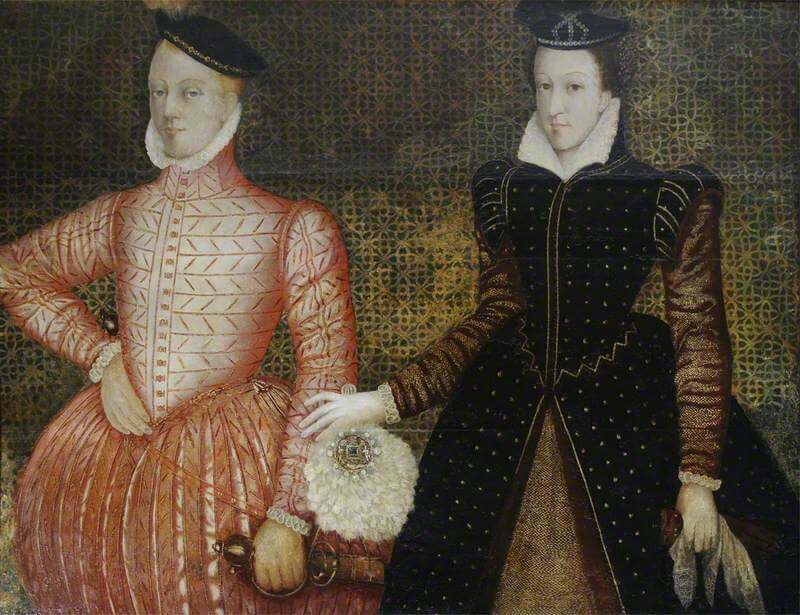
Henry Stuart, Lord Darnley- 1567
As someone who will always be fascinated with Mary Stuart, this is the one historical mystery that haunts me to this day. Mary married Henry Stuart in 1565; they were theoretically a royal power couple as both had claims to the English and Scottish thrones. However, the marriage was incredibly rocky as Darnley continually demanded the crown matrimonial from Mary and she did not grant him that. (Note: it doesn’t say “King of Scotland” above.) Many historians also believe that he took lovers (of both genders). In any case, the couple quickly grew to dislike each other.
Less than a year after their son, James, was born, Darnley was recovering in Kirk o’Field from smallpox which may have actually been syphilis. Mary had intended to visit Darnley on the evening of 9 February but actually ended up attending a wedding elsewhere.
In the early hours of the morning on 10 February, an explosion rocked the house where Darnley was staying. Darnley’s body, and his valet’s, was found in the orchard. Darnley appeared to have been smothered to death and there were no marks on his body that would indicate he was in the house when the barrels of gunpowder under his room exploded.
No culprit was ever firmly identified, and the question of whether or not Mary knew of the plans still remains to this day.
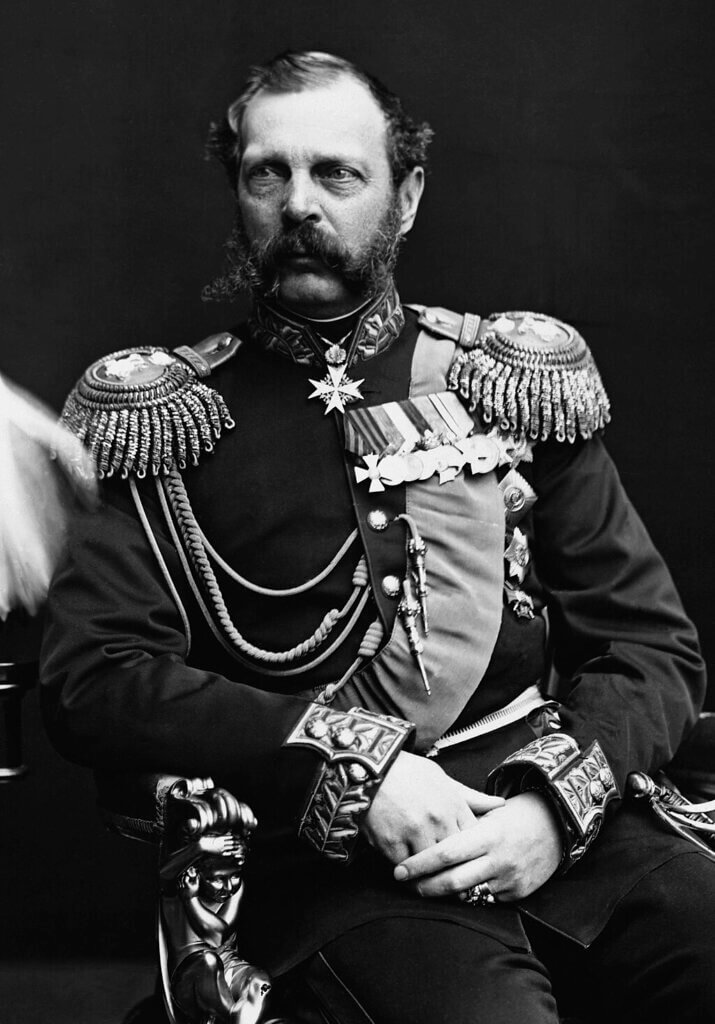
Tsar Alexander II of Russia- 1881
Known as Alexander the Liberator, Tsar Alexander II was also the target of political activists. Alexander took the Russian throne in 1855 and made massive reforms throughout Russia in the first decade of his reign. He made changes in the judicial system and government to help modernise Russia, abolished corporal punishment, and most notably emancipated the serfs in 1861. (Yes, that was Catherine’s goal in The Great.) However, an assassination attempt in 1866 led to him taking a somewhat more conservative stance in general.
Members of the socialist group Narodnaya Volya attempted to assassinate Alexander on the way to supervising a military roll call on 13 March 1881 by throwing a bomb under his carriage. The carriage had been a gift from Emperor Napoleon III of France (that would be the one married to Empress Eugenie), though, and was bulletproof and he survived. However, after he got out of the carriage, a second activist threw another bomb and this landed right at Alexander’s feet. The bottom half of his body was obliterated.
He was taken back to the Winter Palace where he died in his study surrounded by his family. His son and heir, Alexander III, witnessed his father dying- his legs had been blown off, his stomach and intestines were open and bleeding, and his face was nearly unrecognisable. He would stand against allowing any power to be ceded to the socialists, after seeing the horrifying way his father died after granting emancipation.
The man who threw the first bomb was hung for his attempted assassination, and the man who threw the second bomb died shortly after the Tsar.
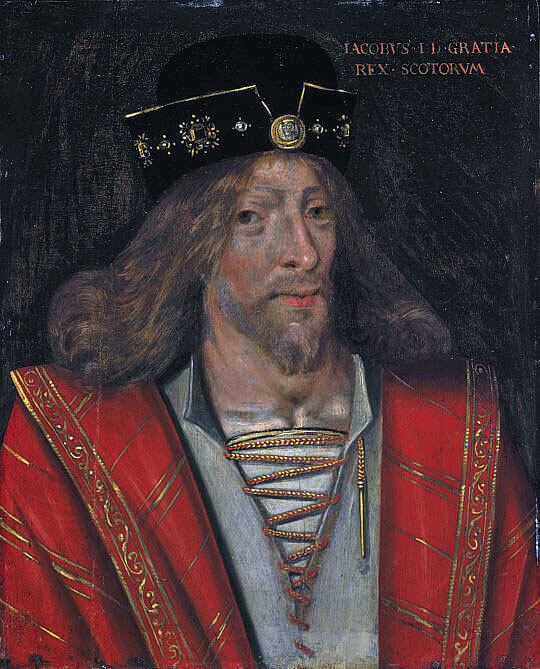
King James I of Scotland- 1437
King James I of Scotland was the son of King Robert III. Robert had attempted to send his son to France in 1406 but unfortunately the young Scottish heir was captured by the English and held prisoner for eighteen years at the English court. (A very well-kept prisoner, but a prisoner.) Robert died shortly after James was captured and his brother claimed the throne as Regent and held that role for over a decade. James married Joan Beaufort and returned to Scotland as King in 1424.
James was not the most popular of kings in Scotland. He had a group of popular and respected nobles executed to seize back power, challenged the Scottish church (Catholic at this time), and continued to limit nobles’ power while still limiting their power.
On 20 February 1437, a group of nobles stormed James’ home in Perth and attempted to find the king to kill him. James hid for several hours after having the Queen and ladies of the court attempt to stop the invaders. When he was eventually found, he was stabbed repeatedly and left for dead.
The Queen was able to escape and James’ son became James II. The murderers did not face any significant punishment for their crime, as James I remained largely unpopular.
When you hear “royal murders in history”, what do you think of?
Cheers,
The Historian
Facebook | Twitter | Instagram | Pinterest


.jpg)
