With the passing of Queen Elizabeth II last year, we’ve seen formal modern mourning that we don’t normally come across. For the British Royal Family, many of their mourning traditions are rooted in the Victorian period.
Although I’ve caught many different fashion exhibitions, I’ve not seen anything terribly creepy. No hats made of human hair or brooches made from teeth. (Thankfully…) So, I’ve decided to explore another area of fashion history in honour of Halloween and all things macabre- mourning dress. (Not to be confused with morning dress.) Until quite recently, people observed set periods of mourning when a loved one died, and your wardrobe was a large part of it. Death affects fashion as much as anything else, and mourning dress offers the perfect insight into that relationship. Today we are going to look specifically at Victorian mourning dress and all that that entails!

Death ironically plays a substantial role in our lives. We have life insurance and wills to take care of our loved ones financially and divide up anything that we leave behind. Many people will check the obituaries to see if anyone they know has passed. Funerals tend to be one of the moments in life when we are brought together as families. (At least, pre-Covid.) It is hard to escape death, and it unfortunately crops up in many different places. And one visual way it does is mourning clothing.

What is Mourning Dress?
Mourning dress is what we wear after a death occurs. People often wear specific colours to mark the death of a loved one, with black being predominant in western society. (Medieval queens would often mourn in white, but that was not widespread.) In the twenty-first century, most of us only wear mourning clothing when we are attending a funeral or a wake, and it doesn’t take a specific form- it is just darker clothing. You will typically see black, navy, or darker grey. In eastern society, white can also be worn for mourning- this is common in China, and sometimes worn in the Philippines. However, in Japan there is a set of mostly black clothing worn for mourning, that can be traditional Japanese garments or formal Western garments. In nearly all cultures, colours- particularly red- are not worn for mourning.

Victorian Mourning Dress
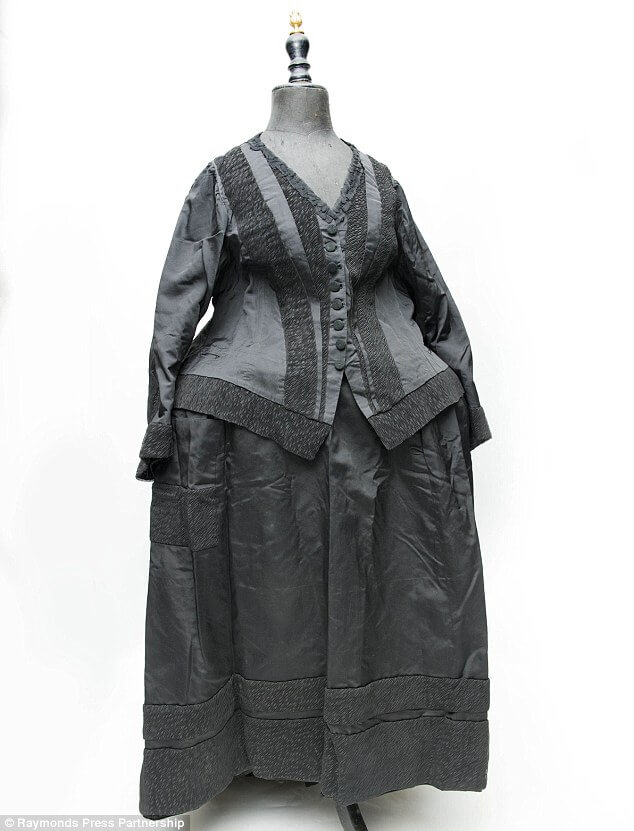
Victorian mourning dress is a whole other kettle of fish. In the second half of the nineteenth century and the early part of the twentieth, mourning was a highly ritualised and prescribed practice. And your clothing was integral to that. Queen Victoria mourned her husband, Prince Albert, from his death in 1867 until her own death in 1901. The prevailing image of Victoria is an older woman in widow’s weeds, to this day. The Met Museum explains it well:
it was considered a social requisite to don black from anywhere between three months to two and a half years while grieving for a loved one or monarch. The stringent social custom existed for all classes and was available at all price points. Those who could not afford the change of dress often altered and dyed their regular garments black. The amount of black to be worn was dictated by several different phases of mourning; full mourning ensembles were solid black while half mourning allowed the wearer to add a small amount of white or purple.
Obviously Victoria took it much further, as she certainly lived more than 2 ½ years longer than Albert. However, these dressing practices spread across society, and could also be found in various parts of the British empire. They were also adopted in the United States. The public presentation of mourning was considered crucial, and your image was the first step.
Royal Mourning
Victoria was not the only royal to extend the mourning period. Yes, she kept the court in mourning for quite some time after Albert’s death (which isn’t shocking). But other royals also observed extended periods of mourning. After Prince Albert Victor (Duke of Clarence and Avondale) died of the flu in 1892, his mother stayed in a state of half mourning for the rest of her life. The Princess of Wales, later Queen Alexandra, kept his room and belongings exactly where they were when he had died. And while she did move out of black clothing, she would only wear muted purples, whites, and greys for the rest of her life. You can see the purple evening gown, at the Royal Women exhibition in Bath, dating to 1910, nearly 20 years after his death. She actually never got the chance to wear it, as she went back into mourning in 1911 with her husband’s death. Given that royals didn’t need to work to support themselves or their families, they were able to observe decades of mourning and adjust their wardrobes permanently.

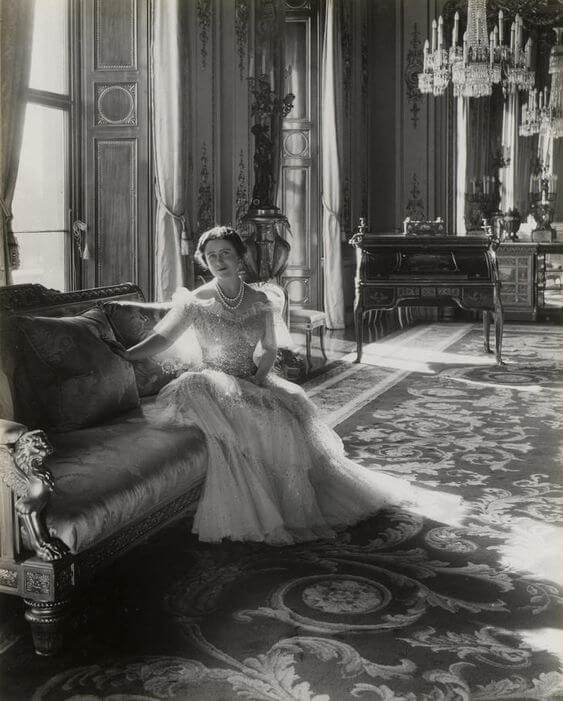
Interestingly, King George VI’s consort, Queen Elizabeth, wore white for mourning. Her mother passed away shortly before a state visit to France, and her planned wardrobe was now inappropriate. Famously known as the White Wardrobe, Cecil Beaton took some of the most well-known photos of her in it! (You can read more about it in my Norman Hartnell style history post!)
Victorian mourning dress, one of the most macabre and preformative areas of fashion…
Cheers,
The Historian
Facebook | Twitter | Instagram | Pinterest | Bloglovin’

Hi there,I enjoyed your article.I have quite a few mourning dresses in my collection but my favourite by far is c 1916.It is charming in its simplicity.As much as I love the Victorian clothing my real love is the Great War.Unfortunately I don’t get to see so much of it .