Today we have yet another Unique Christmas tradition to explore! One of my favourite aspects of the holiday season is that celebrations and traditions vary wildly between the centuries and across the globe. As I shared last week, no holiday tradition is “weird” or stupid- simply different! For this week’s unique tradition, we are going to be heading back several centuries. Although many things have changed since the fourteenth and fifteenth century, holiday traditions centred around children have remained a festive staple. For our second Unique Christmas: the Boy Bishop!

What is the Boy Bishop?
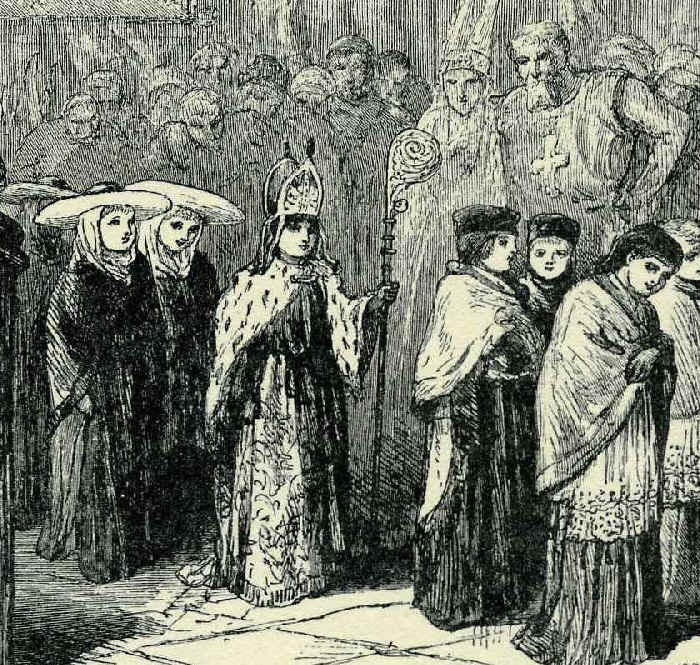
The boy bishop is a medieval tradition that was popular in many areas of Western Europe. Typically, a choirboy would be chosen on St. Nicholas’ Day (6 December) by his peers to be the Boy Bishop.
During his tenure (which lasted until Holy Innocents’ Day, December 28), he would wear a bishop’s robes, go about in procession, take offerings, preach, and give his blessing. (The World Encyclopedia of Christmas, 28)
While the “new” bishop would fulfill all of these different ecclesiastical duties during this time, they were not allowed to preside over Mass. (The church put up with a lot with this tradition- the Catholic Church was not a huge fan- but an actual priest does need to give Mass.)
After Holy Innocents’ Day, the boy bishop would hang up his robes and return back to the choir.
What happened to the boy bishop?
While some revivals of this tradition have popped up in the last half century, it is not widespread. It disappeared pretty quickly, and we have one jerk to thank for that- King Henry VIII. The man who went through wives at an insane pace was also the one who ended this tradition in 1542. While Queen Mary I revived the tradition during her reign, Queen Elizabeth I then finally ended it. (Party poopers if you ask me…)
I hope you enjoyed Unique Christmas: the Boy Bishop! Do you know of any other “topsy-turvy” Christmas traditions?
Cheers,
The Historian
Facebook | Twitter | Instagram | Pinterest | Threads