In the last 300 years, hospitals have become crucial places in society. While they are more than playing their part in this 2020 pandemic, they did not always play this same role in society. Ideally, if you were sick or injured, your doctor would come and treat you at home so that you didn’t have to go to a hospital. But for those that couldn’t afford it, to the hospital you go! The Royal Mineral Water Hospital in Bath played a particularly important role in the early modern and modern history of Bath. To the hospital…

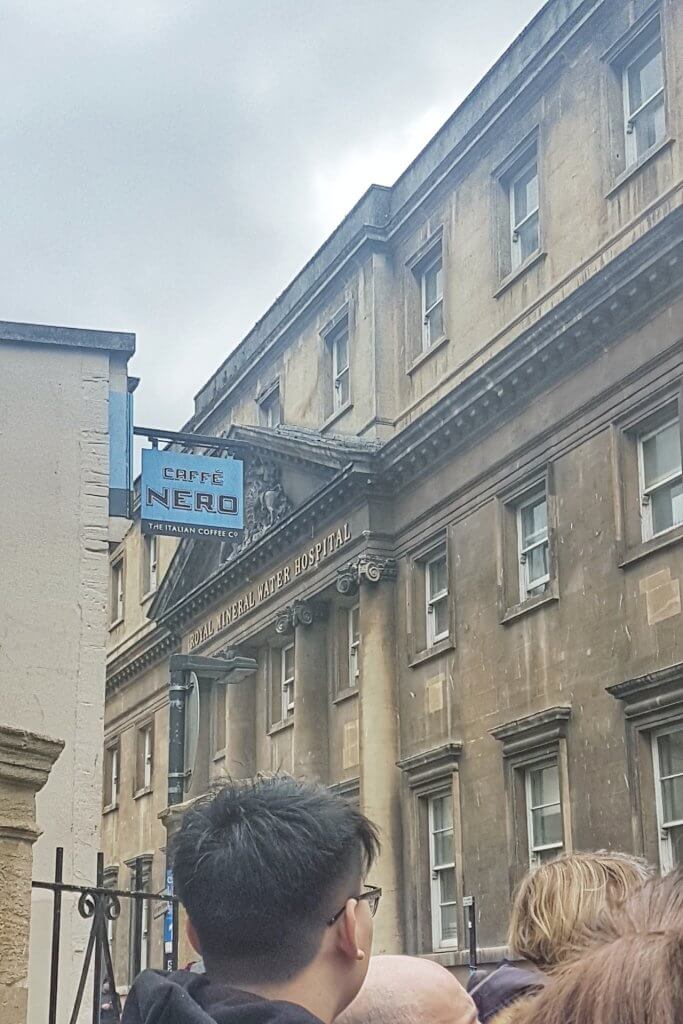
The Royal Mineral Water Hospital is a fairly impressive building. It looks much the same as the rest of eighteenth century Bath, and for good reason. It was designed by John Wood the Elder, the same architect who designed the Circus. (Though, it was finished by his son, John Wood the Younger…) It is built in the Neoclassical style that dominates the city.
Why was a Hospital Needed?
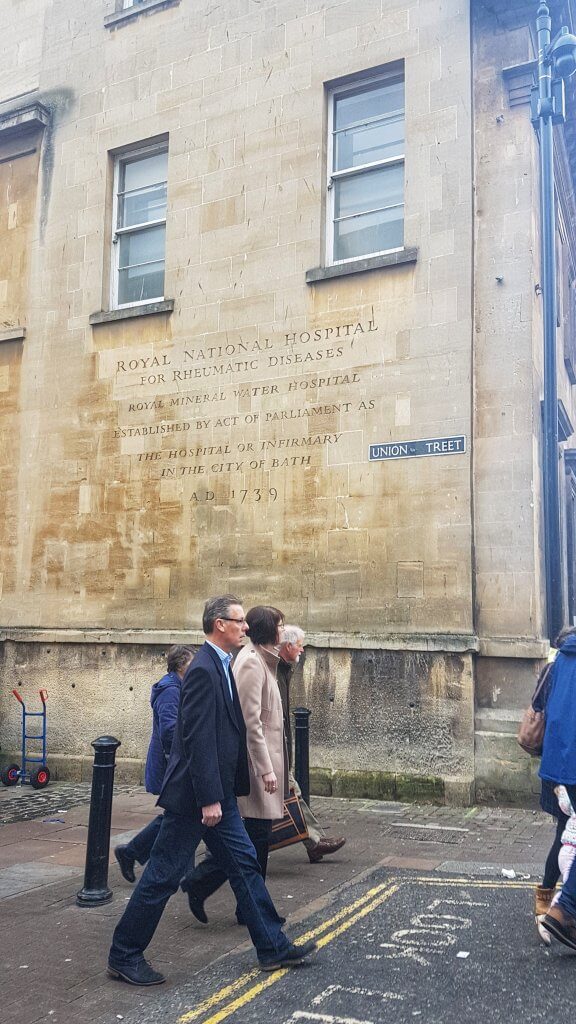
There was a local hospital, but only local residents could visit. However, Bath was the place to go if you were ill. The Bath waters could supposedly cure any number of ailments, including arthritis, gout, and digestion issues. And it wasn’t just the wealthy who went to Bath, the poor went too. Thus, the Royal Mineral Water Hospital was established in 1738 to provide a hospital for Bath’s impoverished visitors.
Is It Still a Hospital?
There is still a hospital in Bath, but the Royal National Hospital for Rheumatic Diseases is now in a new and modern facility (as of 2019). Sections of “The Min” (the original hospital) still exist, as you can see, though not as a hospital. It was purchased in 2018 by a Singapore-based group who aim to convert it into a luxury hotel. So, yes, you could once again stay in The Min yourself!
Have you seen the Royal Mineral Water Hospital in Bath? And I hope you are all keeping healthy and well!
Cheers,
The Historian
Facebook | Twitter | Instagram | Pinterest | Bloglovin’