Period dramas- the gorgeous costumes, sweeping landscapes, beautiful scores, everyone loves them! Or… do they? Whenever a period drama premiers, be it on film or television, historians everywhere shuffle out of their history caves with cries of “BUT IT’S NOT ACCURATE!!!!”. No matter what the period drama is, no matter what it is about, this is inevitable. So today, I’m asking the next question- does it matter if period dramas are accurate? And does the battle cry of “It’s not accurate” do anything? Read on to hear my thoughts on inaccurate period dramas…

The Spanish Princess, Part II
This past week, the trailer for the second season of The Spanish Princess dropped. As someone who is #TeamAragon (if I had to pick one), I really enjoyed the first season. We finally got to see a younger Catherine, not a bitter, old, pious Catherine who won’t give way to the exciting! and younger! Anne Boleyn. And now we will get to see her when first Queen of England. However, as soon as the trailer released, my social media feeds were immediately filled with historians shouting, “BUT SHE NEVER WENT ONTO THE BATTLEFIELD!!!!” and “SHE NEVER WORE ARMOUR, WHAT IS THIS INSANITY?!”.
I fully admit, my feed is majority historians, who would care more about this than most people. It is biased to begin with. However, it kind of ruined all of my excitement immediately. Within an hour, I had to mute the #SpanishPrincess hashtag to not see rampant complaining and whining. I was hoping to chat with people while it aired using the hashtag but unfortunately, probably not. And after ruminating on it, I’ve got to ask: why? What is the point?
Note: There is a difference between “Hey, here’s the history behind TV SHOW and what really happened” and “THIS SHOW IS WROOOOOOOOOONG.” I’m talking about the latter.

What Results from Inaccurate Period Dramas?
I’m going to say upfront: if a period drama is perpetuating racism or any kind of “isms” (don’t do it producers), that is an issue. A period drama can address period specific issues within context without perpetuating them, and that should NEVER be acceptable.
However, other than that: what happens when a period drama is inaccurate? Largely the complaint seems to be that people take them at face value and believe them. Which leads to my next question: what happens if they believe the inaccurate story presented? In this case, what exactly will happen if someone believes that Catherine of Aragon led the English army on the battlefield in armour while pregnant? Does the world stop spinning? Does something implode somewhere? Do all history books suddenly go blank?
Nope, none of that happens. The world keeps spinning as normal, historians keep historying, people keep watching period dramas, and so on and so forth. Yes, the historians in question may rage quietly inside (or not so quietly externally), but life does go on. I understand, if you have spent years of your life researching and being involved with something, it is tough. But in the grand scheme of life, it shouldn’t be weighing you down.

Do I Like Period Dramas as An Historian?
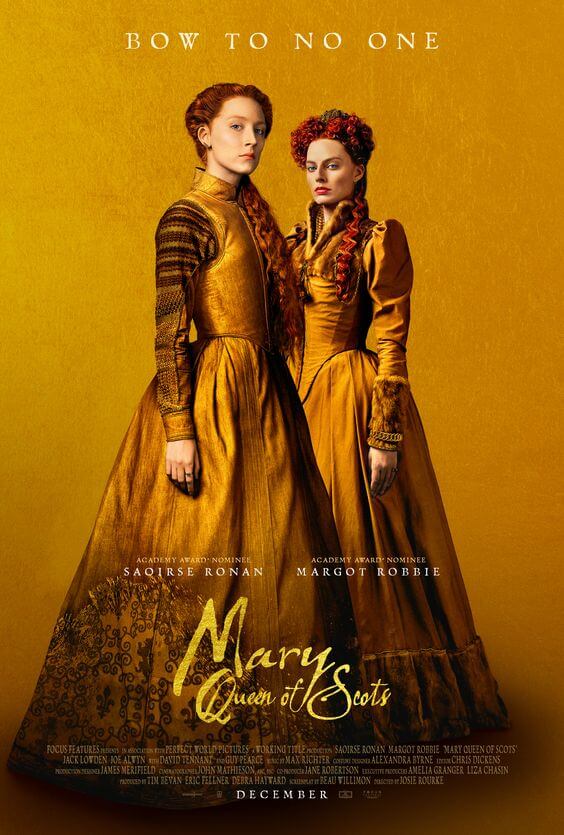
If my position isn’t clear, yes, I enjoy most period dramas- accurate or inaccurate! I love Mary, Queen of Scots and find her fascinating, and I love watching Reign’s loosely Mary-inspired romp in the past. I also enjoyed the 2018 Mary, Queen of Scots even though it was wildly inaccurate, because it still gave me a lot to think about.
I know that Philippa Gregory’s books and resulting tv shows (The White Queen, The White Princess, The Spanish Princess) are often the target of historians’ gripes. I look at them as entertainment that is inspired by history. While some are more enjoyable than others for me, but that is true of anything on television. If you have inspired me to read more and find more information on something or someone, or just let me escape for an hour, I’m a fan.

Why Am I Okay With Inaccurate Period Dramas?
When I was chatting about this on Twitter this week, several people told me that Gregory includes notes about how her books are accurate, but lots of people can declare anything. I’m going to emphasise this- I firmly believe that if someone is going to take The Other Boleyn Girl or The Tudors at face value, they probably weren’t going to be picking up a history book to do research themselves. And that’s okay. Not everyone is an historian or wants to know the full history behind something, and that is how it goes. I don’t want to know the math behind my car or the chemistry behind my nail polish, and that’s okay, too. Historians and history lovers will still keep reading and researching and hunting in the past, and an inaccurate show won’t change that.
“If You Don’t Like It, You Don’t Have to Like/Follow/Watch”
This applies to all sides of this situation. If you are the type of person who gets upset by inaccurate period dramas, don’t even bother watching the trailer, let alone the show. Or if you need to hate-watch it, keep your incessant criticisms to yourself. Many people watching it aren’t taking it that seriously.
And I fully admit, I muted #SpanishPrincess on Twitter so that I don’t see it, and I unfollowed several people. (This wasn’t the only reason I unfollowed, more like the straw…) If I don’t want to hear you ragging on things I enjoy, it is on me to unfollow and step out of that conversation. And I am completely fine if you want to unfollow me for the same reason!
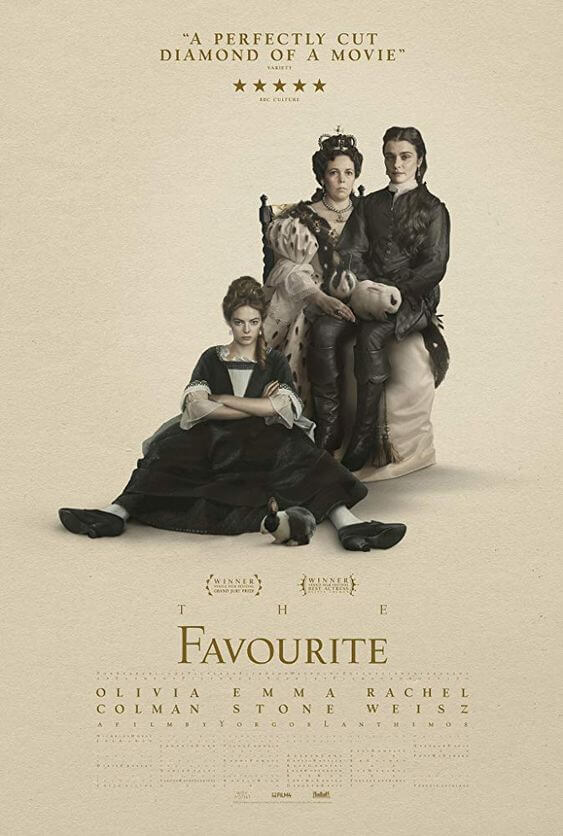
What Are YOUR Favourite Period Dramas?
In a way to balance out all of the negativity, please let me know what your favourite period dramas are! No matter how inaccurate or ridiculous they are, please let me know in the comments which shows and films you love to watch. Bonus points if it was what brought you into history. There is no wrong answer!
What do you think of inaccurate period dramas?
Cheers,
The Historian
Facebook | Twitter | Instagram | Pinterest | Bloglovin’

Thanks for your article!
People feel ownership of the past, and it’s a part of everyone’s identity (maybe moreso for historians?). It makes sense why people get upset over someone telling their story in a way that they feel is misrepresentative. Of course, the past is a lot of people’s history, so nobody has an exclusive claim, but maybe there’s a sense that if we all at least aim for accuracy, we can avoid cultural battles in this media?
There’s also some issues of erasure and mythologizing when everything is too glitzy – John Oliver had a cute epithet about people who fast-forward through the servant scenes of Downton Abbey. Sort of like how Bridgerton occurs during the height of the Napoleonic wars, but it seems like nobody is involved in the war, there are no amputees (I’ve only seen the first season, so apologies if this changes), there are no war widows. Bridgerton didn’t need to be specifically England, specifically during the later reign of George III. If the show isn’t grounded in history, it’s better to give it a vague setting – e.g. “Pirates of the Caribbean” rather than “Edward Teach, Gentleman Pirate.”
And that does suggest one of your points earlier about what people who are interested in history want to see. The stories the studios are making don’t feel as complete or interesting, because what’s happening contemporaneously is a huge part of setting. Shows like Derry Girls do it right in my opinion. It’s essentially a girl coming-of-age story, but the Troubles are never absent from the background. A richer setting makes those characters more interactive, more nuanced, more relatable (case in point, the depiction of how Ireland came to accept homosexuality more publicly felt so awkward – and relatable, because I was a teenager once too). So it’s not just a question of historical accuracy per se, but gorgeous costumes, swooning romances, and anachronistic details suggest that the show I was excited about might be a huge let down. (If I had a Twitter, I’d be hating on “Medici” right now).
But I think the thing I dislike the most about the debate is that it feels like discussions about realism is seen as a coded way to wage cultural battles .
I have said this elsewhere, but one of my main issues with historians and history fans picking on accuracy/details in period dramas is that they tend to be incredibly choosy, and they only care about the niche details they have decided that are important. They dig into period inaccurate hair styles or garment colours or guns or army uniforms but ignore the fact (as you say) that there should be a lot more waste and refuse pretty much everywhere, many people would have some missing or rotting teeth, and you would have a lot more widows and widowers than we see- those things are ignored in critiques because the individual wants to prove that they know more than whomever made it.
With the case of Bridgerton, it is specifically based on dated books and the period’s fashion is fairly recognisable with silhouettes that we don’t see strongly echoed elsewhere. I think that if they were leaning more into a fantasy show you could make it work but existing books with actual dates would mean further changes.
I also think that it comes down to directors, producers, and actors being allowed to create something, well, creative! As a ballet dancer, I don’t tend to watch shows about ballet as the inaccuracies do make it less than enjoyable. That just means that it’s not for me, not that they didn’t need to make Black Swan, Flesh and Bone, or Tiny Pretty Things! These productions are being made for the general public, and that is okay.
I think where I find the rub is that it perpetuates a misconception that current culture values have always been every cultures values. In the US we talk about acceptance and respect for cultural diversity, yet we are raised from a young age to remove another cultures values and replace it with our own, because our own values are the “right ones.” It seems extremely self-righteous to take historical figures that we know quite a bit about and represent them in a way clearly uncharacteristic to who they were, what they valued and the trials they faced to make it more fashionable. It’s a re-writing of history, that influences younger generations perhaps more than history classes, because of the repeated message. Though I don’t like/follow/watch them to encourage a more true to life depiction of history, it’s kind of like me avoiding Walmart. As long as most people support it/ don’t care, Walmart is going to win, and drive all the other outlets out. Cause it’s convenient, and creating something more true to life is immensely harder than just pretending like those differences didn’t exist. It cheapens the experience in my mind, and we increasingly lose the ability to appreciate values other than our own.
I have less issues with interpretations of the past being shown in shades of the present, because that has happened for centuries. During the Renaissance we saw the idea of a “Dark Age” (not dark at all haha), during the Victorian period we saw a Romanticising and sexual cleansing/demonising of much of the past (Anne Boleyn comes largely to mind), etc. And I don’t think that can be avoided, unfortunately. I think you have it right on the head- the biggest/loudest voice wins, but I don’t think that the people who believe inaccurate period dramas were going to study history or do the research themselves anyways!
I honestly roll my eyes a little when I see people blowing up over the fact that a period drama isn’t entirely accurate. (Note: Like you, I’m talking about the people that scream about how wrong it is, not those who simply point out ‘hey, this was actually more like this’) These movies and tv shows are a work of fiction. They aren’t meant to be taken as a historical documentary outlining the exact events as they happened.
Honestly, it’s no different than any other topic. As someone who went through military training, I can tell you that many of the military dramas out there are far from realistic. In the same way, I’m sure that doctors laugh at the ‘medical practices’ in shows like Greys Anatomy and first responders can point out several inconsistencies with shows like Chicago Fire/PD/Med. That’s the nature of Hollywood. It doesn’t make them any less entertaining.
Wow…sorry. I would have broken that up into several separate comments if I had known it would strip out all my paragraphs and make that into one monster paragraph.
Also, no worries! It doesn’t on my end 🙂
I know when I watch a historical fiction movie that it’s essentially that…a fiction. I don’t care too much if they get costume details wrong, or edit out or change certain facts to streamline things (so long as they aren’t key or essential facts that lead to a gross misunderstanding of history). And I figure with the things that are unknown or could have happened but there’s no way to know, they should have free reign. I’m with you in thinking there’s little harm in this sort of thing.
But there are some things that bother me when they change it….that I think do matter.
I’m really disappointed when they change or remove something historical without reason, something that would have made the story BETTER (I was a literature lover and English major before I fell in love with history, and I think it’s my “Literature Nerd” side that has a problem with that more than my “history nerd” side).
I’m also mad when a movie that presents itself as serious history (not “time travel” flicks or tongue and cheek history), and then totally miscaracterizes things. Like, as much as I loved the Braveheart movie, when I learned how crazily off it was in every way, it was just disappointing. But”History Buff’s” criticism of “Patriot” (another Mel Gibson movie…sorry Mel to be picking on you), hit me on a whole nother level. This movie is shown in school, A LOT (my kids teacher showed it, and I showed it to kids as a substitute teacher). But when he shared how they actually reversed some of the things the British and Americans did regarding slavery, making America out much better than it was, and Britain out much worse, and his criticisms of the “house with people burned alive” scene, I thought were very valid. I don’t think we need another whitewashed history movie that makes out the Brits to be cartoonishly evil and Americans out to be cartoonishly saintly.
There’s another thing that bothers me a LOT in historical movies, probably because I’m a Christian (and the way Christians are portrayed in a lot of movies bothers me…cause they all seem to be written by people with little understanding of faith). I hate when shows from times and places where history showed religion really dominated society, and then make everyone out to be essentially atheists, agnostics…except often for the villains who are the only truly devout characters. It’s not that I don’t ever want to see a religious villain…I actually think that can make for an interesting character, though I’d prefer it juxtaposed against people who are religious and not evil. (Otherwise it can feel like an attack, at least when the story takes place in a society where you would expect MOST people to be religious). And I don’t mind an atheist or agnostic hero…so long as it’s well explained how they came to that belief within a religious society.
I think that the difficult part for writers and producers is that the general public doesn’t always consider the same things interesting or exciting that historians and lit fans do (from my discussions with them). I would rather an inaccurate period drama than none at all if that is what comes down to it!
And that is baffling to me- it is probably down to the individual school and teacher, but we were never shown period dramas in school. I don’t think that they should be used as a teaching method in most cases, and if they are, I hope that they are used as part of a critical thinking exercise.
I do wonder on the religious front if it because it tends to be a more foreign concept for people today. In regards to Christianity, very few of us would recognise a day governed by religion as it would have been in the medieval period (for example). I also wonder if it has to do with the US approach to things of separating church and state- it seems to strip all religion from mainstream media as well?