London has several cathedrals to take your breath away. Westminster Cathedral has been home to royal coronations for over 1,000. St. Paul’s Cathedral has played host to Jubilee thanksgiving services for Queen Victoria, King George V, and Queen Elizabeth II. And Southwark Cathedral is known for its literary connections. However, some of the “smaller” churches have their own fascinating histories. I can guarantee that you have seen St. Martin-in-the-Fields if you have visited London, or even looked at pictures of it. But do you know what famous royal mistress is buried there? Let’s dive into the history of St. Martin-in-the-Fields.

The First St. Martin-in-the-Fields
While the oldest burials on the site date back to the fifth century AD, the first reference to the church was in 1222. It was under the control of the Abbot of Westminster but was quite literally in a field at the time. (Yes, odd to think of now when you see it off of Trafalgar Square…) Henry VIII had the church rebuilt in the early 1540s so that people infected with the plague would not need to walk through Whitehall…
Under the Stuarts, the church grew. James I granted more land to the church to support its ever-growing population.

A Royal-Ish Burial
St. Martin-in-the-Fields is home to a royal-adjacent resting place. Nell Gwynne, one of Charles II’s favourite mistresses was buried in the parish church upon her death in 1687. She was born in the parish and rose to fame as an actress before catching the Merry Monarch’s eye.

An 18th Century Rebuilding
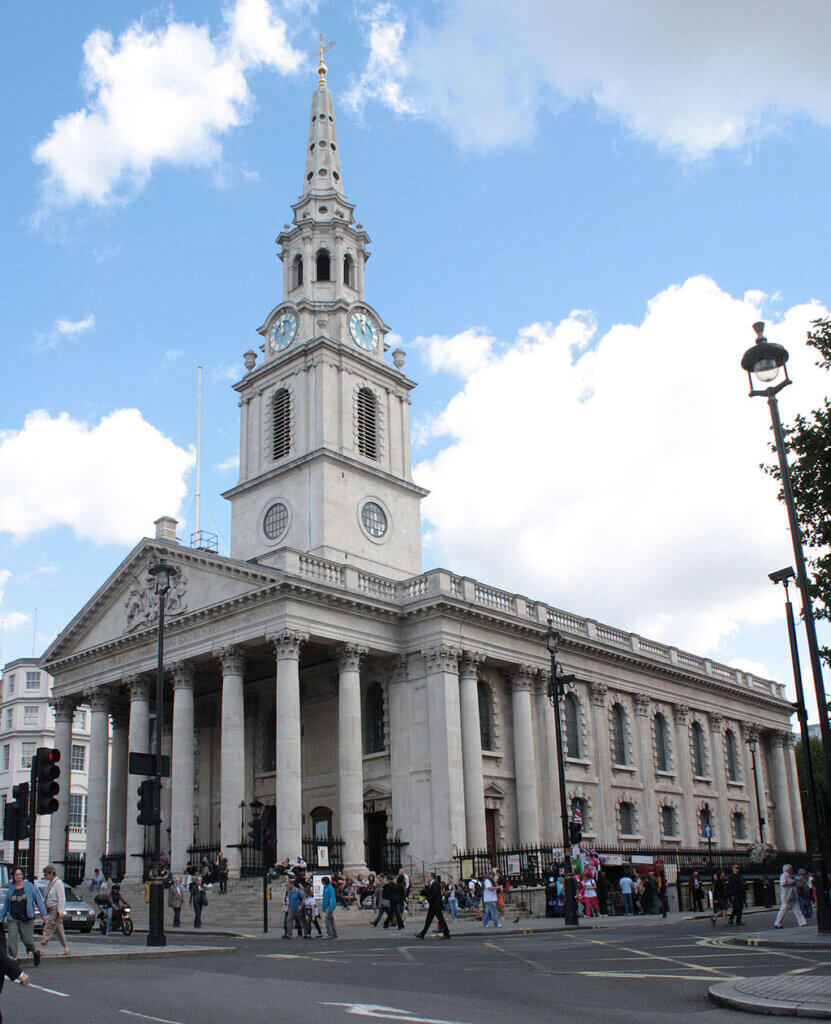
By the early eighteenth century, the parish church was falling apart. James Gibbs was chosen to create a new design for the church, and he drew on Sir Christopher Wren’s works. Building started in 1722 and the new church was finally completed in 1724.
Were you familiar with the history of St. Martin-in-the-Fields?
Cheers,
The Historian
Facebook | Twitter | Instagram | Pinterest

.jpg)
