At the Platinum Jubilee Concert, a certain bear stole the show from everyone (including the royals). Paddington Bear met Her Majesty for a cuppa for Jubilee, adorable as you would expect. He has been one of the most beloved characters for decades. And luckily for us, he happens to have a solid presence in London. Today we are going to look at the history of London Padding Station, the station that bears his name!

What is London Paddington Station?
Officially called “London Paddington”, you will most often hear this referred to simply as Paddington Station. It is both a train station and Underground station. The station serves the Great Western Railway terminus in London, so depending on where you are going, you will probably come into or leave via Paddington. There are actually two Underground stations, though. Paddington (Praed Street) connects you to the Bakerloo, Circle, and District lines, and Paddington (Bishop’s Road) to the Circle and Hammersmith and City lines.

When Was Paddington Station Built?
A temporary station opened in 1838; however, the main permanent station- designed by Isambard Kingdom Brunel- did not open until 1854, and for passengers in 1855. It features recognisable arches in the roof of the train shed (shown above). It was largely used for milk transport, and even had milk docks at one point. There were continual upgrades to the station in the 1870s, 1910s, and 1960s, and Underground service first started in 1863.
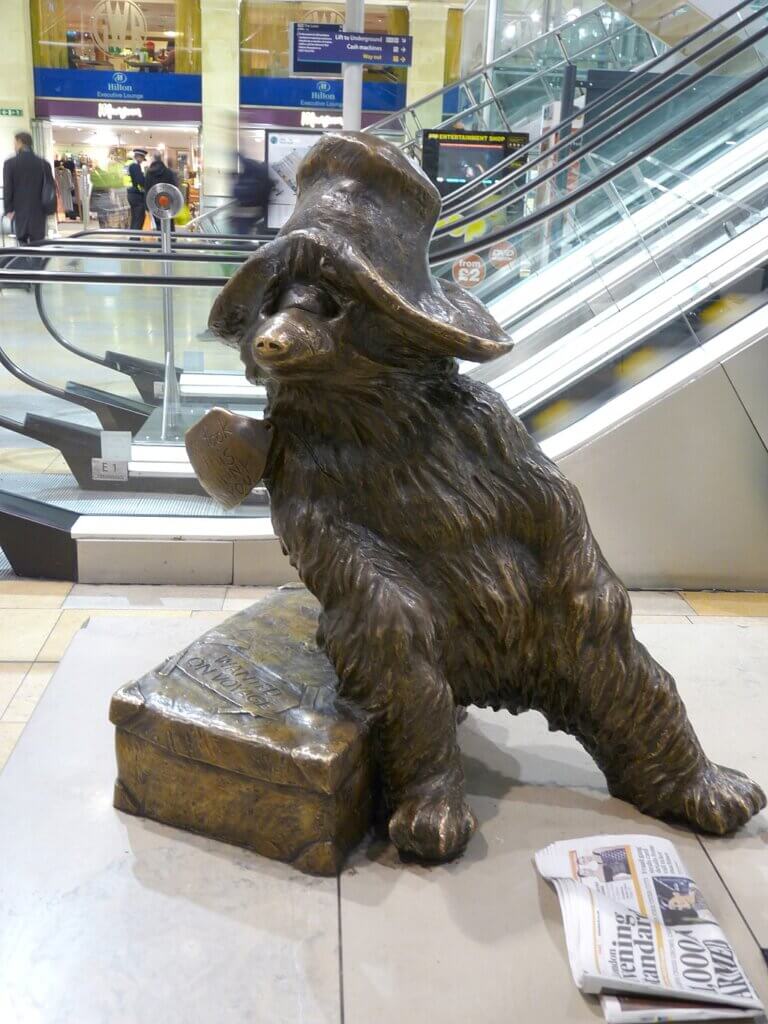
A Certain Paddington Bear
In case it isn’t clear, Paddington Bear was named after the station. The Brown family found a curious and brave little bear at Paddington Station, and wisely decided to call him Paddington Bear. Along with Winnie the Pooh, Paddington remains a firm favourite with children and families everywhere. And apparently Her Majesty, as well!
Were you familiar with the history of London Paddington Station?
Cheers,
The Historian
Facebook | Twitter | Instagram | Pinterest

.jpg)
