Today we are wrapping up our History From Afar series! Many of the inquiries and general questions that I receive are related to how people can find more resources for studying history, specifically accessible and affordable resources. (Most of the time, it’s typically a budget of “free” for many of us.) And while books, talks, classes, etc can be very helpful if you are looking to learn more, there is another invaluable resource: networking. Nope, this isn’t specific to history but it can make a massive difference. In History From Afar today, we are going to talk about online history networking and how you can make the most of it!
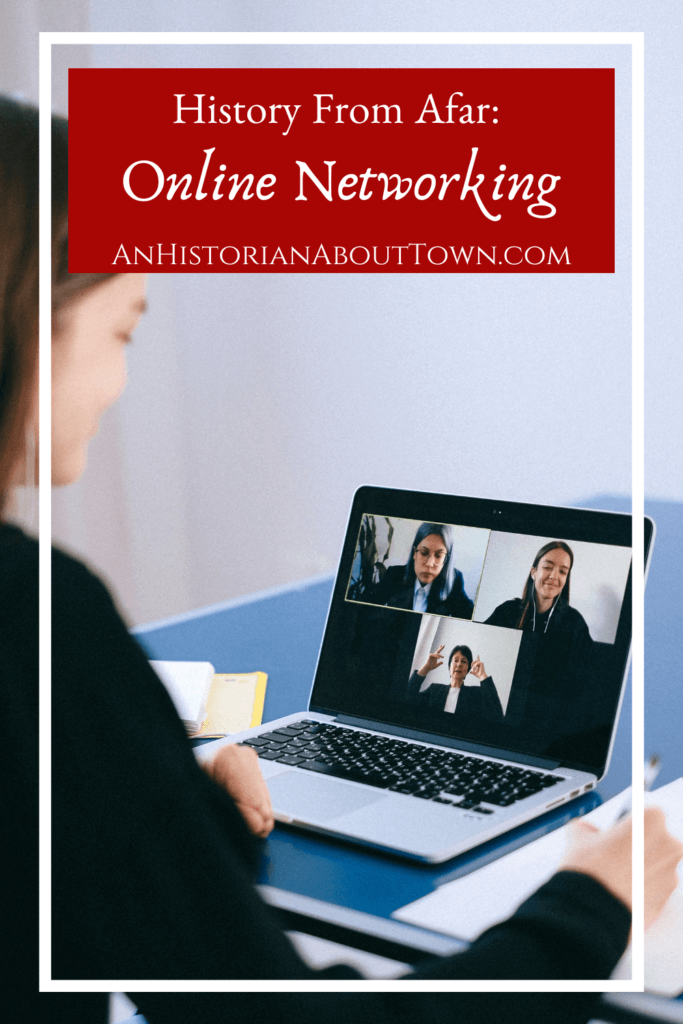
Why Is Networking Important for Historians?
When many people picture historians, they picture someone alone in the archives pouring over a million documents. While this might be the reality for a (small) portion of an historian’s workload, we often need to turn to our peers for a number of reasons. Firstly, we might need their expertise in another topic. Oftentimes you need to understand things on the periphery of your research and it is helpful to be able to turn to an expert. Secondly, we also might need some to help with drafting, editing, or any number of other tasks where you need fresh eyes. Thirdly, history isn’t studied in a vacuum. We share our research and interact with others’ research.
Networking can be nerve-wracking in any situation, though. It is scary to put yourself out there, especially if you admire someone’s work. It is a normal part of researching history and everyone has to tackle it at some point! And if nothing else, remember: if they are an academic, having people reach out to them is very normal.

Online History Networking
I will take a stab and say that for the large majority of us, our networking will mainly take place online. Unless you happen to live close to the people that you are hoping to connect with and have the time and funding to attend the same events that they are, online is the normal venue. There are a few ways to facilitate this; some are easier than others.

Cold Calling/Emailing
Let’s start with the most difficult option first and get it out of the way. It is probably what most people think of when they think of networking: the cold call or cold email. You can certainly reach out to whichever historian you would like by sending them an email or a DM without any introduction. There is no guarantee they will respond, but you can absolutely try.
-When sending an email to someone you don’t know, try to formulate 2-3 specific questions for them. Ideally, they should be able to respond to your email within 15-20 minutes! (No one wants extra work dumped on them.) Try not to start with huge asks in your introductory email.
-Only send an email or a DM if the person has made that form of info publicly available. If their email address is fairly hidden or they state that they don’t accept DMs, do not send it to them.
-Be okay with the fact that you might not get a response- it happens!
“Attending” Online Conferences Together
Again, this will be largely dependent on your time and funding, but attending online conferences can be a fantastic way to network. I’ve made several meaningful and lasting connections through online conferences. Presumably, you will probably be attending conferences on the same-ish subject, and you will start “running into” the same people.
-If you have breakout sessions or are able to chat with people in the same sessions as you, go for it! You essentially have the introductory work done for you, as you already have at least one thing in common.
-If you are interested in someone’s presentation or questions/ comments, do not forget to write their name down to find them later on.
-Save any programs or documents that you receive, as they also tend to have participants’ names included.

Take Part in Podcasts/Panels
I recognise, this is very specific and is not always the easiest to find opportunities for. However, some of the best and most lasting connections I’ve made have been through guesting on podcasts. You are typically recording for at least 30 minutes, sometimes upwards of two hours, and you are generally discussing a subject that you are passionate about. It took me about a year and a half of looking to find my first guest spot, but it has helped immensely to get my foot in the door.
– Do not be afraid to contact a podcast to see if they welcome guests. Some will state upfront on their website/info on whether or not they have guests on their show. You can get a feeling for it, too- if a show has 50+ episodes and no guests, it might be that they aren’t interested. Do not take it personally if they don’t!
-If you are planning on guesting on podcasts, it might be worthwhile to buy a microphone. I bought a $50 CAD microphone on Amazon, and it has worked wonderfully thus far. (You can spend more if you want to, but I don’t think it is necessary.)
-Finally, if you have a guest spot lined up, ask ahead of time if there are any specific questions/discussion topics, and if you need any particular software.

The History From Afar Series
If you missed the previous posts in my History From Afar series:
Intro: History From Afar – The full details on the series!
History From Afar: Books– How and where to find free and affordable history books!
History From Afar: Online History Talks– How and where to find free and paid online history talks!

History From Afar: Online Exhibitions– How and where to find free online exhibitions!
History From Afar: Online Courses– How and where to find free and paid online history courses!
I hope that this info for online history networking has been helpful, and that you’ve enjoyed this History From Afar series!
Cheers,
The Historian
Facebook | Twitter | Instagram | Pinterest