The Bata Shoe Museum was one of my favourite new discoveries on my December trip to Toronto. (New to me, at least.) Given that fashion history is one of my favourite areas of study, the Museum is made for me. It isn’t a huge museum, but it has a few fantastic exhibitions that are perfect for the shoe lover or fashion historian. And one of the exhibitions was particularly interesting. The Gold Standard at Bata Shoe Museum is focused on the glittering gold footwear, seen across the centuries and the globe. Fashion magpies, this exhibition is just for you!

The Gold Standard: What Is It?
The Gold Standard: Glittering Footwear From Around the Globe is one of the 2019 exhibitions at the Bata Shoe Museum. It ties together footwear from Ancient Egypt, 16th century Italy, and 21st century fashion. According to the Museum,
The gleam of gold has always seduced humanity. Treasured for its incorruptibility and remarkable shine, gold has been used ornamentally since time immemorial and as currency since at least the Bronze Age…. [G]olden footwear has been central to expressions of status and style in numerous cultures. From royal shoes to fashionable sneakers, the gleam of golden footwear has been used to proclaim privilege and flaunt status worldwide.
Curated by the BSM’s Senior Curator Elizabeth Semmelhack, and comprised solely of artefacts from the BSM collection, The Gold Standard examines objects as diverse as Ancient Egyptian golden funerary sandals to rare 16th century Italian chopines to contemporary gleaming gold sneakers.
I always appreciate when curators can create exhibitions that span these kinds of gaps. I firmly believe that the past didn’t happen in a vacuum, and there are things that unite us no matter when or where we live. And if you can do that with glittering and gorgeous footwear, so much the better! I think that Semmelhack has pulled together an impressive collection here, and has something to suit literally any visitor. So, which pieces were my favourites?
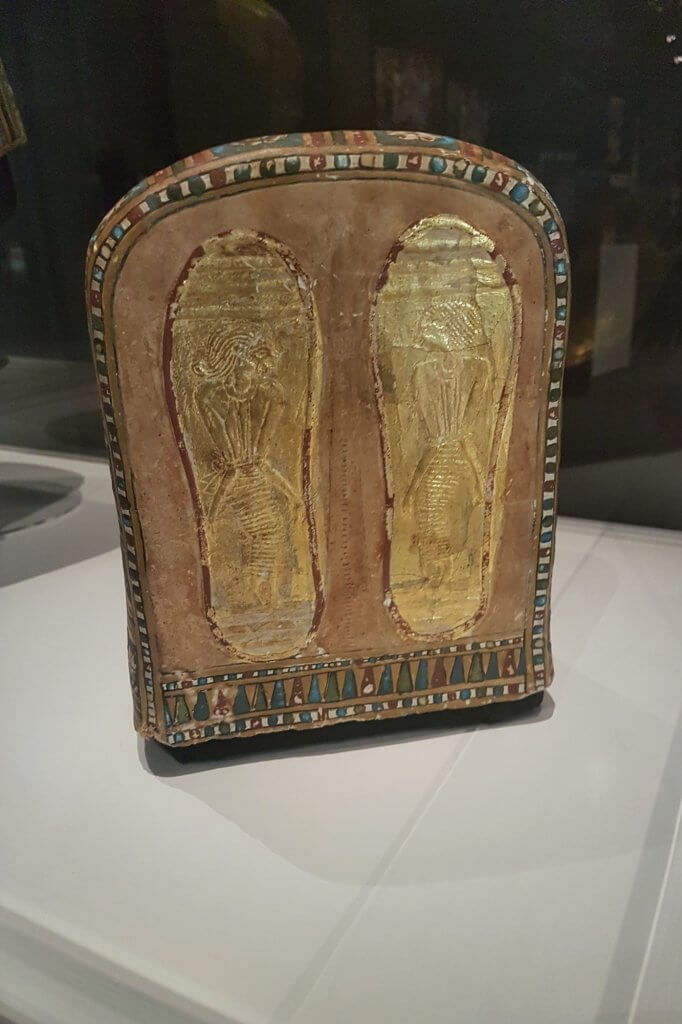
Egyptian Mummy Feet, 1st Century CE
The exhibition starts with… not shoes? I thought focusing on sculpture (not pictured) and this cartonnage (mummy case) was a wonderful way to make the visitor think beyond just shoes. Footwear is often represented in artwork, and in funeral practices, and that shouldn’t be discounted. They might protect our feet from dirt and grime, but they are still eternally important. According to the exhibition, “Footcases typically show the deceased wearing gilded sandals with soles painted with representations of Egyptian enemies such as Nubians and Libyans keeping them ‘underfoot’.” I will admit, I would not have thought that shoes, in life or death, would be used to make such blatant political statements. Clothing is certainly political, but because we don’t always see shoes, I hadn’t thought of it in that manner.
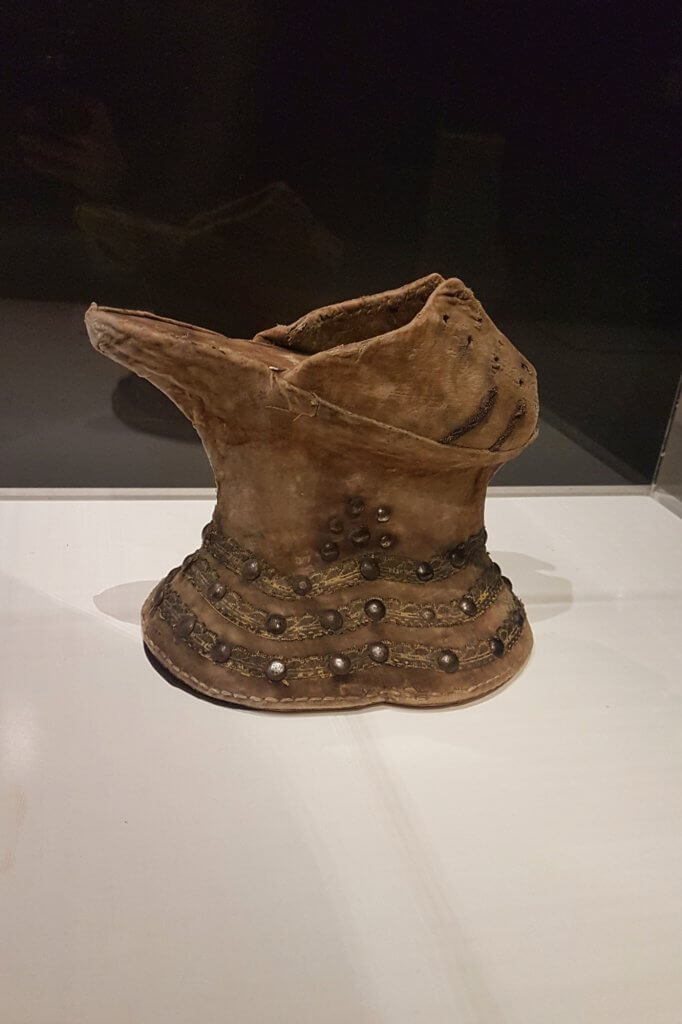
Italian Chopines, Late 16th Century
Chopines are an interesting shoe to look at (and not unfamiliar to 90s kids who wore those black platform sandals…). They are platform shoes that began life as an overshoe to protect more expensive shoes, but in the 15th to 17th centuries, were incredibly popular for women in Italy. The higher the platform, the higher the wearer’s social status! Yes, these look rather unimpressive now. However, in the period that they were made and worn, they would have been something. “The wooden platform is covered in expensive gold-covered velvet and embellished with lace ribbon and silver tacks around the base.” (Exhibition info) Once you know that they wouldn’t have been underneath a dress and not seen, you get a better idea of the wealth behind these chopines. How many of us put considerable money into luxury purchases that no one will ever see?

Byzantine Leather Shoes, ~400 CE
These are one of my favourite pieces in the exhibition. Firstly, my favourite colour is red, and you will notice that red and gold frequently goes together. Secondly, these shoes quite a message once you know what you are looking at. These shoes are from Egypt, in the post-Pharaoh, Christian era. Religion wasn’t a personal choice. There was a state religion, and everyone was expected to adopt and practice it. (Not that everyone did, but that is another in-depth blog post.) You will notice that there are four heads on the shoe, each surrounded by halos. The exhibition suggests that they “most likely depict[] the four apostles of Christ suggesting that these shoes may have been designed for ecclesiastical use.” I love that they can tell us so much about the period, as well as the intended wearer.

Burmese/Myanmarese Shoes, 19th Century
There is nothing like a gorgeous pair of royal shoes to make a fashion historian smile. These shoes date to the last Burmese dynasty. The Konbaung dynasty dated 1752-1885. And they are in remarkably good condition being well over 100 years old! “They are in the shape of the golden-feathered hintha bird and feature traditional shwe-chi-doe embroidery which incorporates gold thread, gold sequins, beads and cut glass”. (Exhibition info) The exquisite beading is incredibly beautiful in person, and they survive in amazing condition. And these shoes are a perfect example of what I loved about the Bata Shoe Museum: they spurred me on to do more research. I knew next to nothing about the Burmese throne, and after seeing these, I had to find out more. Ending with a sad story of abdication in 1885, it is fascinating. and absolutely worth your time.

Giuseppe Zanotti Shoes, 2012
I will be quite honest, I thought these were related to the Alexander McQueen Lobster-esque shoes (Lady Gaga, anyone?). They date to the same period though, the 2010s. Designer Giuseppe Zanotti created these platform shoes to call back to the Renaissance when chopines (see above) were used to show women’s status. According to the exhibition, “Similarly, this pair of shoes proclaims status but it also connotes the world of fetish. The shape is reminiscent of the ‘pony-girl’ horse-hoof footwear and the gold and silver spikes add an aggressive edge to the design.” Although I can’t say that I would ever want to try and walk in these, I don’t know that walking was ever the point of it…

French Heels, ~1930
These heels from the 1930s would not look particularly out of place now in 2020, which says quite a bit about the cyclical nature of fashion. In the 1930s, “Shoes made of gilded leather were promoted as neutrals designed to go with everything.” (Exhibition Info) What is quite interesting to me about these is that the Great Depression would have just been starting at this point- did the owner have an idea of how bad everything would get? And while they are quite versatile and would go with the majority of evening looks, they may have become an excessive luxury. Many questions arising, like any good exhibition should bring out!
And I promise that you will have the “Want: Desire, Design, and Depression Era Footwear” post next week! These shoes tie quite nicely, into that exhibition as well.
Have you seen Gold Standard at Bata Shoe Museum yet?
Cheers,
The Historian
Facebook | Twitter | Instagram | Pinterest | Bloglovin’