There are very few books that I actively look forward to reading for months. Unfortunately, I’ve got a lot of books that cross my path so I typically am focused on the next 4-6 weeks of releases. However, every once in a while, I look forward to a book. And After Elizabeth was one of them. I think that we’ve all been asking questions about the monarchy, so it seems quite relevant and timely. As a Canadian historian who studies the history of the Canadian Crown, and the Crown as a whole, you would think I would have loved this book. However, it has largely missed the mark. Today I am sharing my After Elizabeth review.
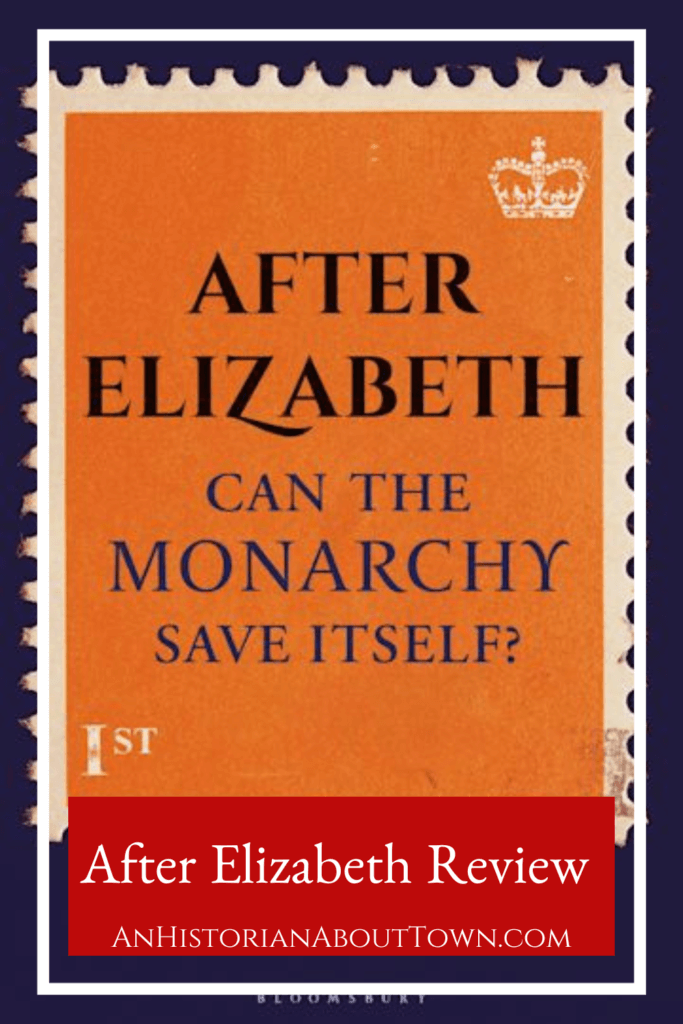
After Elizabeth: Can the Monarchy Save Itself?, Ed Owens
The British monarchy has been through turbulent times of late. Rocked by scandal and strife, and without it seems a clear plan for the future following the death of Queen Elizabeth II, we have been left what happens next?
Nothing seems certain. Will the monarchy survive with its continuing echoes of an Imperial past? Will young people – disenchanted with the political status quo – find the ritual and practice of the monarchy quite so mesmerising as previous generations have done? What might a republican Britain look like?
Ed Owens argues that the monarchy must embrace reform and transform itself radically. No more private jets while preaching about the importance of the environment; no more secrecy obscuring royal influence in high places; and no more hangers on enjoying grace-and-favour homes. A major slimming down is essential. And it’s time the family archives were opened.
All these issues will have a direct effect on the common good of the nation as it tries to reinvent itself as a modern working democracy, and endeavours to equip itself for the coming decades. Ed Owens situates this critical moment of royal transition in its historical context in order to set out a vision for monarchy that is future-proof, but which would also see the crown play an integral role in the evolution of 21st-century Britain.

After Elizabeth Review
I will admit, I had been waiting for this book for months. I truly enjoyed Owens’ first book, The Family Firm: Mass Media and the British Public, 1932-1953, it is a wonderful resource on the mid-century Windsors and media. And as a rule, I tend not to publish negative reviews on the blog- I prefer to highlight the books that I recommend rather than the ones that I don’t. However, I’ve spoken about this book several times on social media and with many people individually, and wanted to explain further why I would not recommend this book.
The premise of this book is solid: what changes can the Windsors make to ensure a solid, continuing future for the monarchy? It is obvious to everything that they aren’t exactly in a stable position- this is an entirely fair and needed question in 2023.
I will say there are three major areas of suggestion. Firstly, Owens argues that the British Royal Family needs to improve the image that they project and how they interact with the media. I don’t think that there is a lot of argument there; all principals in the royal family (and those that are no longer working royals) could all stand to improve the ways in which they interact with the media.
Secondly, Owens suggests that the Royal Family takes advantage of existing situations. Ie. They capitalise on the lack of government support in many areas of life in Great Britain by taking advantage of the PR coming from philanthropic engagements. (Think: the Waleses going to a foodbank, when the government could be doing more to ensure citizens don’t need foodbanks.) He also suggests that they take advantage of the cult of remembrance in the UK. This is best seen when they are in Whitehall to lay the wreath on the Cenotaph for Remembrance Sundays.
All in all, I would agree with this first part- they do use these situations to their best advantage. However, it is not the Royal Family’s place to make changes that would remove these situations. The government- elected politicians and related staff- needs to change social policies in order to remove situations that the BRF can use for positive PR, rather than the Royal Family just simply stopping to do these engagements as he seems to suggest. And any changes to ceremonies for the armed forces should come from the armed forces themselves, not the royals.
Finally, Owens starts and finishes this book by firing shots at the Commonwealth. He is essentially arguing that The King should tell the Commonwealth realms that he will no longer be head of state in those nations so that he can focus on the UK. In his conclusion, this is his argument:
One other obstacle to overcome would be the British Crown’s overseas commitments, not least the 14 Commonwealth realms where the King remains head of state. If he is to symbolise British democracy and spend his time overseeing its smooth functioning, King Charles can’t be distracted by his political roles in other countries. Constitutionally speaking, the monarchy cannot unilaterally separate itself from the realms- the political impetus for change must come from the people and politicians of these countries. However, the sovereign could signal to these nations that his priority is the UK by discretely acknowledging his reluctance to continue engaging in their political affairs thus potentially hastening the process by which the publics in these countries vote to get rid of their crowned head of state.
I am quite frankly astounded that an historian who considers themself to be an expert on the modern royal family to be so out-of-touch with how this would be read by anyone in a Commonwealth realm. And quite frankly, this quote (and train of thought as a whole) highlights that many people in Britain still lack an understanding of the lasting effects of colonialism. It is not Britain’s place to say, “Well, we colonised your country and installed our monarch as your head of state and it is entwined in your court and judicial systems, but we would like all of their time so we’re just going to cancel that.” All Commonwealth realms are having discussions of some sort of the future of the monarchy, but those discussions are our discussions- the Commonwealth realms get to decide their own future. It is our decision on whether or not we keep our (separate) crowns.
Largely, many in the UK seem to see the EU as their equal and a valued connection while the Commonwealth nations are simply places you go to do your working holiday and your ski and surfing vacations. It is wholly disappointing to see an historian with a platform like Owens disseminating such a horrifically outdated idea where the British once again impose their will with only their future considered.
If you have read this book, I would love to read your After Elizabeth review!
Cheers,
The Historian
Facebook | Twitter | Instagram | Pinterest