Unsurprisingly to most, I am a big fan of both giving and receiving books as gifts. Obviously if someone doesn’t like reading, I won’t force a book on them. But if I think they might enjoy it, I will always give a book. And whenever possible, I like to give a non-fiction book. Although it is often written off as being a textbook, non-fiction can be gripping and moving and keep you glued to the page, just like fiction. So, if you are looking give a book this holiday season (or treat yourself), I’ve gathered 8 captivating non-fiction books for inspiration!
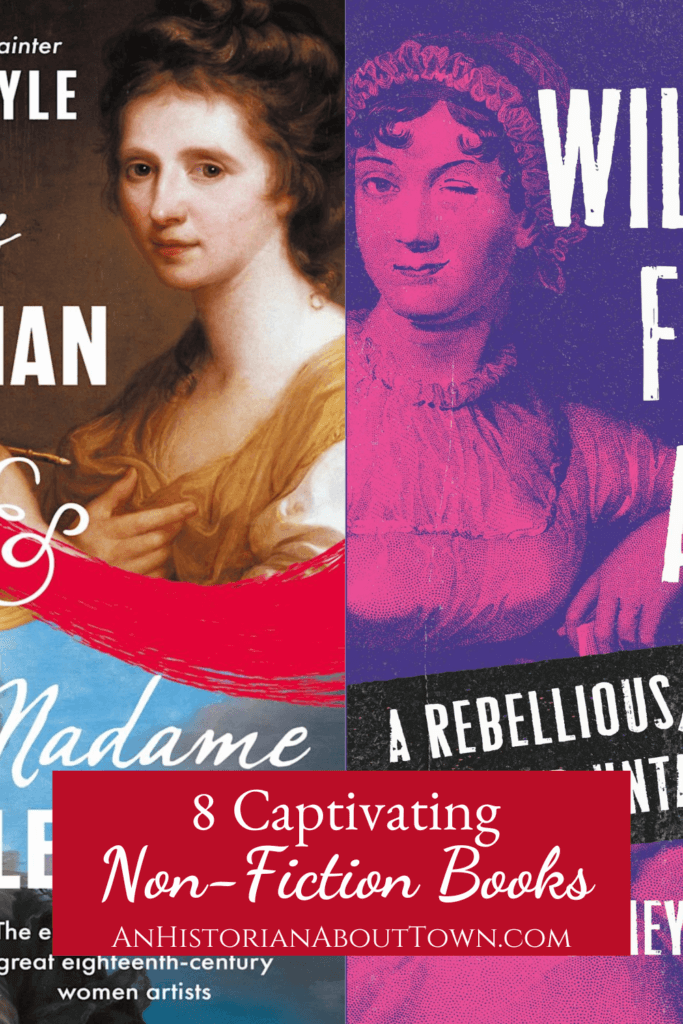
8 Captivating Non-Fiction Books
There are so many people and moments from across the centuries that are fascinating. Artists, authors, queens, and even fictional characters all have real life stories to tell, and you will not be able to put them down. These are all some of my favourite books, and I recommend them widely! I have included my review post below when there is one, if you want to know more.

Mrs Kauffman and Madame Le Brun: The Extraordinary Entwined Lives of Two Eighteenth-Century Painters, Franny Moyle
In the spring of 1790 two of the most gifted artists in Europe met in Rome and became fast friends, sharing their views on art, visiting the city’s ancient sites and making trips to the opera together over several happy weeks. The Swiss history painter Angelica Kauffman and the French portraitist Elisabeth Vigée Le Brun are no longer household names in the early twenty-first century but were much-fêted celebrities in the late eighteenth. The two had much in common: both had been child prodigies; both were members of the prestigious Academies of their respective countries; both had been celebrated court painters; both had made disastrous marriages that had drained them financially and made them the subject of scandal.
Franny Moyle uses their meeting in the eternal city as the point of departure for a lavishly illustrated ‘life and times’ biography of two brilliant but neglected women artists whose lives and creative careers straddled the political upheavals of the late eighteenth and early nineteenth centuries.
Mrs Kauffman and Madame Le Brun allows Moyle to explore an age of political, aesthetic and social revolution via a web of connections that embraces many of the most intriguing and powerful personalities of the time – to view a whole era of changing ideas and political ferment through the prism of the intertwined tales of two remarkable, rediscovered female lives.

Claire McCardell: The Designer Who Set Women Free, Elizabeth Evitts Dickinson
Claire McCardell forever changed fashion—and most importantly, the lives of women. She shattered cultural norms around women’s clothes, and today much of what we wear traces back to her ingenious, rebellious mind. McCardell invented ballet flats and mix-and-match separates, and she introduced wrap dresses, hoodies, leggings, denim, and more into womenswear. She tossed out corsets in favor of a comfortably elegant look and insisted on pockets, even as male designers didn’t see a need for them. She made zippers easy to reach because a woman “may live alone and like it,” McCardell once wrote, “but you may regret it if you wrench your arm trying to zip a back zipper into place.”
After World War II, McCardell fought the severe, hyper-feminized silhouette championed by male designers, like Christian Dior. Dior claimed that he wanted to “save women from nature.” McCardell, by contrast, wanted to set women free. Claire McCardell became, as the young journalist Betty Friedan called her in 1955, “The Gal Who Defied Dior.”
Filled with personal drama and industry secrets, this story reveals how Claire McCardell built an empire at a time when women rarely made the upper echelons of business. At its core, hers is a story about our right to choose how we dress—and our right to choose how we live.
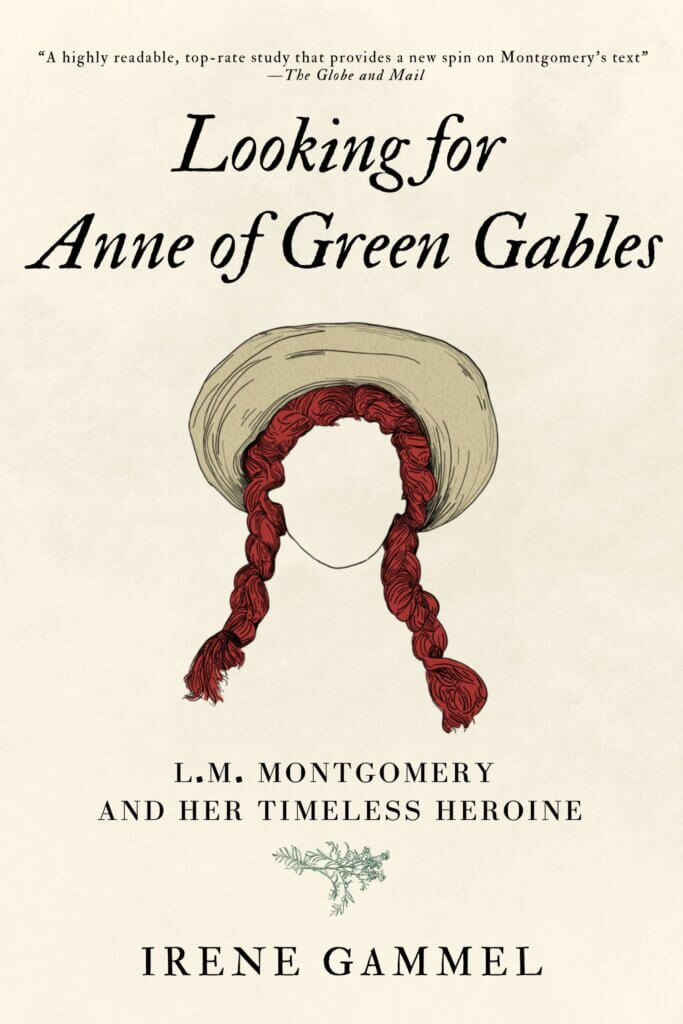
Looking for Anne of Green Gables: The Story of L. M. Montgomery and Her Literary Classic, Irene Gammel
In Looking for Anne of Green Gables, Irene Gammel draws on her archival discoveries, and on the author’s private journals to reveal an emotional landscape of longing, loss, and a deep yearning for connection—themes that found their way into her famous novel. Blending biography and cultural history, Gammel traces the parallel journeys of Montgomery and her beloved heroine, showing how the author’s personal grief was transformed into the triumphs and joys of Anne Shirley. This dual biography of Montgomery and her timeless character explains how a literary classic was conceived and why it continues to enchant readers today.
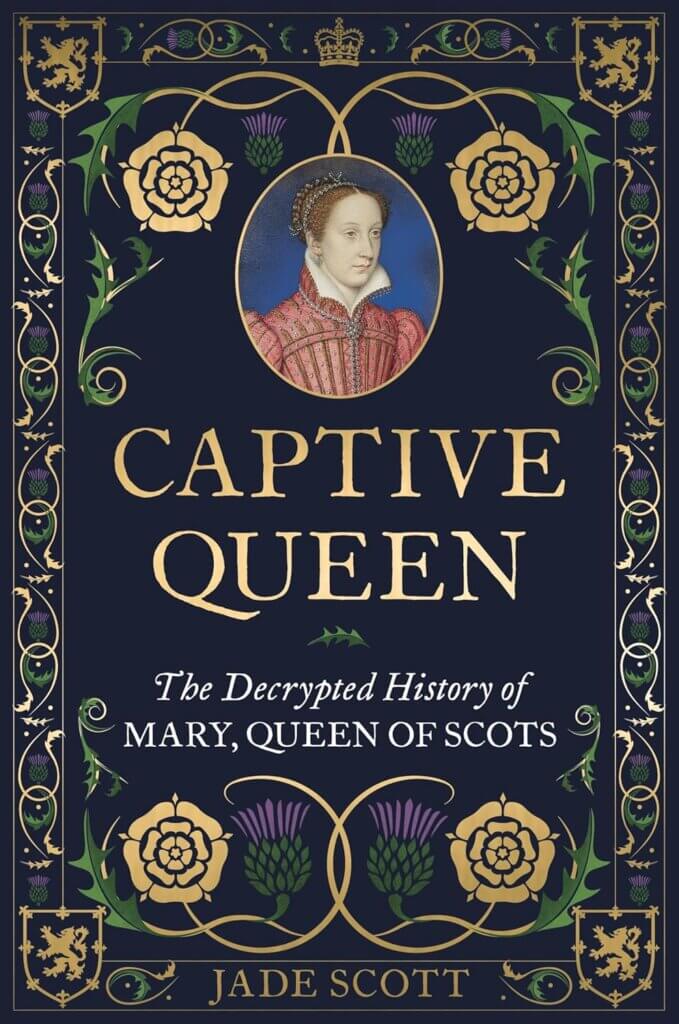
Captive Queen: The Decrypted History of Mary, Queen of Scots, Jade Scott
For almost two decades before her execution at Fotheringhay Castle in 1587, Mary, Queen of Scots was a prisoner. From her chambers, she wrote countless letters, many encrypted using complex ciphers to prevent her communications from being intercepted. In this way, she used language to exert her will and her influence, even while incarcerated.
More than 400 years after Mary’s death, the discovery of further encoded letters has led to renewed interest in the breadth of her encrypted correspondence in captivity.
In Captive Queen: The Decrypted History of Mary, Queen of Scots historian and expert on Mary’s correspondence Dr Jade Scott draws on hundreds of Mary’s letters and those sent to her, to paint a vivid portrait of one of history’s most compelling figures. She interrogates Mary’s complex relationships with friends and enemies throughout her imprisonment, illuminating her strategic expertise and bringing Mary’s captivity to life as never before.
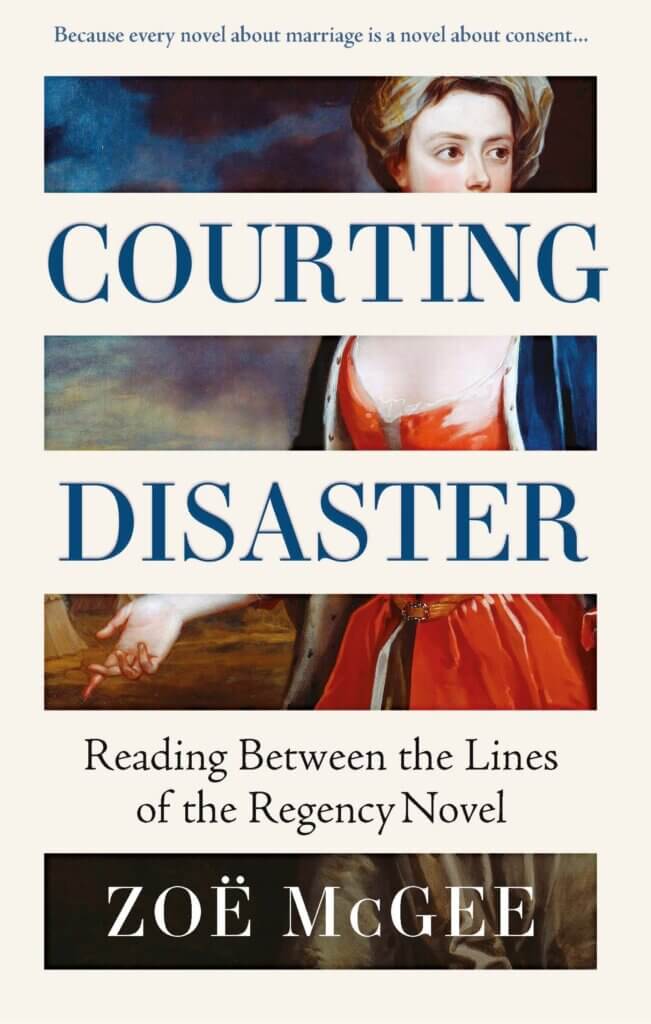
Courting Disaster: Reading Between the Lines of the Regency Novel, Zoe McGee
Drawing parallels with the #MeToo movement, this book explores how a series of brilliant female authors in the eighteenth and nineteenth centuries cleverly used the novel as a vehicle for ground-breaking discussions about consent.
What do #MeToo and Jane Austen have in common? More than you might think.
Ever since the novel was invented, women have used it as a platform for sharing ideas about sexual consent. Dr Zoë McGee reveals how Jane Austen, Frances Burney and their now-overlooked contemporaries used their stories to try to change society’s mind about rape culture – and to reassure survivors they were not alone.
Courting Disaster takes a timely deep-dive into a series of classic novels, comparing them with both historic court records and current events to show that our arguments about consent are not a new phenomenon. With the wit and wryness of a courtship novel, McGee reads between the lines to unveil a quiet feminist movement that still resonates today. Because every novel about marriage is also a novel about consent.
In an era that’s clamouring for a return to the values of the past, Courting Disaster asks what that would really mean, and whether anyone actually liked it back then anyway…
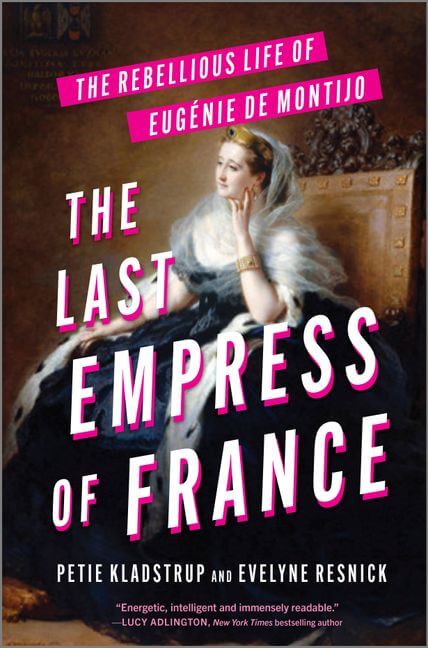
The Last Empress of France: The Rebellious Life of Eugénie de Montijo, Petie Kladstrup, Evelyne Resnick
Although a nineteenth-century woman, her almost twenty-first century outlook was key to the creation of modern France. Viewed frequently as a mere “ornament of the throne” of her husband, Emperor Napoléon III, this Spanish-born aristocrat proved to be almost as fiery as her red hair, fighting against institutional limitations, establishing innovations in childcare and women’s health, scientific research and education, battling anti-Semitism and “sex prejudice,” all the while displaying a political acumen so sharp that her husband gave her sole control of the government during his absences and consulted her daily when he was home. But the triumphs and glamour of her life were coupled with heartbreak and tragedy.
The dramatic, untold story of Eugénie de Montijo, the woman who created haute couture, fought for women’s rights, opened France’s schools to girls and ruled the country as its last empress, yet today remains almost unknown.

Wild for Austen: A Rebellious, Subversive, and Untamed Legacy, Devoney Looser
Thieves! Spies! Abolitionists! Ghosts! If we ever truly believed Jane Austen to be a quiet spinster, scholar Devoney Looser puts that myth to rest at last in Wild for Austen. These, and many other events and characters, come to life throughout this rollicking book. Austen, we learn, was far wilder in her time than we’ve given her credit for, and Looser traces the fascinating and fantastical journey her legacy has taken over the past 250 years.
All six of Austen’s completed novels are examined here, and Looser uncovers striking new gems therein, as well as in Austen’s juvenilia, unfinished fiction, and even essays and poetry. Looser also takes on entirely new scholarship, writing about Austen’s relationship to the abolitionist movement and women’s suffrage. In examining the legacy of Austen’s works, Looser reveals the film adaptations that might have changed Hollywood history had they come to fruition, and tells extraordinary stories of ghost-sightings, Austen novels used as evidence in courts of law, and the eclectic members of the Austen extended family whose own outrageous lives seem wilder than fiction.
Written with warmth, humor, and remarkable details never before published, Wild for Austen is the ultimate tribute to Jane Austen.

The Rebel Romanov: Julie of Saxe-Coburg, the Empress Russia Never Had, Helen Rappaport
In 1795, Catherine the Great of Russia was in search of a bride for her grandson Constantine, who stood third in line to her throne. In an eerie echo of her own story, Catherine selected an innocent young German princess, Julie of Saxe-Coburg, aunt of the future Queen Victoria. Though Julie had everything a young bride could wish for, she was alone in a court dominated by an aging empress and riven with rivalries, plotting, and gossip—not to mention her brute of a husband, who was tender one moment and violent the next. She longed to leave Russia and her disastrous marriage, but her family in Germany refused to allow her to do so.
Desperate for love, Julie allegedly sought consolation in the arms of others. Finally, Tsar Alexander granted her permission to leave in 1801, even though her husband was now heir to the throne. Rootless in Europe, Julie gave birth to two—possibly three—illegitimate children, all of whom she was forced to give up for adoption. Despite entreaties from Constantine to return and provide an heir, she refused, eventually finding love with her own married physician.
At a time when many royal brides meekly submitted to disastrous marriages, Julie proved to be a woman ahead of her time, sacrificing her reputation and a life of luxury in exchange for the freedom to live as she wished. The Rebel Romanov is the inspiring tale of a bold woman who, until now, has been ignored by history.
♠
What is your favourite non-fiction book?
Cheers,
The Historian
Facebook | Threads | Instagram | Pinterest