I know that currently everyone is stuck at home, but for many of us, we are always physically separated from the things that we study. Whenever I share anything stating that I’m grateful for Zoom events and online exhibitions and the access that they afford me, without fail someone has to respond and say that it is no replacement for in person events. Well, not all of us have the luxury of living in places that have in person events and exhibitions for us. And a massive benefit of life shifting to the virtual is that there are even more ways to connect with people and get involved. Today I’m sharing how you can get involved with history communities, no matter where you are!
If you do hate working online and live somewhere that allows you to stay closely connected with whatever you study, the history gods are on your side. However, if you are like me, and live ⅓ of the globe away from what you are interested in, or don’t have the time or funds to continually travel to see things, read on!
These tips are for the history blogger and the historian, alike- no matter what your end goal is, you will be able to foster stronger connections!
1) Be On Social Media
I know that there is a dedicated contingent of people who refuse to be on social media, and I can understand why for privacy reasons. However, I would recommend that you do have Twitter and Instagram accounts, particularly Twitter. (You can use a pseudonym, and simply introduce yourself if you DM someone.) Many historians are incredibly active on Twitter, and you will see a lot of informal discussions of research, upcoming talks and panels, much more there. Not everyone is there, but many historians have started to realise that it is a valuable place to be. And yes, you can email them, but most of us don’t want even MORE emails, and you would still be missing a lot of discussions happening.
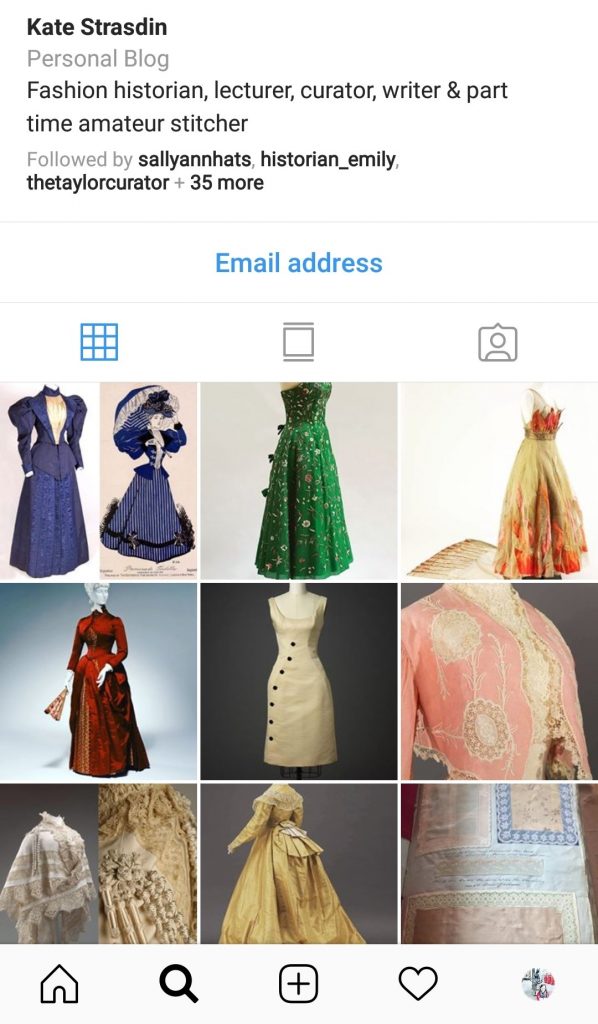
Instagram is more sub-field dependent- for example, many fashion and dress historians are more present on Instagram. Many historians will share different artefacts and research finds there, so it can be an interesting place to be, as well. If you only had to pick one, I would recommend going with Twitter.

2) Follow and Participate in Hashtags
There seems to be a hashtag for everything these days, in a good way. Interested in the Stuarts? Follow #StuartsSaturday on the weekend, and #KeepItStuart on Twitter! Want to see more historical garments? #DressHistory can be a great place to start on Instagram. There are dedicated talks on Twitter based around hashtags- questions will be tweeted out in a set time period and you can respond and interact with others. And there are many Instagram challenges based around a theme, like #GeorgianJanuary that takes place each year (if you are intrigued by the eighteenth century).
By no means do you have to participate- you can simply follow the hashtags in both Twitter and Instagram to see new posts! It can feel a bit overwhelming to wade in, but Twitter chats are often the easiest way to get started. (Most people who take part in them are fairly friendly, and are excited to chat about whatever with different people.) “Meeting” in a Twitter chat is often a low-pressure way to start chatting with a fellow historian, rather than cold-sending a DM.

3) Reach Out to Museums and Sites
If you are interested in a particular collection, exhibition, or site, reach out to the museum or organisation. Most are more than happy to hear from you, and help in whatever way they can. I will say, I’ve not had a lot of luck with massive institutions- they understandably have scholars from around the globe contacting them all day long, every day. However, for anyone other than the V&A/Met Museum level, I’ve always had fantastic success.
I’ve emailed pictures that I took while visiting, to see if they had any more information. In the before-times, I had contacted different museums to see if they had any online materials for in-person exhibitions that I could look through. And now that so many more things are online, I often contact museums to ask if they have any upcoming talks or online exhibitions in the works. They can’t always divulge what they know, but everyone has been incredibly friendly and will at least let me know if something is in the works. (They want help getting the word out, so it helps them, too!) The worst thing that will happen is no response.

4) Be Flexible and Creative
I have to admit, coming from Canada where the concept of digital archives was pioneered decades ago, I was baffled to come to find that a lot of UK and EU collections and archives aren’t online at all, or in name only. (To everyone who cannot physically access needed articles for their theses and dissertations, my heart goes out to you!) A lot of materials either haven’t been digitally archived or photographed yet, or cannot be due to copyright issues. In any case, creativity and flexibility is a must!
If you have applied to a PhD program with a specific project that requires particular materials or are writing a monograph, you might be limited in creativity depending on what your funding and supervisors dictate. However, if you aren’t bound to a specific topic, start thinking outside the box to see if there is a related topic with online materials to work on in the meantime. More than likely, you will be able to tie it into your larger project.
5) Pay Attention to Journals and Organisations
Many journals and organisations are advertising virtual positions, if you are looking to get involved in the organisational part of history. Most are volunteering roles, but depending on where you are in your education and career, it could be fantastic experience. Some require specific skills or memberships, some don’t, but it doesn’t hurt to apply or at least look into them. (When looking at the requirements, do check to see if you need specific devices/programs- many require Photoshop or similar programs.) You may end up making invaluable connections that will come in handy later, and if nothing else, you will have tried something new. It is one of the most versatile ways to get involved with history, as people outside of the discipline can see the use and value in the skills needed.
How do you get involved with history, and stay involved?
Cheers,
The Historian
Facebook | Twitter | Instagram | Pinterest | Bloglovin’

This is some great advice! I have definitely used social media and online talks about exhibitions to engage with museums whilst their doors have been closed. I have also continued volunteering with the Birmingham Museums Trust though their remote volunteering programme. Great post. Sinead x
I have loved getting to interact with museums that I never would have otherwise- such a boon for the distant historian!! And that sounds fantastic- what have you been working on?