When this post publishes, it is the day before the May long weekend here in Canada! (A bank holiday for any UK readers.) And while I have many errands and things around the house to do, I always like to set time aside on long weekends to read. There is just something about a long weekend that says “You should be reading” to me. So I thought I would gather some stylishly appropriate books in case anyone else also feels like kicking off their weekend. For Style File Friday I’ve got a list of 5 easy-to-read fashion history books!
As I said above, I’ve gathered some easy-to-read and accessible books about fashion history! While I have many academic books on fashion history that I’m more than happy to share, I know that they can be difficult to find, expensive, and oftentimes more complex than a more casual reader wants. (That doesn’t mean these aren’t well-researched and well-written, though.)

Silver and Gold: The Autobiography of Norman Hartnell, Norman Hartnell
Sir Norman Hartnell (1901–1979) was the star of London couture during the interwar years, gaining international fame as dressmaker to the British royal family. His autobiography, first published in 1955, tells the story of the creation of his couture house in 1923, his formal appointment as dressmaker to the royal family in 1935, and the most momentous commissions of his Princess Elizabeth’s wedding gown in 1947 and her magnificent coronation dress six years later. Best known for romantic eveningwear shimmering with beads and embroidery, Hartnell is credited with reintroducing the crinoline to world fashion through his full-skirted designs for Queen Elizabeth. Silver and Gold describes an extraordinary life with elegance and panache.
Why You Should Read This…
Silver and Gold remains one of my favourite books of all time. Hartnell is my favourite designer, so it should not be a surprise that I would love his autobiography. It is a true treasure trove of information about royal fashion in the 1930s, 1940s, and 1950s (it was written in 1955), as well as London society in general. Hartnell describes his experiences designing for several members of the Royal Family including Queen Elizabeth (later the Queen Mother) and Queen Elizabeth II. The details on Princess Elizabeth’s 1947 wedding dress and her 1953 coronation dress are fascinating. (And I feel that it gives you a lot of great insight into what the design process can look like for these historic garments.)

Deluxe: How Luxury Lost Its Lustre, Dana Thomas
Once luxury was available only to the rarefied and aristocratic world of old money and royalty. It offered a history of tradition, superior quality, and a pampered buying experience. Today, however, luxury is simply a product packaged and sold by multibillion-dollar global corporations focused on growth, visibility, brand awareness, advertising, and, above all, profits. Award-winning journalist Dana Thomas digs deep into the dark side of the luxury industry to uncover all the secrets that Prada, Gucci, and Burberry don’t want us to know. Deluxe is an uncompromising look behind the glossy façade that will enthrall anyone interested in fashion, finance, or culture.
Why You Should Read This…
This book weaves the current state of luxury clothing and goods into the history of these companies that have become such status symbols. As we are heading into another global recession in 2023, I’ve noticed that there are a lot more articles on “Is Hermes a good investment?” and “can you sell your Chanel handbags to survive”. This isn’t a new trend; luxury tends to market itself as a solid investment. However, how did it achieve the position that it has now? And why do we all buy into it? This is a fascinating read for anyone interested in luxury in any form.
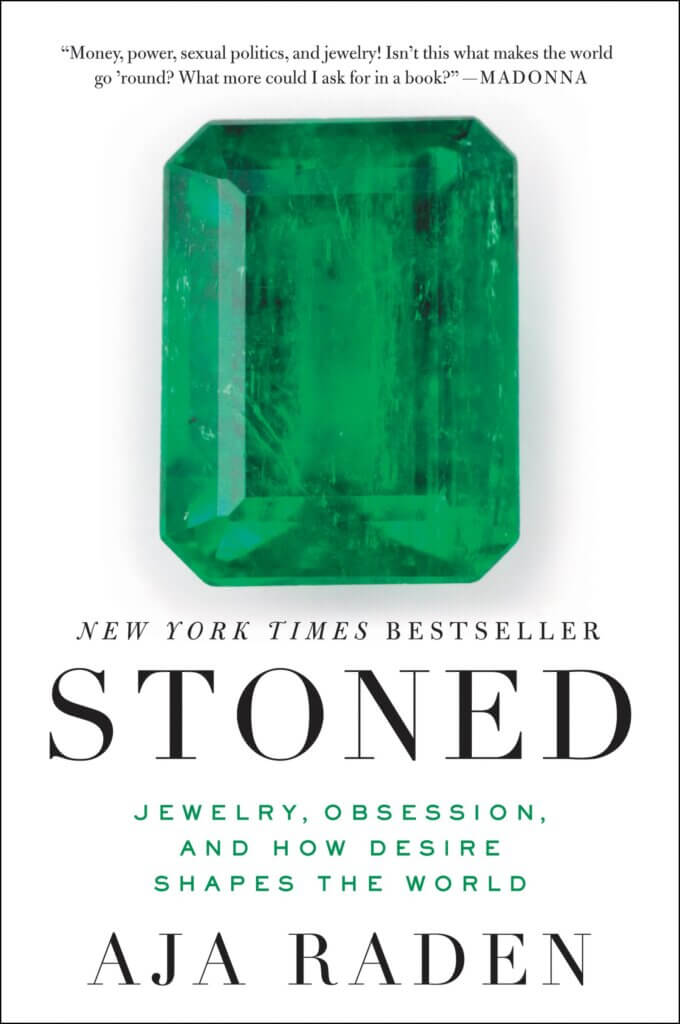
Stoned: Jewelry, Obsession, and How Desire Shapes the World, Aja Raden
As entertaining as it is incisive, Stoned is a raucous journey through the history of human desire for what is rare, and therefore precious. What makes a stone a jewel? What makes a jewel priceless? And why do we covet beautiful things? In this brilliant account of how eight jewels shaped the course of history, jeweler and scientist Aja Raden tells an original and often startling story about our unshakeable addiction to beauty and the darker side of human desire. What moves the world is what moves each of desire. Jewelry—which has long served as a stand-in for wealth and power, glamor and success—has birthed cultural movements, launched political dynasties, and started wars. Masterfully weaving together pop science and history, Stoned breaks history into three categories—Want, Take, and Have—and explains what the diamond on your finger has to do with the GI Bill, why green-tinted jewelry has been exalted by so many cultures, why the glass beads that bought Manhattan for the Dutch were initially considered a fair trade, and how the French Revolution started over a coveted necklace. Studded with lively personalities and fascinating details, Stoned tells the remarkable story of our abiding desire for the rare and extraordinary.
Why You Should Read This…
Again, with the coronation just behind us, and the 2023 Met Gala as well, priceless jewellery is still a hot topic of conversation. (And for many of us, it remains a hot topic of conversation permanently.) This book is incredibly easy to read, very entertaining, and well-researched. Raden frames the history of these jewels through the lens of desire and it works so well. As you might guess, the history of semi-precious and precious stones is fraught and this is thoroughly conveyed. If you want to be to wow your friends with your knowledge of fine jewels before the next big society event, Stoned is the perfect book for you!
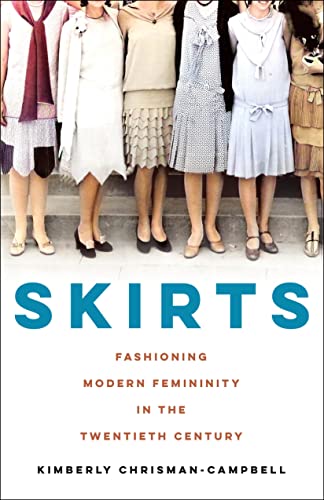
Skirts: Fashioning Modern Femininity in the Twentieth Century, Kimberly Chrisman-Campbell
While the story of women’s liberation has often been framed by the growing acceptance of pants over the twentieth century, the most important and influential female fashions of the era featured skirts. Suffragists and soldiers marched in skirts; the heroines of the Civil Rights Movement took a stand in skirts. Frida Kahlo and Georgia O’Keeffe revolutionized modern art and Marie Curie won two Nobel Prizes in skirts. When NASA put a man on the moon, “the computer wore a skirt,” in the words of one of those computers, mathematician Katherine G. Johnson. As women made strides towards equality in the vote, the workforce, and the world at large, their wardrobes evolved with them. They did not need to “wear the pants” to be powerful or progressive; the dress itself became modern as designers like Mariano Fortuny, Coco Chanel, Jean Patou, and Diane von Furstenberg redefined femininity for a new era.
Kimberly Chrisman-Campbell’s Skirts looks at the history of twentieth-century womenswear through the lens of game-changing styles like the little black dress and the Bar Suit, as well as more obscure innovations like the Taxi dress or the Pop-Over dress, which came with a matching potholder. These influential garments illuminate the times in which they were first worn―and the women who wore them―while continuing to shape contemporary fashion and even opening the door for a genderfluid future of skirts. At once an authoritative work of history and a delightfully entertaining romp through decades of fashion, Skirts charts the changing fortunes, freedoms, and aspirations of women themselves.
Why You Should Read This…
I will say, Skirts is one of the most interesting books that I’ve read since the beginning of 2021. And it interested me enough that after receiving an eARC via NetGalley I also purchased a copy for myself to keep for reference.
Skirts starts out by explaining that skirt and dress have historically often been used interchangeably. And she explores the evolution of how these garments have been constructed, what shapes and silhouettes they take, and how society perceives them. Given that we are in a social media pull in all directions of “Love yourself and your body”, “traditional silhouettes are making a stronger comeback than ever”, and everything in between, I found this a very timely read. (And again, with a looming recession, historically clothing takes a more traditional turn again.)
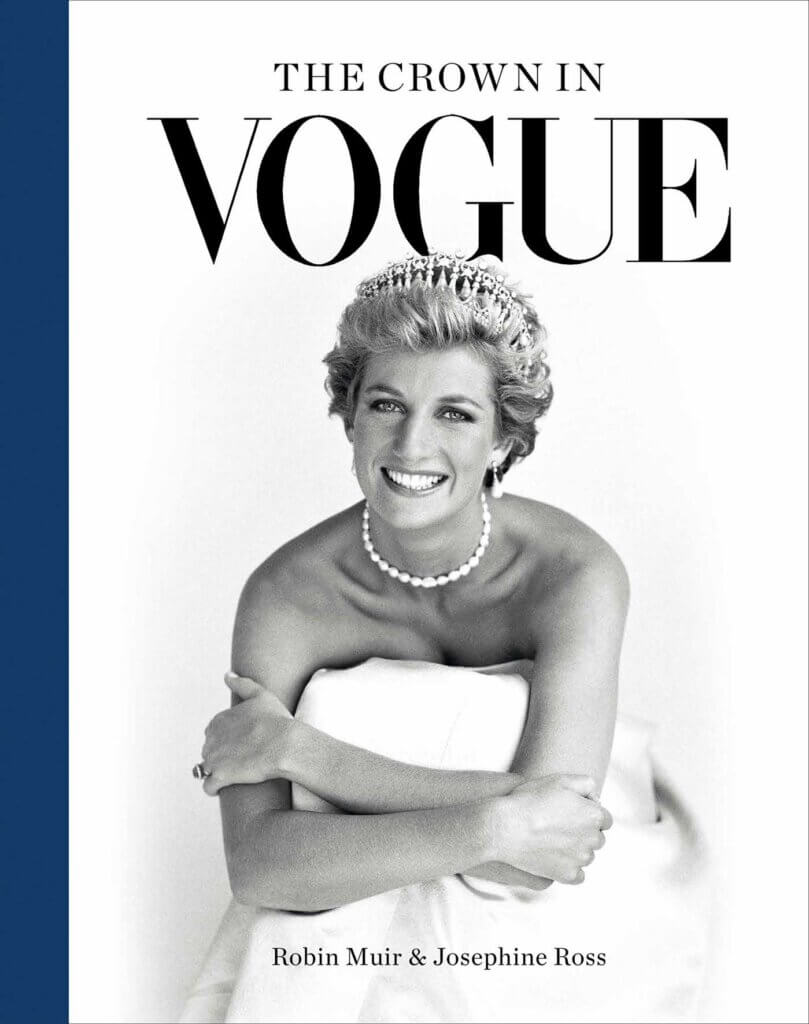
The Crown in Vogue, Robin Muir & Josephine Ross
The Crown in Vogue is an extensively illustrated tribute to the 70-year reign of Queen Elizabeth II and to the British Royal Family from the pages of British Vogue. Four monarchs (crowned and uncrowned); one abdication; one royal investiture; a jewel box of jubilees and many, many royal marriages… British Vogue has borne witness to a century of royal history. The Crown in Vogue is the magazine’s “special royal salute” to our longest-serving monarch and her “assured and unwavering” presence in the lives of a nation.
Vogue’s first star photographer, Cecil Beaton, was entranced by the House of Windsor and the admiration was mutual. A younger star photographer, Antony Armstrong Jones, left Vogue to marry the Queen’s sister and returned as Lord Snowdon. The Queen’s cousin, Vogue’s Lord Lichfield, proved an insightful photographer of royal style along with many of Vogue’s fashion photographers, including Horst, Norman Parkinson, and David Bailey. With visual treasures from Vogue’s unrivaled archive and contributions through the decades from the most perceptive of royal commentators—from Evelyn Waugh to Zadie Smith— The Crown in Vogue is the definitive, authoritative portrait of Queen Elizabeth II’s magnificent reign—and of royalty in the modern age
Why You Should Read This…
I read this in April ahead of the Coronation to get into the royal fashion mood. On the one hand, it made me a little sad as it was released around The Queen’s Platinum Jubilee and it still seems a tad strange that QEII is no longer around even though King Charles seems very normal to me. However, on the other hand, the stunning collection of Vogue portraits of members of the royal family spanning a century are amazing and make me both reminisce on the past and look forward to what the next decades will bring.
Vogue is not formally connected to the British Royal Family but has featured members of the family several times throughout the years. It is easy to see after reading this why the relationship is so strong.
If you are at all interested in the British Royal Family’s relationship with Vogue or fashion in general, this is a must-read!
I hope these 5 easy-to-read fashion history books are on your to-read list!
Cheers,
The Historian
Facebook | Twitter | Instagram | Pinterest