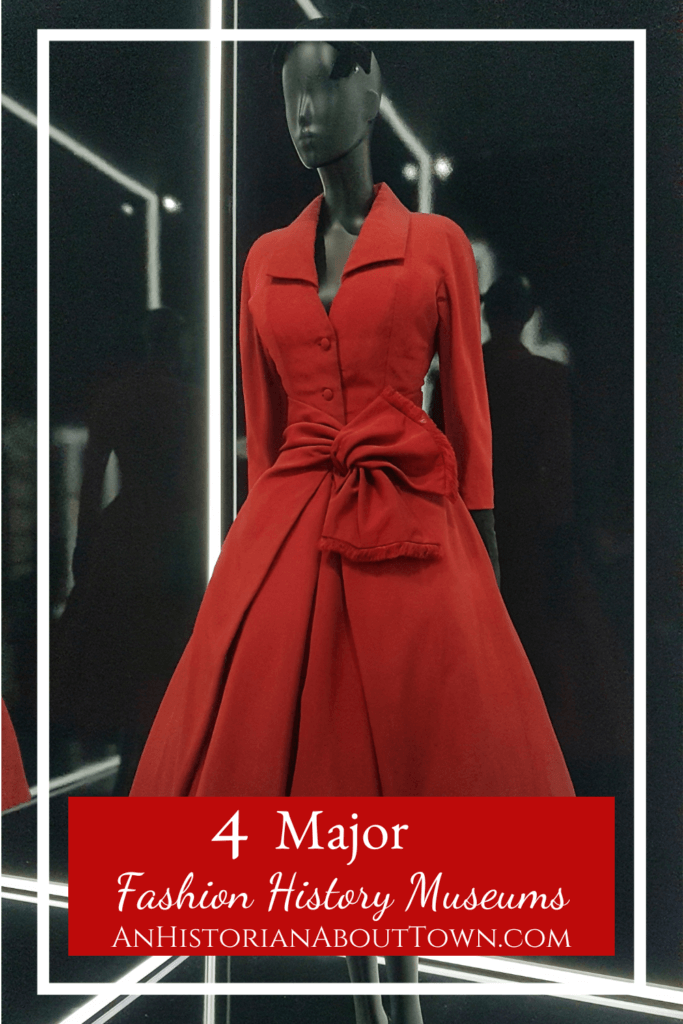
I find that although few people will admit their passion for it, fashion history is one of the most popular areas of history. We all wear clothing, right? It is a common element across history and geography. And fashion history exhibitions remain immensely popular blockbusters that sell out for months at a time. (See Dior: Designer of Dreams in 2019.) For Style File Friday this week, we are going to be exploring 4 major fashion history museums that you can visit!
What Do I Consider a Major Museum?
There are many amazing smaller fashion history museums that you can visit that I can and do recommend at any point possible. The Bata Shoe Museum in Toronto has one of the wildest and most impressive collections of historic footwear that exists. The Fashion Museum in Bath also has one of the largest garment historic collections; however, they are currently in transition to a new home and will not be reopening in their new location for another two to six years.
The museums I’ve listed here are the large fashion history museums that cover a wide variety of styles, periods, and geographic areas. Someone who has no idea about fashion history has possibly heard of them; they host the “it” exhibition that we all die to go to, they publish books, they keep all of us coming back for more. And most importantly, most unsuspecting friends and partners will agree if you suggest a visit!
If you are interested in a list of smaller fashion history museums, please let me know!

Victoria and Albert Museum, London
What would this list be without the V&A? Obviously, the museum does not solely cover fashion history but the V&A has the largest textile collection in the world. For over a century, it has been an exceedingly popular museum with artists, historians, and visitors with a dizzy array of interests. However, the V&A fashion history exhibitions, particularly in the last fifteen years, have been selling out and bringing people in.
The Victoria and Albert Museum has the largest dress collection in the world, and it features items from the fifteenth century and one. The collection’s strength comes in at the 18th century. Many designers and collectors will bequeath part or all of their collection to the museum, and it takes full advantage of it.
The V&A is named for Queen Victoria and Prince Albert, and the original idea for the museum came in the form of exhibitions from The Great Exhibition in 1851 being made permanent. The museum strove to be accessible early on- they were open for late evening sketching and drawing so that those people working during the day would still be able to use the museum’s resources.
While the permanent Fashion gallery is in Room 40, there is more often than not a temporary, larger exhibition downstairs!
Past Notable Exhibitions: Dior: Designer of Dreams (2019), Wedding Dresses: 1775- 2014 (2014-2015)
Palais Galliera, Paris
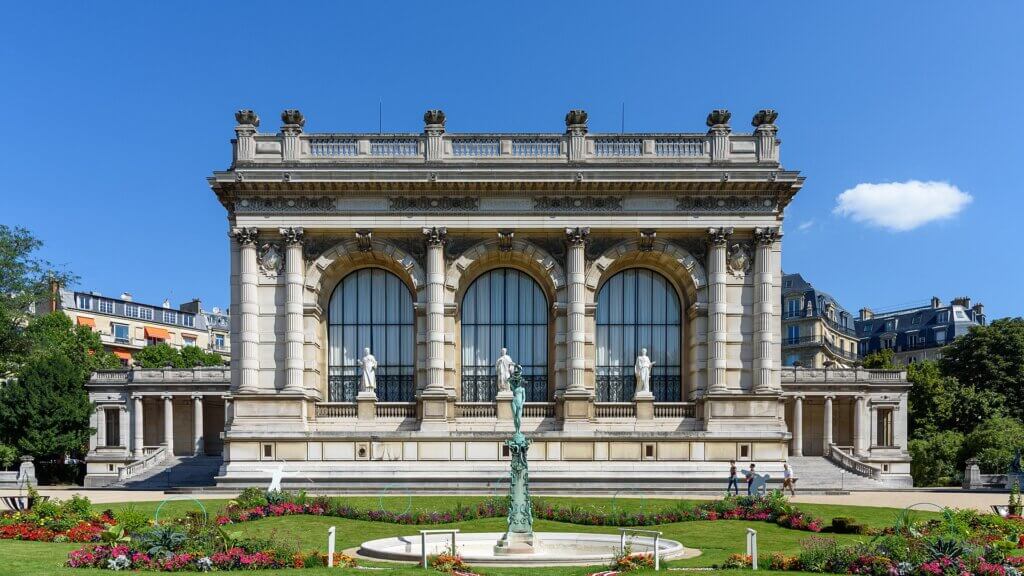
The Palais Galliera was originally known as the Musée de la Mode de la Ville de Paris, and as one might expect, is an exceptionally popular museum in Paris. France has long been a home of fashion and haute couture is a French creation. (The Chambre Syndicale de la Haute Couture is based in France and controls which houses can claim they create haute couture. There are select foreign members but it is still overwhelmingly French.) The Italian Duke and Duchess of Galliera commissioned the museum in the 1870s, though the museum was not completed until 1894.
The Palais holds over 70,000 pieces that are sorted into four different categories: undergarments, accessories, costumes, and graphic arts. Chanel (the house) has donated significant funds to help establish more permanent exhibition space at the museum. The “Salles Gabrielle Chanel” are found in the basement and will allow the Palais to stage more large-scale exhibitions.
Past Notable Exhibitions: ALAÏA (2013-2014), BALENCIAGA, L’OEUVRE AU NOIR (2017)
Kyoto Costume Institute, Kyoto
The Kyoto Costume Institute has produced some of the most valuable fashion reference books that I own/have used, and it is a major fashion history museum that flies under the radar for a lot of people. The KCI studies and examines Western clothing and the influences that it has had around the globe in addition to studying Japanese designers.
The Kyoto Costume Institute’s collections include over 13,000 garments and 20,000 documents (because nothing lives in a vacuum!).
This museum focuses on three different areas: collecting, conserving, and research, meaning that a lot of fashion historians interact with the KCI on a professional basis.
I could not phrase this better myself, so I’ve included this statement from the KCI’s research section:
Throughout history, clothing and people’s lifestyles have been closely interlinked, so examining the way that clothing has changed in various socio-historical contexts lies at the core of our research at the KCI. Fashion, as a concept, first emerged in modern Western Europe. Today, it has expanded into a nearly universal pursuit with a direct impact on the way we look and dress. Fashion is intimately connected with many of the factors that shape our society, and the KCI examines these changes from an interdisciplinary academic viewpoint, keeping a constant eye on new social trends.
Past Notable Exhibitions: Kimono Refashioned: Japan’s Impact on International Fashion (2019)
The Metropolitan Museum of Art, New York City
I would say that the Met Museum is better known for the Met Gala across the world, but it is in fact a fundraiser for the museum! The Anna Wintour Costume Centre is a wing of the Metropolitan Museum’s main building that houses their immense costume collection. The Met Gala’s theme is always drawn from that year’s major fashion exhibition. (Side note: I understand that the Met Gala is a major fashion and society event in the US, but it breaks my heart that it overshadows the exhibition every year.)
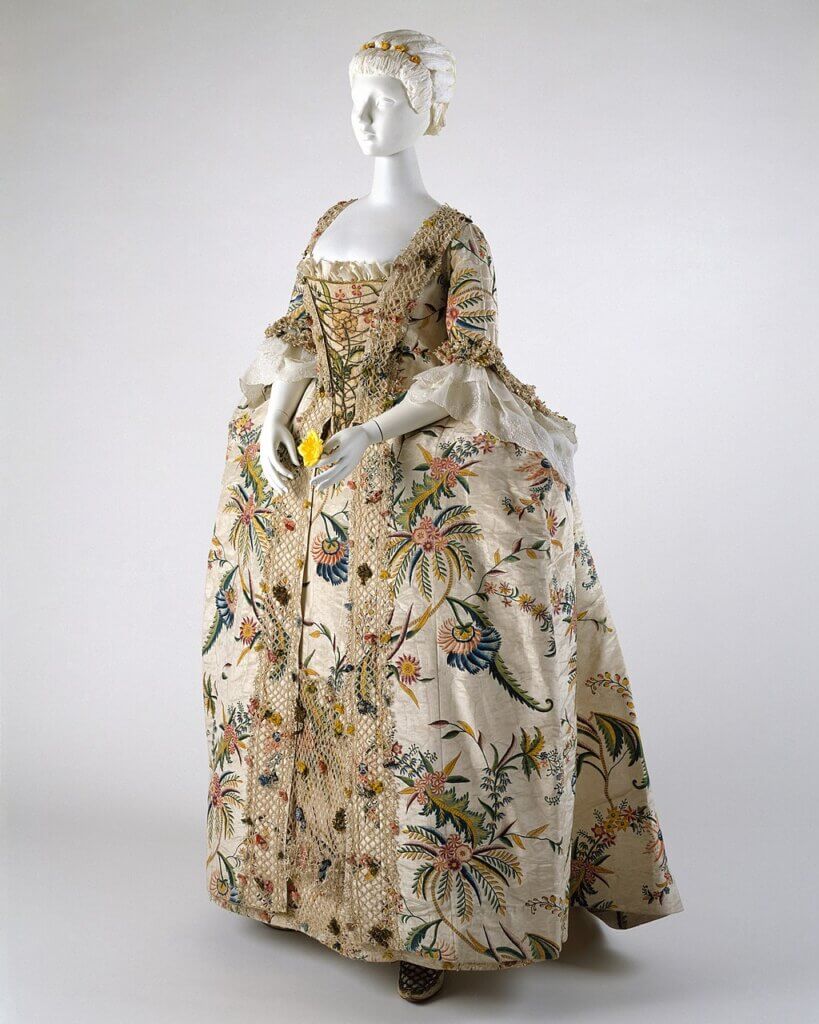
The Costume Institute holds over thirty-three thousand garments spanning from the fifteenth century to the present. The exhibition space was redone in the early 2010s; it reopened in May 2014.
The Museum of Costume Art was founded in 1939, and then it merged with the Metropolitan Museum of Art in the 1950s. Notable fashion editor and journalist Diana Vreeland was a special consultant to the Museum from 1972 to 1989. In 2009, the Brooklyn Museum merged with the Costume Institute, bringing thousands of historic garments into the collection, including the largest existing Charles James’ collection.
You can search the Costume Institute’s collection here.
Past Notable Exhibitions: Alexander McQueen: Savage Beauty (2011) and Heavenly Bodies: Fashion and the Catholic Imagination (2018).
Which of these major fashion history museums have you visited?
Cheers,
The Historian
Facebook | Twitter | Instagram | Pinterest