In the past 60 years, fashion and style history has been recognised as a legitimate field of study. Although it can still be brushed off as inconsequential, I think that most historians, and most people, understand that the history of clothing can tell us a lot about society, culture, and life in general. If you are new to my blog, you will know that style history is one of my favourite areas of study. I’ve done quite a bit of reading on the subject and wanted to share my favourites. This is the first half of my top style history books, covering the five best pop style history books!

Pop/Public History Books
These books are for the general reader; they require little (if any) knowledge beforehand, and aren’t written in an academic tone. That doesn’t mean that they aren’t useful or worthwhile, just that they aren’t written with an academic purpose in mind. (I’ve tried to note when I think a book would have cross-over appeal.) One of the biggest benefits of non-academic books? The price tag! They tend to be a lot cheaper than academic books, as they aren’t written for a super-niche audience by an academic press. They are usually easier to find at the library, as well.

Corsets and Codpieces: A Social History of Outrageous Fashion, Karen Bowman
This is a fun read, and I really enjoyed it. This is a pop history of all of the weird and wacky things that we humans have worn over the years in western society. You don’t have to have any prior knowledge at all to read this book, anyone could pick it up! While I’ve mentioned that much of style history and fashion history is discussed in art history terms, Bowman writes in a straightforward and easy to understand tone. A lot of criticism has been lodged at the editing of this book- apparently Jane Austen was spelt as ‘Austin’, for example. However, that was fixed by the time I purchased the ebook in 2019, and doesn’t hinder the actual meat of it all. (Blame the editors and publishers; hell, it could have been a change that an editor made!)

I wouldn’t necessarily recommend it to the fashion history scholar in your life (although there is a solid bibliography that you can mine). However, if you have a family member (or are that family member) that is waiting with bated breath for the Downton Abbey movie in the fall, you can read about how they achieved those Edwardian silhouettes in season 1 and those flapper silhouettes in season 6! The appendix is also wonderful, as it includes things like the Tudor sumptuary laws that tell us exactly what people were and were not allowed to wear.

Deluxe: How Luxury Lost Its Lustre, Dana Thomas
This book has the widest appeal of any on this list, I think. This is thorough look at the modern luxury industry, and how we got to where we are with it today. I think that most of us can spot a Louis Vuitton from a mile away, but how many people actually know how the brand got its start? And how many of us know the story behind Hermès? Depending on who you are and your tastes, you may lust after luxury items and covet that purse you saw at that boutique, but the history behind it isn’t quite linear.

What makes this book a must-read for me is that Thomas deftly ties the luxury industry’s history to where it stands today. We all know people who swear by their knock-off Prada shoes, or their fake LV purse- “why would I pay full price when the quality isn’t any better?” Thomas looks both the history behind the items/garments, as well as the modern issues to consider when buying a real or a fake. Although this isn’t a true historical book, I would certainly recommend for anyone vaguely interested in luxury fashion. (I’ve heard rumblings that there may be a follow up coming, I will share any news if there is.)

Modern Royal Fashion: Seven Royal Women and Their Style, Historic Royal Palaces
If you have any interest in modern royal fashion, this book is a wonderful place to start. Focusing on the British Royal Family, this book was produced by Historic Royal Palaces. It is part of the Kensington Palace collection (noted by the red spine and KP designation), but I would guess you may be able to buy it at some of the other HRP properties. It looks at the royal fashion of: Queen Alexandra, Queen Mary, Queen Elizabeth, the Queen Mother, Queen Elizabeth II, Princess Margaret, Diana, Princess of Wales, and Catherine, Duchess of Cambridge. Covering nearly 150 years and six generations of royal women, it is a good introduction to each of their style “portfolios”, if you will.

Historic Royal Palaces has a fair amount of royal fashion in their collections- I was able to see both the Fashion Rules exhibition in 2013 and the Diana: Her Fashion Story exhibition in 2019. What I enjoy about this book is that you are able to see pieces that aren’t regularly displayed, and you get a bit more background on where the piece was worn. As someone who studies royal style history, I would have liked to see slightly more in depth info on the pieces themselves. (If you wanted to contact HRP about one of the pieces, you would just have to go by the page number/book, whereas a collection number would be more exact.) However, for the general royal fashion watcher, this book is perfect! At £11, it is on the more expensive end for HRP guides, but I think it is still worth it.

Fashion in the Time of Jane Austen, Sarah Jane Downing
I’ve chosen to include this book because I think that the years of Jane Austen’s life saw incredible changes, with a lot of them reflected in fashion. The French Revolution, the American Revolution, and the rise of industry all had very tangible ramifications on fashion. And, arguably more than most authors, fashion plays quite a role in Austen’s works. At only 64 pages, it is quite a quick read, and it is easy to read. That doesn’t make it any less enjoyable, though.

Downing does a fantastic job of supporting her arguments, and illustrating the changes that she is discussing. Although photography obviously wasn’t happening yet, she uses countless painting and illustrations throughout the book, making it easy to picture the changes. She does cite Austen and her works, but she also cites many other contemporary sources. There is not a detailed bibliography, nor many footnotes, but there is usually enough information given to track down a source if you need to. (I don’t think that it is necessarily crucial in a book like this, though.) I wholly appreciated the easy tone of this work, as it made for a very enjoyable afternoon of reading! If you are an Austen or Regency fan at all, I would absolutely pick this up.

Christian Dior, Oriole Cullen
This is a personal favourite pop fashion history book of mine, given that I was lucky enough to see the Dior: Designer of Dreams show at the Victoria and Albert museum in February 2019. Christian Dior entered fashion at a very difficult time, right after the Second World War amidst much rationing. However, his New Look with full skirts and nipped in waists that debuted in February 1947 bucked the slim silhouettes of the war in favour of a much more feminine shape. I believe that Dior is one of the most influential designers in modern fashion history, and that it is still playing a role in fashion today.
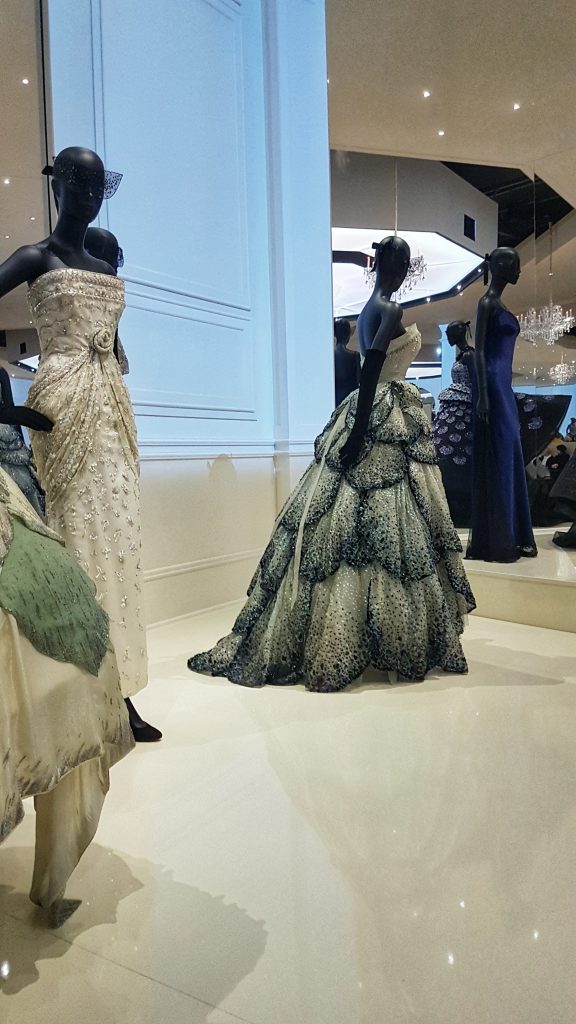
This book accompanies the London exhibition (as there was a Dior exhibition in Paris and in Colorado). There is a chapter dedicated to each room/ section of the exhibition, which flows nicely if you have seen it. I love that it goes into more detail and background- the exhibition itself featured quite a bit of information but Christian Dior goes a little bit further. It isn’t a catalogue, so it doesn’t feature every piece (there were over 500). However, you do get more information on the pieces that are featured, like materials and where they were worn. You also get to see more detail on a lot of the pieces, which I loved! The exhibition was so well-done, but there are some pieces that you can’t see too closely- this book is the answer! At £25, it may not be the cheapest book, but in my opinion, it is certainly worth the money.
What are your top style history books? And do you have a favourite period in fashion history?
Cheers,
The Historian
Facebook | Twitter | Instagram | Pinterest | Bloglovin’