Historical fiction is one of my favourite genres to read. I know a lot of historians don’t like it because of inaccuracies, but I love getting lost in the past in any form. In the past few years, there have been a lot of amazing books coming out, and they are perfect for a long reading session or two. There is something about the past that can steal your weekend! So, these are the best historical fiction books to get lost in, and maybe discover some new-to-you authors.

I have to give a bit of a preface as a historian: please don’t read historical fiction to learn about the past. Many authors will go above and beyond with their research but a fiction author is not writing to recount history. They are writing a story, and enjoy it for the story, rather than the facts. I love that they can weave the most engaging and engrossing stories possible, and they use the past to build up those stories. Now, onto the good stuff!
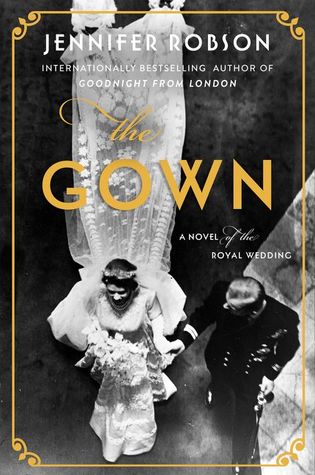
The Gown, Jennifer Robson
“Millions will welcome this joyous event as a flash of color on the long road we have to travel.”—Sir Winston Churchill on the news of Princess Elizabeth’s forthcoming wedding
London, 1947: Besieged by the harshest winter in living memory, burdened by onerous shortages and rationing, the people of postwar Britain are enduring lives of quiet desperation despite their nation’s recent victory. Among them are Ann Hughes and Miriam Dassin, embroiderers at the famed Mayfair fashion house of Norman Hartnell. Together they forge an unlikely friendship, but their nascent hopes for a brighter future are tested when they are chosen for a once-in-a-lifetime honor: taking part in the creation of Princess Elizabeth’s wedding gown.
Toronto, 2016: More than half a century later, Heather Mackenzie seeks to unravel the mystery of a set of embroidered flowers, a legacy from her late grandmother. How did her beloved Nan, a woman who never spoke of her old life in Britain, come to possess the priceless embroideries that so closely resemble the motifs on the stunning gown worn by Queen Elizabeth II at her wedding almost seventy years before? And what was her Nan’s connection to the celebrated textile artist and holocaust survivor Miriam Dassin?
With The Gown, Jennifer Robson takes us inside the workrooms where one of the most famous wedding gowns in history was created. Balancing behind-the-scenes details with a sweeping portrait of a society left reeling by the calamitous costs of victory, she introduces readers to three unforgettable heroines, their points of view alternating and intersecting throughout its pages, whose lives are woven together by the pain of survival, the bonds of friendship, and the redemptive power of love.
I wasn’t sure about this but this has been one of my favourite books this year! I find that Queen Elizabeth II isn’t a historical fiction subject yet, probably because she is still living. However, I think that the release of The Crown on Netflix has finally ushered her fictional presence in. And I must say, Jennifer Robson has done a wonderful job of it. Elizabeth and Philip aren’t the protagonists, but their wedding does provide the backdrop for this story. I wasn’t sure if balancing the two storylines would work, but the history actually tied it together perfectly. Robson had clearly done her research when she included an exhibition from Buckingham Palace, as it actually happened. (And yes, I’m so sad I wasn’t able to see it.) Norman Hartnell is a fascinating designer that does not get the credit and spotlight that his work deserves, I was thrilled to see him featured. And although fashion became a much more male-dominated industry in the mid-twentieth century, Robson really shines a light on the women that work so hard to make these couture gowns. If you love family history, royal history, or fashion history, you need to stop and read The Gown immediately!
Sidenote: If you want to see Norman Hartnell’s work, check out my Royal Women exhibition post– his gowns are absolutely gorgeous!

The Accidental Empress, Allison Pataki
New York Times bestselling author Allison Pataki follows up on her critically acclaimed debut novel, The Traitor’s Wife, with the little-known and tumultuous love story of “Sisi” the Austro-Hungarian Empress and captivating wife of Emperor Franz Joseph.
The year is 1853, and the Habsburgs are Europe’s most powerful ruling family. With his empire stretching from Austria to Russia, from Germany to Italy, Emperor Franz Joseph is young, rich, and ready to marry.
Fifteen-year-old Elisabeth, “Sisi,” Duchess of Bavaria, travels to the Habsburg Court with her older sister, who is betrothed to the young emperor. But shortly after her arrival at court, Sisi finds herself in an unexpected dilemma: she has inadvertently fallen for and won the heart of her sister’s groom. Franz Joseph reneges on his earlier proposal and declares his intention to marry Sisi instead.
Thrust onto the throne of Europe’s most treacherous imperial court, Sisi upsets political and familial loyalties in her quest to win, and keep, the love of her emperor, her people, and of the world.
With Pataki’s rich period detail and cast of complex, bewitching characters, The Accidental Empress offers a captivating glimpse into one of history’s most intriguing royal families, shedding new light on the glittering Hapsburg Empire and its most mesmerizing, most beloved “Fairy Queen.”
I have to admit something incredibly embarrassing here, and say that until late last year, I had no idea who Sisi was. Empress Elisabeth of Austria, married to Franz Joseph and lead a rather sad life. She was infamously beautiful, but also quite troubled by her life. Although it seems like her romance would be the main focus, her life at court is the real focus and you won’t be able to put it down. The European courts of the later nineteenth century were incredibly decadent and steeped and tradition, and Sisi provides a familiar lens in. As the daughter of a nobleman, she has some idea of the court, but it is largely unknown to her (as it is for the reader). It is a heartbreaking story, but I couldn’t stop reading.
Sidenote: Some Goodreads reviews are quite harsh on this book because it isn’t historically accurate. It is in general, but as I said, if you are reading historical fiction to learn the history, that is on you. Pataki masterfully takes a complex and lengthy subject, and uses it as a solid base for her story.

The Last Collection, Jeanne Mackin
Paris, 1938. Coco Chanel and Elsa Schiaparelli are fighting for recognition as the most successful and influential fashion designer in France, and their rivalry is already legendary. They oppose each other at every turn, in both their politics and their designs: Chanel’s are classic, elegant, and practical; Schiaparelli’s bold, experimental, and surreal.
When Lily Sutter, a recently widowed young American teacher, visits her brother, Charlie, in Paris, he insists on buying her a couture dress–a Chanel. Lily, however, prefers a Schiaparelli. Charlie’s beautiful and socially prominent girlfriend soon begins wearing Schiaparelli’s designs as well, and much of Paris follows in her footsteps.
Schiaparelli offers budding artist Lily a job at her store, and Lily finds herself increasingly involved with Schiaparelli and Chanel’s personal war. Their fierce competition reaches new and dangerous heights as the Nazis and the looming threat of World War II bear down on Paris.
I actually *just* finished reading this book, and I knew as soon as I started reading it that I wanted to share it with everyone. I think that my love of style history is well-documented on this blog, so it should not be a surprise that I would love this book. Elsa Schiaparelli was a fascinating and complex person, and I think Mackin really nails that. When you see Schiaparelli’s work in person, it really does feel whimsical. It also can make you think of Schiap as a caricature almost. However, the Schiap of The Last Collection is a fully-fleshed out character that makes you want to keep reading. I have to admit, I was far more interested in Schiap than in Lilly, the protagonist, but I couldn’t put it down either way. I also personally dislike Chanel- not only were her actions during the war questionable, she was fairly awful to her employees, and made a lot of morally questionable choices in her life. Mackin did a wonderful job with making her slightly more sympathetic, though. I didn’t hate Coco like I thought I would in this. (Though my attitude on the historical person stands…) This is possibly my favourite 2019 release!
What historical fiction books are you ready to get lost in?
Cheers,
The Historian
Facebook | Twitter | Instagram | Pinterest | Bloglovin’

Ooh thanks, these look great – especially The Gown!
Please let me know what you think of The Gown!!
Sure thing, when I get around to reading it