St. Albans Cathedral is one of those fantastic buildings that doesn’t get the attention that it deserves. It looks quite magnificent from the outside, but it gets brushed off quite a lot. However, it is a treasure trove of hidden history and is a must-see. It dates back to the Norman period, and although it mostly dates to the nineteenth century, there is some medieval history waiting for you. One of my favourite discoveries is a medieval painting of St. William of York at St Albans Cathedral, a remarkably well-preserved piece of the past…

St Albans Cathedral is rather a hodge-podge cathedral. At the beginning of the nineteenth century, it was in quite a state of disrepair. After the Dissolution in the sixteenth century, it was used for different purposes (a school and a jail, amongst other things), and time took its toll. In the mid and late nineteenth century, four different men took charge of repairing and restoring St Albans Cathedral, and as a result, it is mix of different architectural styles that they liked. However, during the restorations, there were some fantastic finds…
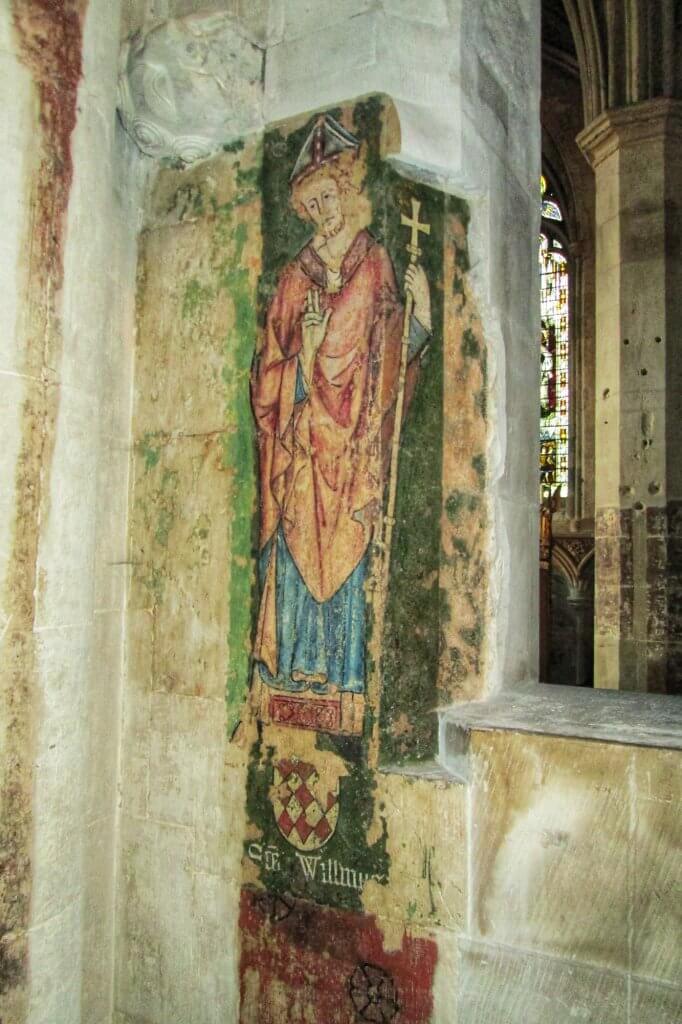
The Painting
This wall painting was hidden away for several years. It is thought to date back to the early fourteenth century (1308), is tucked away close to the watching loft of St Alban’s shrine, and is in amazing condition. It has several layers of paint, and a clear glaze over top, probably why it has survived in such a bright condition. St. William of York is the patron saint of York, and was elected Archbishop of York twice in the twelfth century. His canonisation didn’t take long; after his death (potentially by poisoning), his corpse did not rot, or burn in a later fire. I’m not sure why exactly he is in St Albans, but the painting is quite amazing.
Have you seen St William of York at St Albans Cathedral?
Cheers,
The Historian
Facebook | Twitter | Instagram | Pinterest | Bloglovin’