Monarchs in the twenty-first century only fulfil a few of the same roles and duties as their historical counterparts. For example, King George II was the last British King to lead his soldiers into battle. However, there are some roles that they still fill to this day. One consistent royal role that we still see today is championing the arts. This can take a number of forms of support and can be seen across different art forms. Today I am exploring royal patrons of the arts and what that looks like throughout history!

What is a Patron?
A patron is defined as:
a person who gives financial or other support to a person, organization, cause, or activity.
While we are most familiar with patrons providing social cache in the twenty-first century, a patron can provide any form of support to an individual or an organisation. (Yes, Patreon is a play-on patron!)
In the past, support took on a variety of forms. For example, Margaret Beauford helped to found Christ’s College at Cambridge in the fifteenth century.
How Do Royal Patrons Show Support?
Within the last 50-75 years, we’ve seen many royals lend their name and fame to different organisations. Interestingly, many modern royals do not have as much money as you might think- monetary donations typically are not coming in from royals.
The fame of a royal can be invaluable to an arts organisation. Having a member of the royal family attend your gala or fundraiser, or even regularly take in performances can boost ticket sales and popularity. Across Europe, royal families will often go to the theatre, ballet, and opera to support their performing arts. It is also very common to see museums and galleries with royal patrons, and frequent engagements to new exhibitions. The media often covers when royals attend these events, bringing them into wide public attention.
Royal Patrons of the Arts

George IV- An Eye for the Visual Arts
Charles I was the first monarch to actively start building the Royal Collection as we know it today. However, much of the collection was collected under George IV (both as Prince of Wales and Regent, and the King). As Prince of Wales, he sought to kit out Carlton House (his residence) with Dutch and Flemish paintings to the tune of £400,000. (That would be over £31,000,000 today.) After he took the throne, George commissioned Sir Joshua Reynolds and Sir Thomas Lawrence, among other artists.
George’s support was not only limited to the visual arts. He widely supported many artists, including Jane Austen (whose feelings were not reciprocal). The King collected thousands of books for his library, many of which also remain in the Royal Collection.

King Ludwig II- Surrounded By Art
King Ludwig II of Bavaria led a complicated and tragic life, and it is easy to get caught up in the drama of it. However, art was at the core of Ludwig’s life. Ludwig was the dedicated patron of the German composer Richard Wagner. He spent much of his adult life dedicated to Wagner and his operas, and even went so far as to fund and build a theatre for Wagner. He also worked to bring popular plays, ballets, and other operas to Munich. While his extravagant spending largely led to his downfall, his support of the arts cannot be ignored.
King Charles III- Active Patron
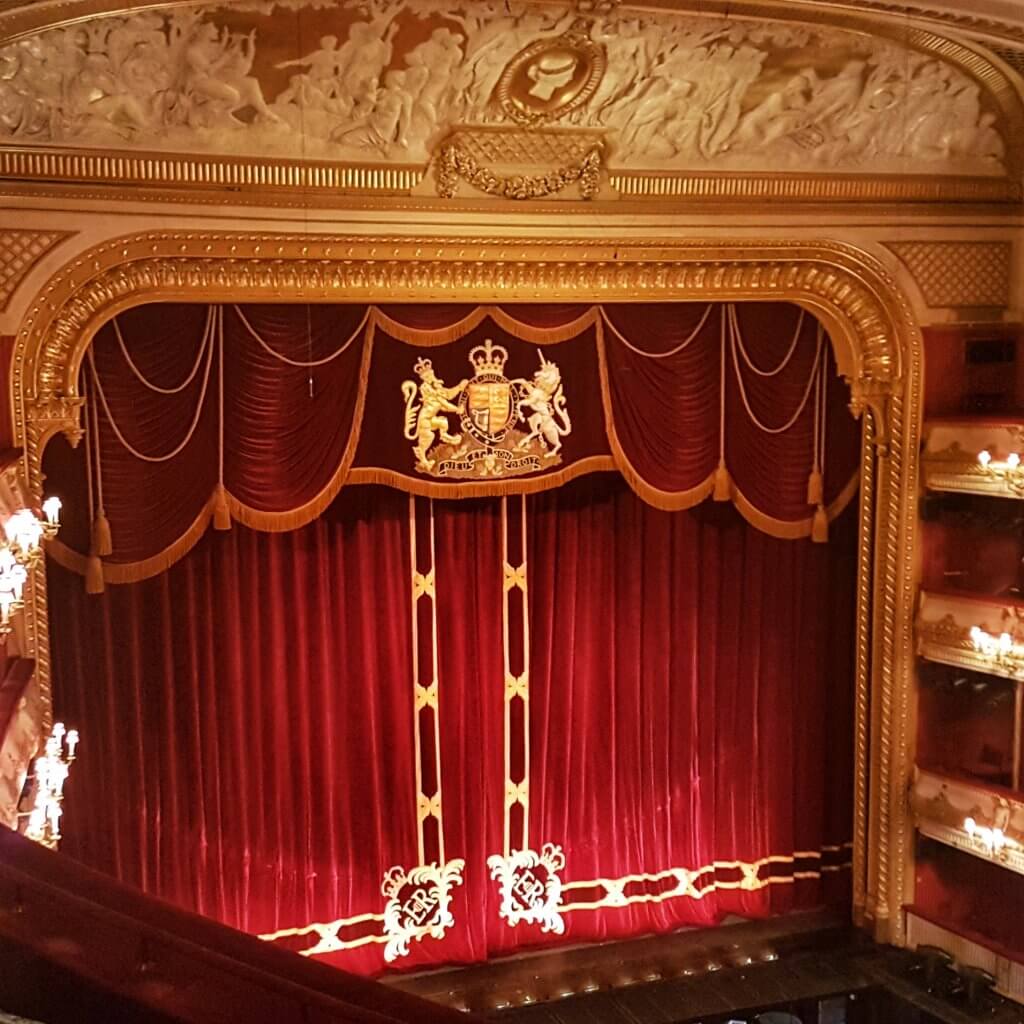
His Majesty has been a supporter of the arts for all of his adult life, and we can see that in a number of ways. Firstly, he is a regular visitor to the Royal Opera House to take in both Royal Ballet and Royal Opera productions. Secondly, he is an official patron to countless organisations in visual arts and performing arts. (You can find more information on Google Arts and Culture on his 2018 exhibition for the Royal Collection Trust, Prince and Patron, here.)
As Prince of Wales, he was Patron to the Royal Drawing School and The Prince’s Foundation School of Traditional Arts, as well as the Welsh National Orchestra, Birmingham Royal Ballet, Royal Philharmonic Orchestra, Scottish Ballet, Royal Opera, and President of the Royal Ballet and the Royal Shakespeare Company. (There is currently a review of all royal patronages- they will need to decide which of the late Queen’s patronages will be taken over and by whom, as well as which patronages Charles will be able to manage.)
Interested in more book previews, period dramas, royal news, and more? You can subscribe to my biweekly substack newsletter here: https://anhistorianabouttown.substack.com/!
Queen Margrethe II- Royal Artist
Queen Margrethe II of Denmark will always remain one of my favourite royal figures, largely for her dedication to the arts. Margrethe not only supports the arts but takes part herself.
Her Majesty is a talented artist. She created the sketches that were used as the basis of the artwork for the Danish editions of the Lord of the Rings books. And Margrethe is not limited to one form- she works in pencil, watercolour, oils, silk screen, and more. Her artworks have been featured in several exhibitions in galleries across Denmark, including a landmark exhibition in 2022-2023 that marked her Golden Jubilee.
Margrethe’s work expands beyond the gallery, as well. She has worked with the Tivoli Ballet Theatre in Copenhagen to design the sets and costumes for several ballets, including The Nutcracker and Thumbelina. She also worked with the Royal Danish Ballet since 1992, including a production of Bournonville’s A Folk Tale and The Snow Queen. Given how busy she is, I am continually blown away by her dedication to the arts.
Do any of your favourite arts organisations have royal patrons?
Cheers,
The Historian
Facebook | Twitter | Instagram | Pinterest