I hope that everyone had a wonderful International Women’s Day 2026 (despite the fact that we were shortchanged by an hour, which seems as fitting as possible)! We are continuing on with 2026 Women’s History Month and what would WHM be without book recommendations? I find that as reading becomes more and more popular on social media, fiction is flourishing but non-fiction is widely ignored. And people are missing out on some fantastic books that are often more dramatic than anything you could find in a piece of fiction. Today I am sharing my 5 favourite women’s history books!
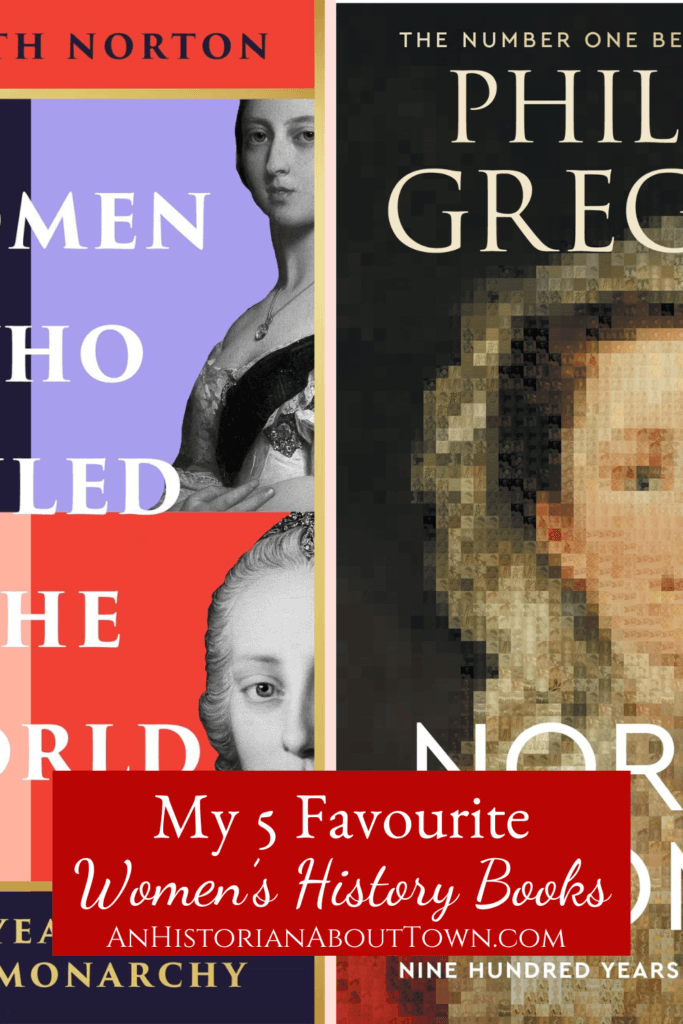
5 Favourite Women’s History Books
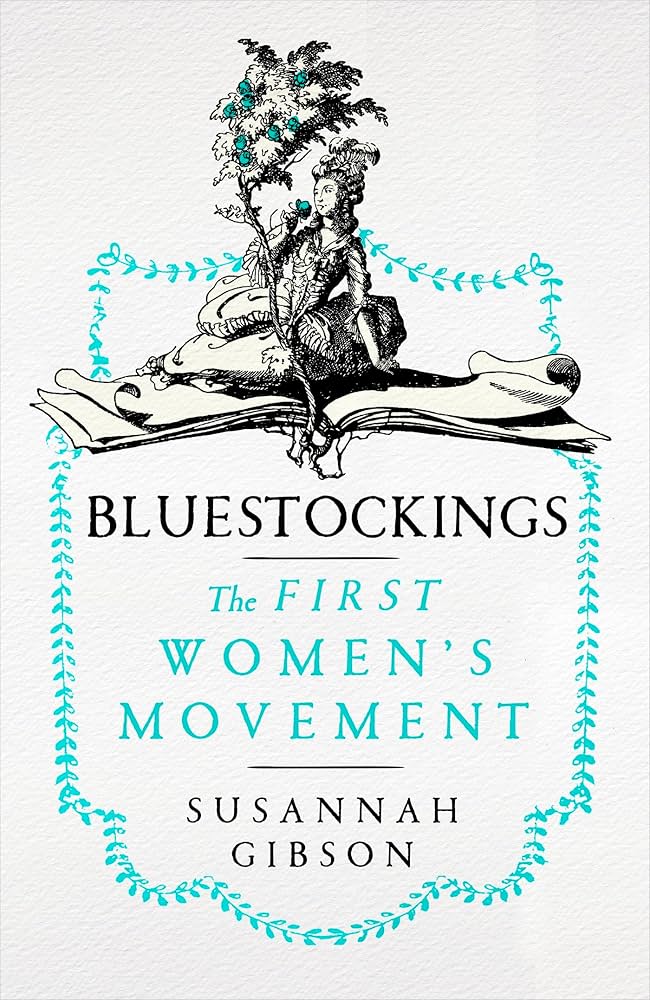
The Bluestockings: A History of the First Women’s Movement, Susannah Gibson
In England in the 1700s, a woman who was an intellectual, spoke out, or wrote professionally was considered unnatural. After all, as the wisdom of the era dictated, a clever woman—if there were such a thing—would never make a good wife. But a circle of women called the Bluestockings did something extraordinary: coming together in glittering salons to discuss and debate as intellectual equals with men, they fought for women to be educated and to have a public role in society.
In this intimate and revelatory history, Susannah Gibson delves into the lives of these pioneering women. Elizabeth Montagu established one of the most famous salons of the Bluestocking movement, with everyone from royalty to revolutionaries clamoring for an invitation to attend. Her younger sister, Sarah Scott, imagined a female-run society and created a women’s commune. Meanwhile, Hester Thrale, who also had a salon, saved her husband’s brewery from bankruptcy and, after being widowed, married a man she loved—Italian, Catholic, and not of her social class. Other women made a name for themselves through their publications, including Catharine Macaulay, author of an eight-volume history of England, and Frances Burney, author of the audacious novel Evelina.
In elegant prose, Gibson reveals the close and complicated relationships between these women, how they supported and admired each other, and how they sometimes judged and exploited one another. Some rebelled quietly, while others defied propriety with adventurous and scandalous lives. With moving stories and keen insight, The Bluestockings uncovers how a group of remarkable women slowly built up an eviscerating critique of their male-dominated world that society was not yet ready to hear.
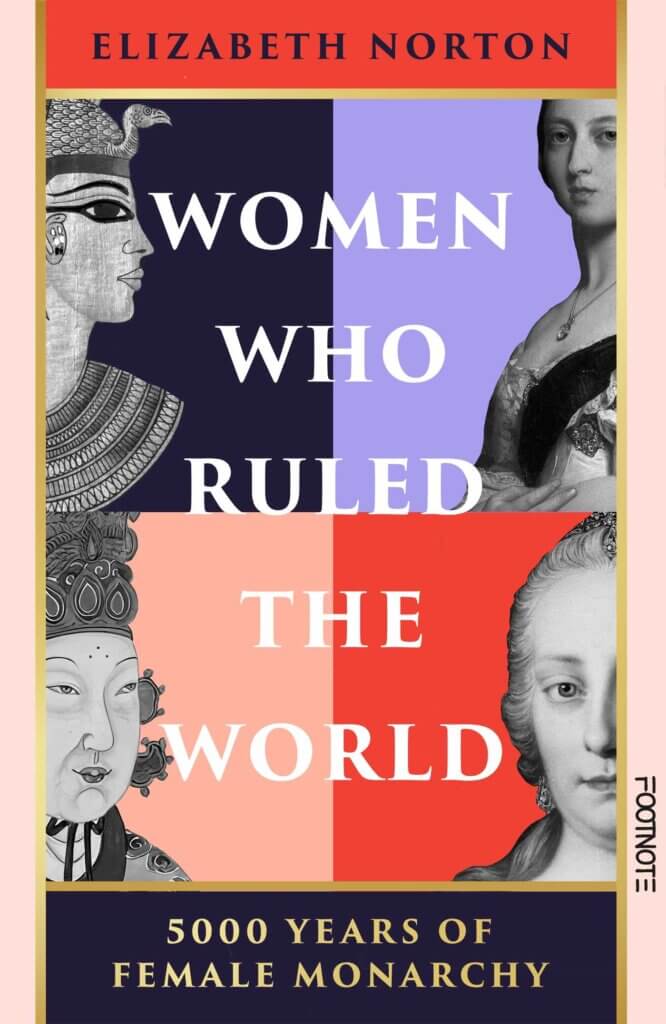
Women Who Ruled the World: 5000 Years of Female Monarchy, Elizabeth Norton
Female kings have always been a rarity, an oddity, or an undesirable outcome. In almost all places on the globe a male ruler was preferred to a woman, with female inheritance vanishingly rare and frequently disputed. In spite of this, women have secured crowns – or fought for them – over several millennia. This scintillating book tell the story of the female kings: women who risked everything, sometimes unwillingly, to find a place in a man’s world. Women Who Ruled the World covers an exhilarating expanse of time and space: from the lush oases of Ancient Egypt to the cherry blossomed islands of Japan, from the 19th century Queens of Madagascar who defied French attempts to colonise them to Tamar the Great, who presided over a golden age in Georgia. From the familiar – Boudicca, Cleopatra, Catherine to Great – to the unfamiliar – Urracca of Castile and Leon, Kushite queen Shanakdakhete, Lili’uokalani of Hawaii. This ground-breaking book casts a global eye over five millennia of queenship, a truly remarkable feat of historical skill and breadth of knowledge.
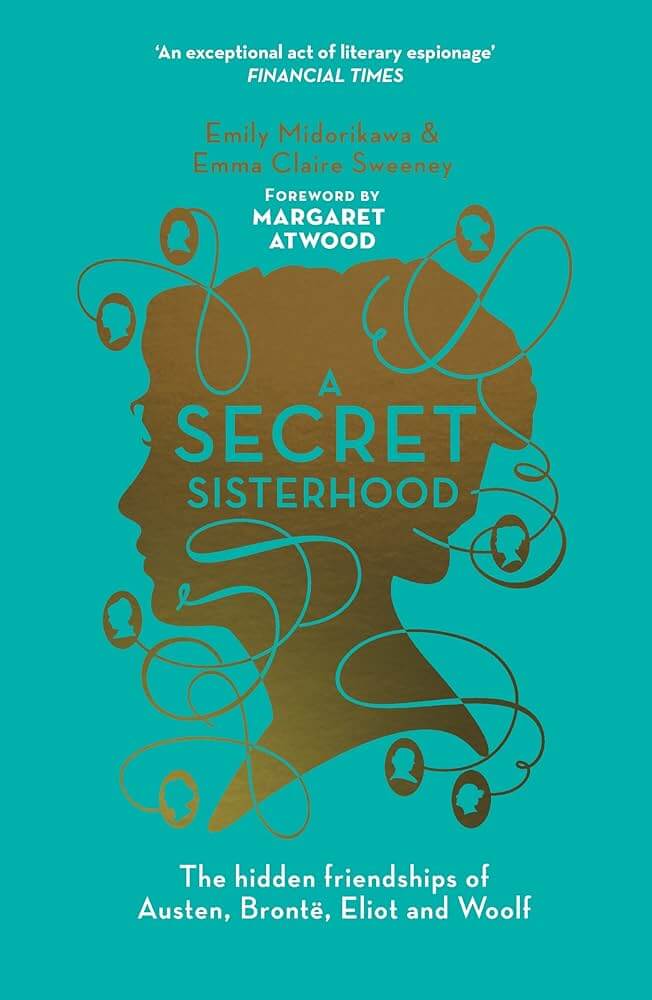
A Secret Sisterhood: The Hidden Friendships of Austen, Bronte, Eliot and Woolf, Emma Claire Sweeney, Emily Midorikawa
A Secret Sisterhood uncovers the hidden literary friendships of the world’s most respected female authors.
Drawing on letters and diaries, some of which have never been published before, this book will reveal Jane Austen’s bond with a family servant, the amateur playwright Anne Sharp; how Charlotte Brontë was inspired by the daring feminist Mary Taylor; the transatlantic relationship between George Eliot and the author of Uncle Tom’s Cabin, Harriet Beecher Stowe; and the underlying erotic charge that lit the friendship of Virginia Woolf and Katherine Mansfield – a pair too often dismissed as bitter foes.
In their first book together, Midorikawa and Sweeney resurrect these literary collaborations, which were sometimes illicit, scandalous and volatile; sometimes supportive, radical or inspiring; but always, until now, tantalisingly consigned to the shadows.
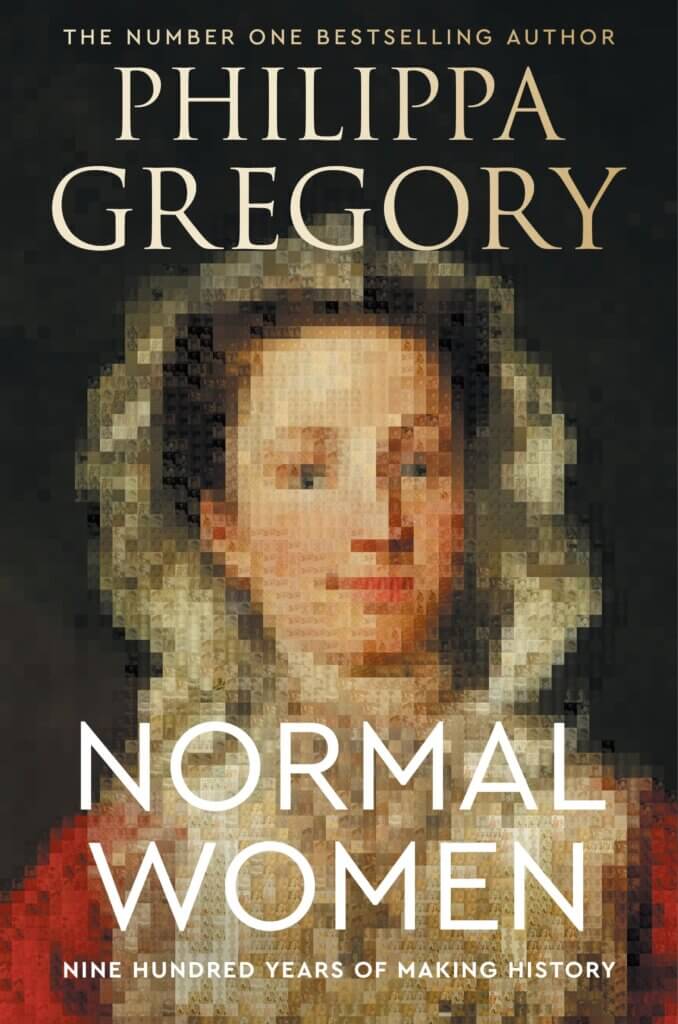
Normal Women: Nine Hundred Years of Making History, Philippa Gregory
Did you know that there are more penises than women in the Bayeux Tapestry?
That the Peasant’s Revolt was started and propelled by women, protesting a tax on women?
Or that celebrated naturalist Charles Darwin believed not just that women were naturally inferior to men but that they’d evolve to become ever more inferior?
These are just a few of the startling findings you will learn from reading Philippa Gregory’s Normal Women. In this ambitious and ground-breaking book, she tells the story of our nation over 900 years, but for the very first time women – some fifty per cent of the population – are no longer invisible in this history of England, but are at its beating heart.
Using research skills honed in her work as one of our foremost historical novelists, Gregory trawled through court records to find highway women, beggars and shepherdesses, through newspapers and diaries to find murderers and brides, housewives and pirates, female husbands and hermits. The ‘normal women’ you will meet in her pages went to war, ploughed the fields, campaigned, wrote, and loved. They rode in jousts, flew Spitfires, issued their own currency and built ships, corn mills and houses as part of their everyday lives They committed crimes, or treason, worshipped many gods, cooked and nursed, invented things and rioted. A lot. They built our society to be as diverse and varied as the women themselves. They are there in the archives – if you look – and they made our history.
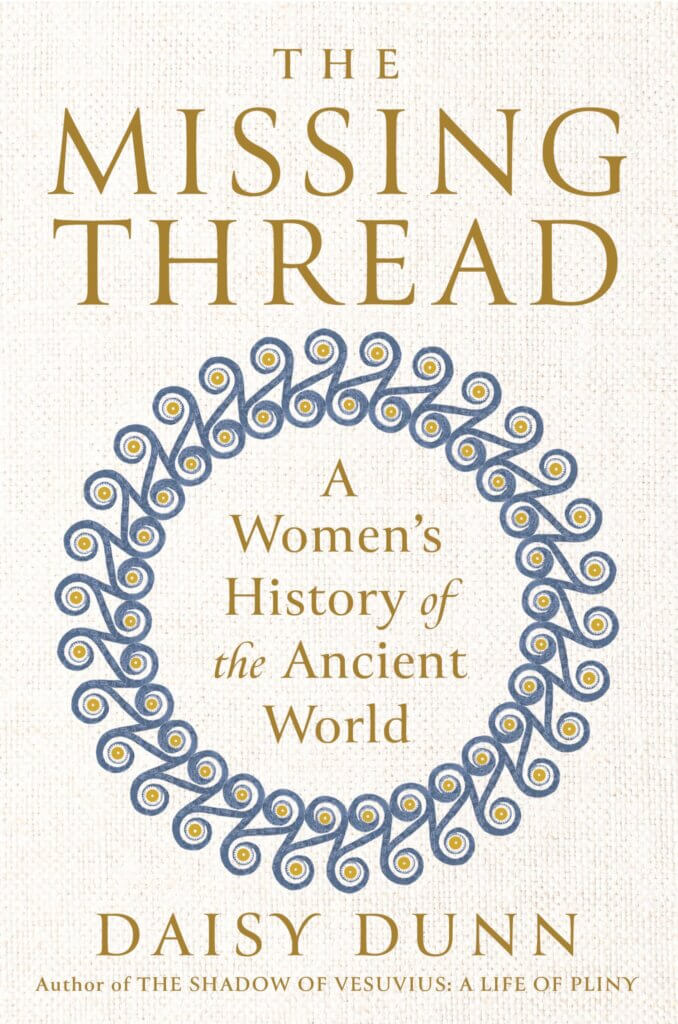
The Missing Thread: A Women’s History of the Ancient World, Daisy Dunn
Around four thousand years ago, the mysterious Minoans sculpted statues of topless women with snakes slithering on their arms. Over one thousand years later, Sappho wrote great poems of longing and desire. For classicist Daisy Dunn, these women—whether they were simply sitting at their looms at home or participating in the highest echelons of power—were up to something much more interesting than other histories would lead us to believe. Together, these women helped to make antiquity as we know it.
In this monumental work, Dunn reconceives our understanding of the ancient world by emphasizing women’s roles within it. The Missing Thread never relegates women to the sidelines and is populated with well-known names such as Cleopatra and Agrippina, as well as the likes of Achaemenid consort Atossa and Olympias, a force in Macedon. Spanning three thousand years, the story moves from Minoan Crete to Mycenaean Greece, from Lesbos to Asia Minor, from the Persian Empire to the royal court of Macedonia, and concludes with Rome and its growing empire. The women of antiquity are undeniably woven throughout the fabric of history, and in The Missing Thread they finally take center stage.
What are your favourite women’s history books?
Cheers,
The Historian
Facebook | Threads | Instagram | TikTok