This week, I am incredibly fortunate to be seeing the Royal Winnipeg Ballet’s Moulin Rouge, one of their most popular productions ever. (To date, it has been seen by over 100,000 people!) I tend to prefer story ballets, and this story is set in the opulence and technicolour of the Moulin Rouge. And between this ballet, the 2001 movie of the same name, and now Moulin Rouge! The Musical! on Broadway, it seems that no one get enough of this Paris mainstay. Today, I’m going to take you through the history of the Moulin Rouge, and how it is still thriving in 2020!

The Beginning of the Moulin Rouge
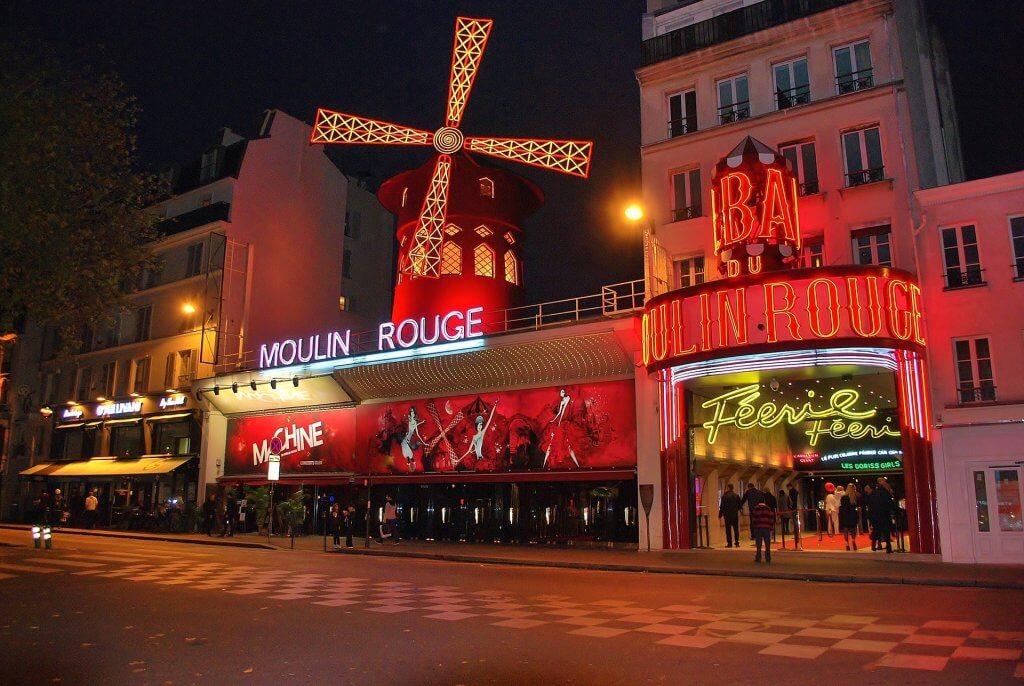
The Moulin Rouge dates back 131 years, to the first show in 1889 in the heart of Montmartre. Dominated by the gorgeous Sacré-Cœur, in the nineteenth century, Paris’ 18th arrondissement was known as the home of artists, writers, and Bohemians, and for its exciting nightclubs. (The perfect home for a cabaret!) The two founders, Charles Zidler and Joseph Oller, had a very specific goal: to “allow the very rich to come and slum it in a fashionable district, where people live differently from other parts of Paris. The place attracts men and women, the middle classes and rich foreigners passing through Paris as well as artists and ordinary folk.“ (RWB) Though they weren’t exactly sitting together, the Moulin Rouge was meant for all classes. The can-can, a dance that evolved from the French quadrille, held the audience captive from the very beginning, and inspired cabarets across Europe.

Rebuilding the Moulin Rouge
In 1915, the original Moulin Rouge burnt down. It was most likely caused by a short circuit, but the theatre portion and the ballroom were completely destroyed, with only a small piece of the stage and the iconic facade remaining. It shut down for nearly 6 years, and did not reopen until 1921. The Moulin Rouge was the first building in Paris to have entirely electrical lighting, which had propelled the cabaret to infamy so quickly; it is particularly unfortunate that it was also cause of its destruction. A new manager, Francis Salabert, took to reinvigorating the Moulin Rouge, and new stars and productions were promoted immediately. Many of the images, dancers, and productions we now associate with the Moulin Rouge are from this period.
The Moulin Rouge During WWII
Unlike most of France, the Moulin Rouge didn’t suffer under Nazi occupation. The occupying German officers and soldiers enjoyed the cabaret, and it was on their “must-see” list. (Is that a list that anyone wants to be on?) Places like the Moulin Rouge were instrumental in Nazi propaganda, as it could be used to show a thriving and lively Paris. Edith Piaf performed at the Moulin Rouge in 1944 after the liberation of Paris, but would not while the Nazis held control of France. The post-war period for both the Moulin Rouge and France wasn’t wonderful by any stretch.

The Modern Moulin Rouge
In June 1951, Georges France, bought the Moulin Rouge. France owned the popular dance club, Le Balajo, and quickly set about refurbishing the cabaret. New interiors designed by Henri Mahé are still in place today, and the larger auditorium was needed. In 1955, France transferred the club to the Clérico brothers, who owned a popular burlesque club. They continued to bring in new acts and make improvements. In 1962, they gave in to superstition and would only put on revues that started with “F”, which has continued through to the present “Féérie”. For the last several decades, the cabaret shows have stayed largely unchanged, and over 600,000 visitors a year continue to visit!
An Image to Protect
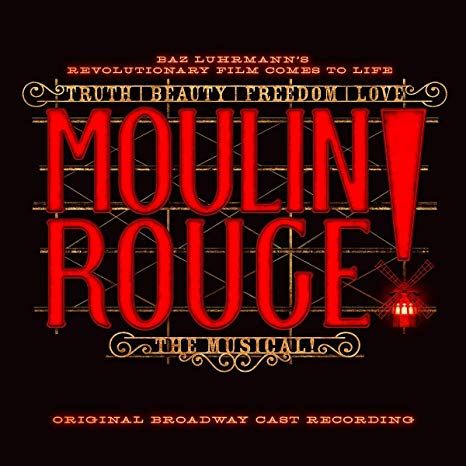
One of the most interesting aspects of the Moulin Rouge to me is how tightly they control their image now. It isn’t uncommon, think of Disney or another large corporation. However, you tend not to see it as often in the theatre. (While I’m sure that company directors and theatre managers don’t love everything that is said about their own, they usually can’t stop it.) To use the Moulin Rouge name, incredibly strict standards for marketing, aesthetics, and infomation must be met. You will notice that anything that uses the trademarked official Moulin Rouge name usually has the same brief history, provided by the cabaret. I personally think that it has been quite successful thus far, given that there is consistency across all productions that invoke the Moulin Rouge name.
Further Readings
Looking to dive deeper into the history and culture of the Moulin Rouge? These are some of my favourite resources!
-Without a doubt, you need to head to the Moulin Rouge’s official site. It isn’t a fully encompassing history, but it does cover all of the major points and periods. There are specific sections on the chronology of it, the periods it is known for, and the stars of the Moulin Rouge. (Note: this is their official history, so it is only covering what they choose.)
–ParisCityVision– This is a brief history, but it has links to several different facts and figures about different aspects of the Moulin Rouge, including song lists, people associated with the cabaret, and more. (Note: this site is selling tours to take you there, keep that in mind.)
-The RWB has a fantastic quick history of the Moulin Rouge, with the key dates and figures.
-Burleigh, Robert. Toulouse-Lautrec: The Moulin Rouge and the City of Light. Harry N. Abrams, 2005. – This is a rather short book, but does give you an execellent introduction to one of the most prolific Bohemians connected with the cabaret.
(There is an odd absence of historical research on the Moulin Rouge, at least from my hour of searching. Theatre historians, I’ve found your next project!)
-Looking for a fictional read? I would thoroughly recommend Catherine Heywood’s May Leave Stars! A big thank you to NetGalley and Catherine for providing an eARC in exchange for an honest review- this is one of my favourite books of 2020. The Moulin Rouge isn’t mentioned by name, but the novel follows Amélie, a cabaret dancer in Belle Époque Paris. It is an exciting and interesting read, and gives you a fantastic feeling for the period.
Are you familiar with the history of the Moulin Rouge?
Cheers,
The Historian
Facebook | Twitter | Instagram | Pinterest | Bloglovin’

I have enjoyed reading your detailed description of the Moulin Rouge and its history! All very interesting – thank you for sharing!
I went a couple of years ago to see performers at the Moulin Rouge in Paris – I loved it! Thanks for this post, was interesting to see more of the history.
I hope to one day see them myself!! Something we all need to see at least once!