This week’s Style File Friday is going to be a little bit different. While I do love my fashion history, I think it is important to do a check in on current trends as well. And one that still seems to be quite controversial? Buying second hand. You wouldn’t think it is, but it can actually be quite a twisted web when you get into it. Today I’m going to be sharing my thoughts on the issues with buying second hand clothing, and how you can thoughtfully shop second hand or vintage. (Also, I know that I had said I was going to feature my own closet/ style/ beauty once a month for Style File Friday- I’m going to try schedule more for late summer/fall!)
I thought that it was the right time for this post for a few reasons. For one thing, it is constantly on my mind, to the point where I’m yelling at my phone when I’m on Instagram. (Yes, I do unfollow the person/account when that happens…) And for another, my Why Do We Keep Buying Clothes post is becoming more and more popular, despite being nearly two years old. I completely understand that there are going to be some people who strongly disagree with me, but I’ve accepted that.

Issues With Buying Second Hand Clothing
I need to say upfront, I aim to buy the majority of my own wardrobe second hand- it is always my first stop. However, there can be a lot of issues with it, too.
Second Hand Clothing Hauls
I am thrilled to see so many more people shopping second hand. It keeps clothing out of the landfill, and it can give it a new lease on life. However, I’m really disappointed to see countless people doing secondhand clothing hauls, for a few reasons.
Firstly, NO MORE SECONDHAND HAULS. None of us need to “haul” anything. I get it, not everyone is a minimalist, but as a planet, we are over-consuming like no tomorrow. Sure, a second hand haul is slightly better than a new clothing haul, but no one needs to haul anything. I’m not apologising for saying this anymore- it is 2021 and we all need to do better. Stop watching haul videos, or following haul Instagram accounts, if it is too tempting. (Easier said than done, I know.)
Secondly, there are many people who can only afford to shop secondhand. I’ve seen many people go into three, four, five, thrift stores in a day to flip for a reselling business. While I respect that it is your business, it is also cleaning those stores out for people who can only shop there. When I’ve pointed that out to people, I’ve gotten the response “well, I’ve left clothes behind”. People who need to shop at second hand stores should not be relegated to last choice items because you felt like you needed to clear everything from the last decade out.
“Re-Poshing” On the Spot
I don’t know if this is specific to Poshmark (let me know if it is/isn’t, in your experience), but I’ve noticed that there are a lot of people buying items second hand and immediately flipping them. And yes, I completely understand that you can’t try things on. However, there are many people who are purchasing and immediately re-selling. (As in, they are listing them within the first day or two of receiving them.) It seems to go along with hauls- none of us need to constantly be buying “new” clothes, whether they are new or new-to-you. Yes, it can be better to buy second hand, but if you are feeding a shopping addiction, you’ve not really changed that much. (And unless you are buying local, you are still doing a lot of shipping.) Stop and think about what you are buying, and if you actually need it. And if it doesn’t work for you, can you repair or tailor it so that it does?
3 Tips for Buying Second Hand Clothing
If you are going to purchase clothing second hand (and you should), there are a few things I always look out for.
“Do I Need This?”
It might seem an obvious question, but make sure you are asking yourself, “Do I actually need this?”. It is easy to get caught up in the rush of shopping, new or second hand. And there is definitely a bit of a feel good factor when it is second hand. Ask yourself if you genuinely need this new item. Will you actually wear it regularly? Does it work in your wardrobe? Does it at least appear to line up with your measurements? (See below) Don’t get caught up in the thrill of “Oh, I found XYZ second hand, must buy!”.
Also, this is where it ties into history for me. Aside from the upper 5% of people, for most of history, people weren’t continuously buying new clothing. They mended and made do and kept things for as long as possible before recycling it into something else. And not all of the world lives that way now, either. I’m definitely not a “live in the past” person (I like medication… and having rights…) but I think that there are some things that the past had the right idea on.
Have Your Measurements Handy
If you are shopping second hand in person, this is less of an issue (but still handy). If you are shopping second hand online, this is a necessity. Take all of your measurements, have someone help if you need. Take your bust, waist, and hip (butt) measurements, as well as the top of your shoulder down to your knee. While it won’t guarantee fit, it will help when shopping. Ask the seller for measurements if they haven’t provided them- do not go by the size alone.
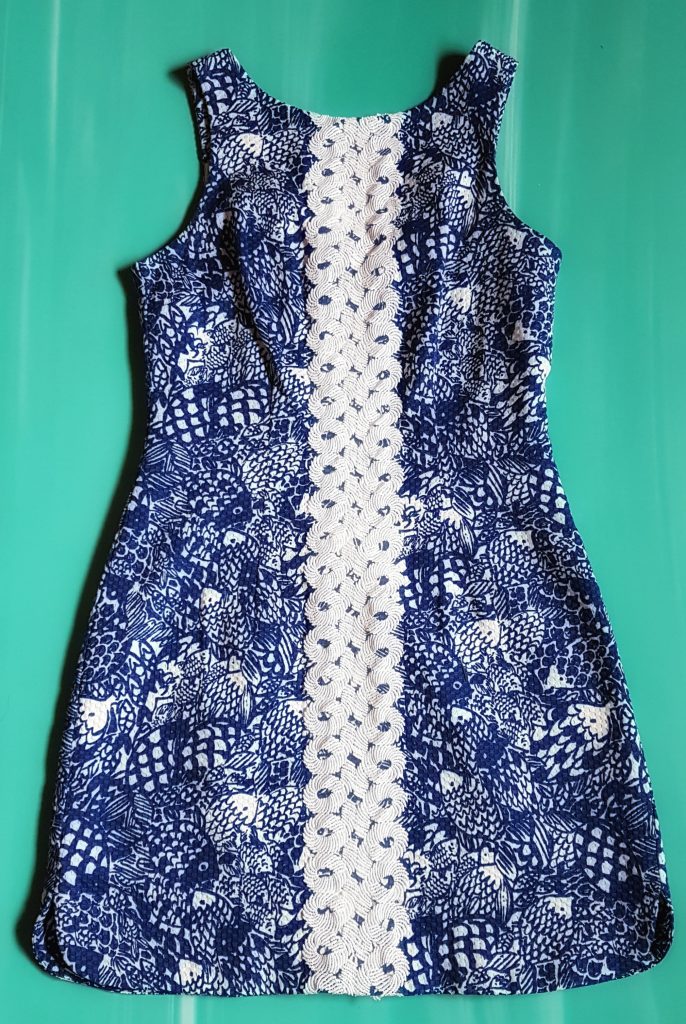
The colourful prints you can see in this post (not the London ones) are both from Lilly Pulitzer, a brand that I can wear anywhere from an XS to a Medium in. There is no “guaranteed fit”- I need the measurements to make sure.
“Why Am I Buying This?”
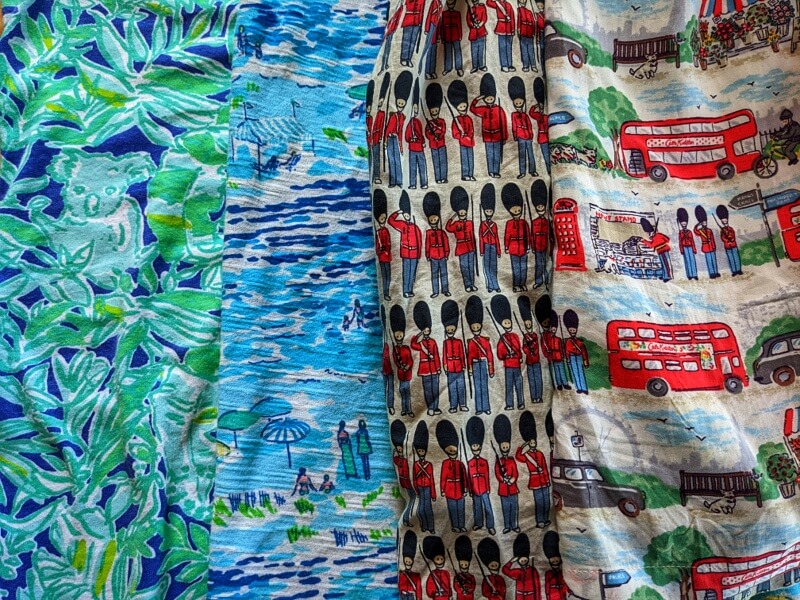
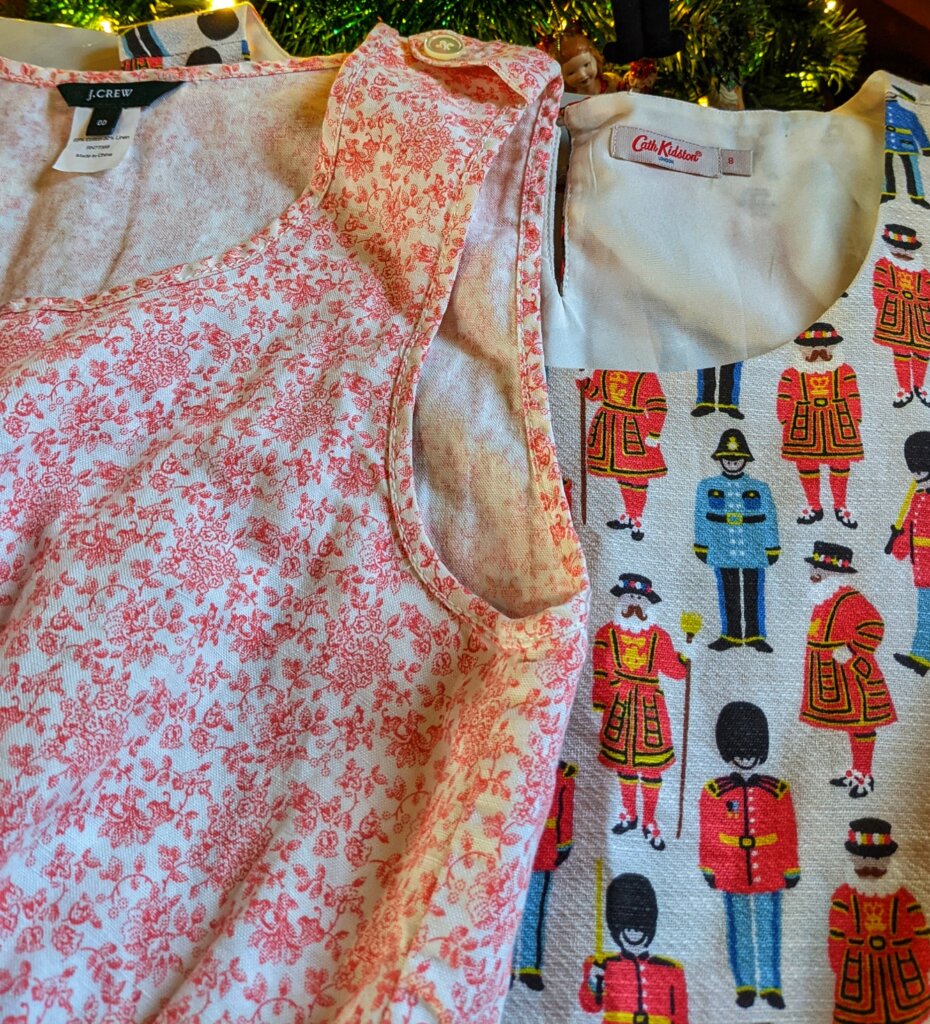
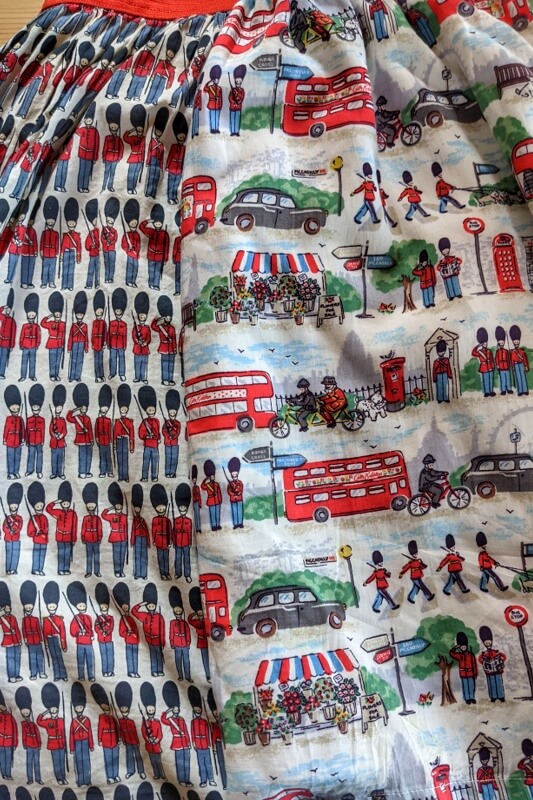
The other big question I ask myself with any clothing purchase- “why am I buying this?” The London prints you see here are from one of my other favourite brands, Cath Kidston. It’s harder to get in Canada and very expensive with the exchange rate, so finding it on Poshmark or eBay can be a steal. However, I have almost purchased several pieces solely because they were a good price and Cath Kidston. I wouldn’t have worn them… But I would have purchased them had I not stopped myself and thought about it. Shopping should never be mindless, new or second hand.
Let me know how you feel about buying second hand clothing!
Cheers,
The Historian
Facebook | Twitter | Instagram | Pinterest

Thanks for this. I think, inevitably, the law of unintended consequences applies here. A drive to reduce consumption overall ends up creating a new form of consumption and the desire to consume remains but now in a less guilty way but also, and I thought this was a great point, it creates competition and drives up prices for those that can least afford it. Just buy what you need, when you need it, new or second hand.
I think that you are absolutely spot on- it is the “it thing” to do, but doesn’t address the core issue of consumption!
Thanks for this. I think, inevitably, the law of unintended consequences applies here. A drive to reduce consumption overall ends up creating a new form of consumption and the desire to consume remains but now in a less guilty way but also, and I thought this was a great point, it creates competition and drives up prices for those that can least afford it. Just buy what you need, when you need it, new or second hand.